Home > Products > Wood Plastic WPC Extrusion Machine > WPC Profile Making Machine > WPC manufacturing plant

IMG
WPC manufacturing plant
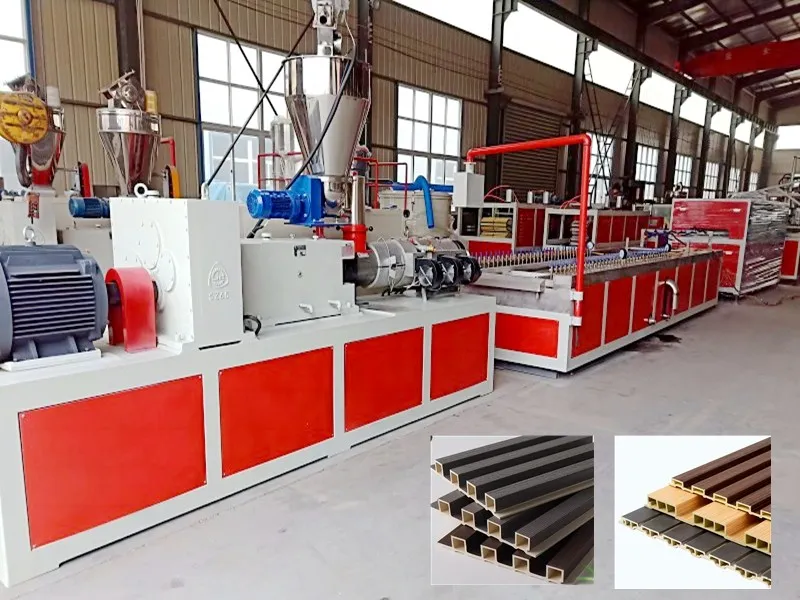
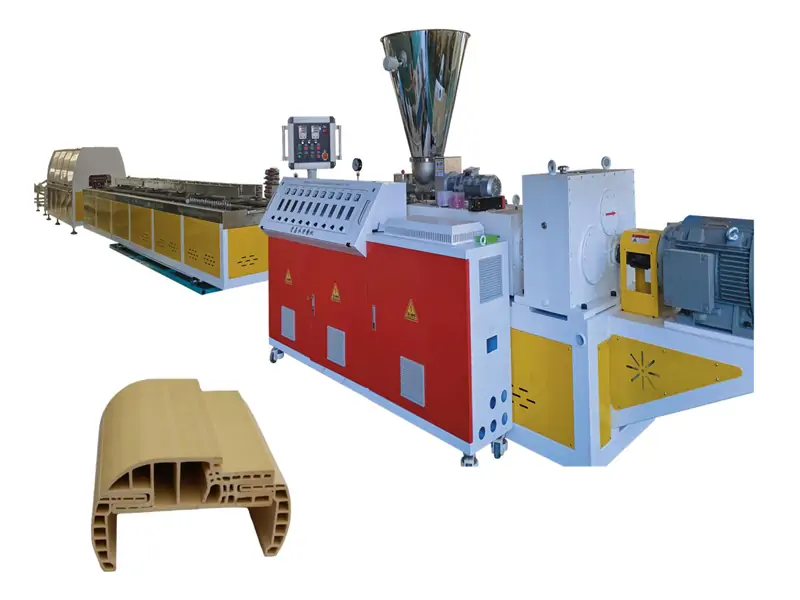
Yongte provides WPC manufacturing plant machinery for making WPC products that is stable and efficient, using recycled materials to create a product that looks like wood but has benefits of both wood and plastic.
Model:SJSZ65/132
Send Inquiry
Product Description
WPC Manufacturing Plant Cost- Yongte WPC turnkey project manufacturer
Yongte, a manufacturer of WPC manufacturing plant that make WPC products, which stands for Wood Plastic Composite, offers a whole production line for making wpc profiles. This production line is designed in such a way that it aims to be stable, efficient, and capable of large-scale manufacturing. The equipment involved in this process combines, recycled plastic, specifically PP or PE, along with wood powder. This combination is done through a certain kind of advanced technology called extrusion, which is a method that pushes materials through a mold to shape them. The outcome of this whole process is that it produces decking boards that are durable, meaning they can withstand wear and tear over time, and they are also waterproof.
WPC products have a quality that is low in terms of maintenance, which is to say that after one installs them, they do not require a great deal of care or attention, unlike the natural wood that often, or sometimes, needs a lot of looking after. It is also worth mentioning, or perhaps noting, that these WPC boards are made in such a way that they try to copy, or imitate, the textures that one finds in natural wood, which is something that many people find quite appealing or attractive in some way. This imitation is something that could be considered interesting, as it brings together the idea of nature and the convenience of modern materials, though one might wonder about the depth of this appeal.
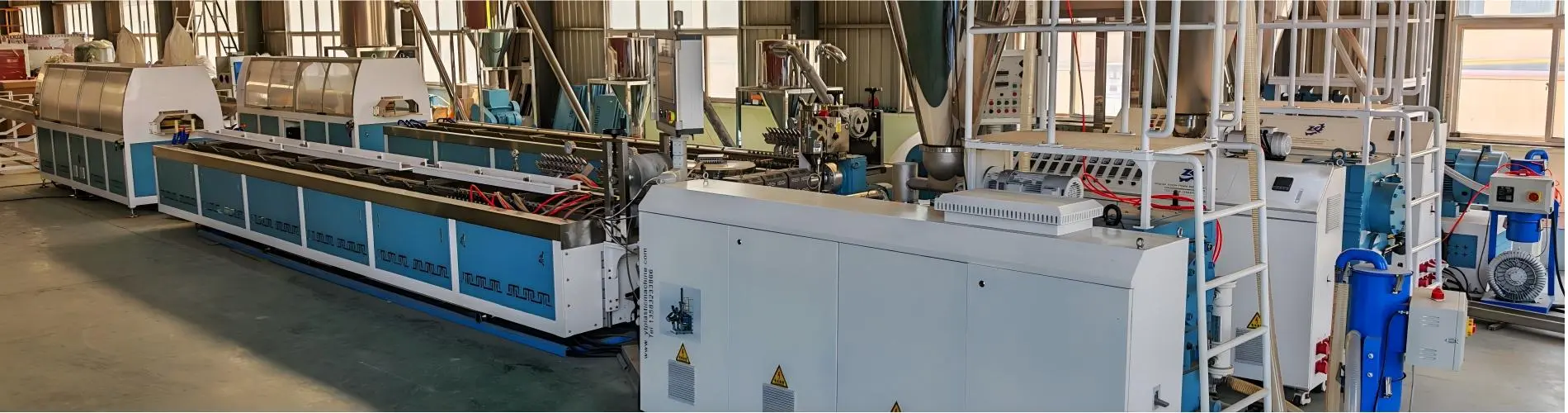
In summary, Yongte provides WPC manufacturing plant machinery for making WPC products that is stable and efficient, using recycled materials to create a product that looks like wood but has benefits of both wood and plastic. Our comprehensive solution, which one might say is quite complete, encompasses the entire process, starting from plastic recycling, which is the very first step, moving on to the preparation of wood powder, and then continuing to the mixing phase, followed by compounding, and then there is the extrusion part, and after that, we have embossing and surface finishing, and finally, we arrive at the stage of final stacking. This whole sequence of events allows our customers, those who wish to engage in this business, to set up a complete production facility dedicated to the creation of WPC decking, taking them from the raw materials, which are essential, all the way to the finished decking boards, which are the end product. Thus, it is a complete journey, if you will, from start to finish, covering all necessary aspects in a rather thorough manner.

Equipment list for WPC manufacturing plant
| No. | Equipment name | Unit. capacity | Functions |
| 1 | Plastic recycling machine | 300 kg/hour | it is used for recycling the plastic wastage into plastic flakes which can be used for making WPC products, the plastic can be PP or PE film/bottles/caps/cans, it includes the crushing, washing and drying process. |
| 2 | Wood powder making machine | 400 kg/hour | it is used for making wood material into 80-100 mesh wood powder, the wood material can be big wood,wood chips, wood sawdust,rice husk, rice straw, cotton straw, wheat straw, it includes the wood chipping, wood crushing, wood grinding and wood drying process |
| 3 | WPC mixing machine | 600 kg/hour | it is used for mixing plastic, wood and chemical additives according to the formulation, the wood content can be 60-70%. |
| 4 | WPC granulation machine | 500 kg/hour | it is used for the first time extrusion and composition the wood and plastic, with this WPC granulation process, it can ensure the wood and plastic material composited well and the final product strength will be good. |
| 5 |
WPC profile co extrusion machine |
150 kg/hour | it is used for the second time extrusion and composition the wood and plastic, it equip with the extrusion, molding and cooling system to make the WPC products into required size and shape, the customer can make different WPC products in this machine by changing the mold |
| 6 | online embossing machine |
|
it is used for making wooden pattern on the WPC products |
| 7 | WPC profile molds |
|
it will decide the size and shape of the WPC products |
| 8 | Sanding and brushing machine |
|
it is used for making rough surface on the WPC products |
Detailed pictures and production flow of WPC manufacturing plant
1, Plastic recycling machine
This system is specifically designed, one might say, for dealing with various kinds of waste plastic materials, which include but are not limited to items such as PP and PE waste plastic. This waste plastic can take the form of films, bottles, daily plastic refuse, and even offcuts from production processes. The functions of this system are quite numerous; it involves crushing the plastic into smaller pieces, washing these pieces to remove contaminants, drying them thoroughly, and then pelletizing the cleaned material to create granules that can be reused for various purposes, thus forming reusable plastic granules which can be put back into circulation.

2, Wood powder making machine:
This machine has the capability to process, in a manner of speaking, wood waste. The types of wood waste that it can handle include sawdust, wood chips, rice husk, straw, and other agricultural residues that are often left behind. The end product of this machine is a fine wood powder, with particle sizes that range from 80 to 100 mesh, achieving a stable particle size throughout the process. This powder is fine, and it is produced from various sources of wood waste, making it quite versatile in its applications.

3, Wood plastic WPC mixing machine:
This machine takes various materials like plastic granules, wood powder—up to about sixty or seventy percent, perhaps—and also some stabilizers, coupling agents, and various additives that are based on, well, your specific formula, to create a mixture. This ensures that the material quality remains consistent before it goes through the process of compounding, which is quite essential.

4, WPC granulation machine :
it is professional equipment specially used to produce wood-plastic composite WPC granules. it pelletizes the mixed materials. The purpose of this is to produce granules of WPC that are of high quality. This process makes sure that there is uniform plasticization during something called extrusion, which is, in fact, important for the next steps.

5, WPC decking extrusion machine:
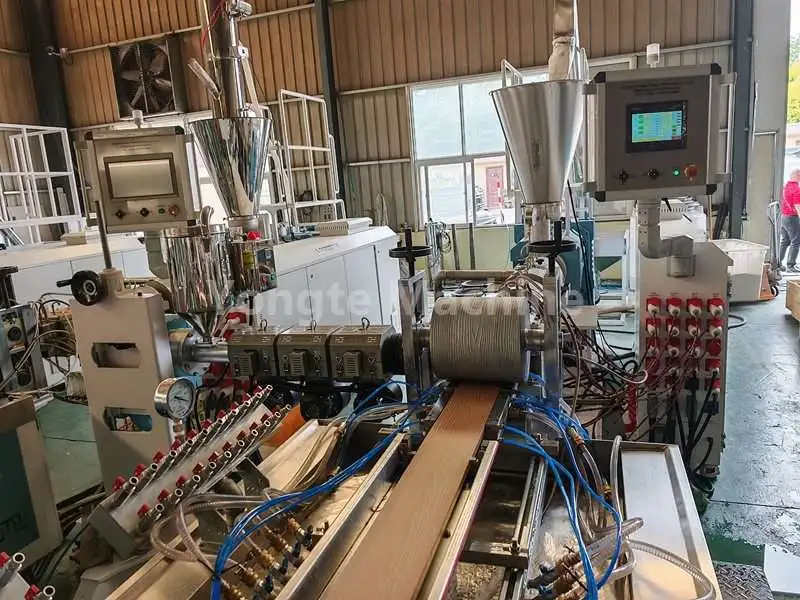
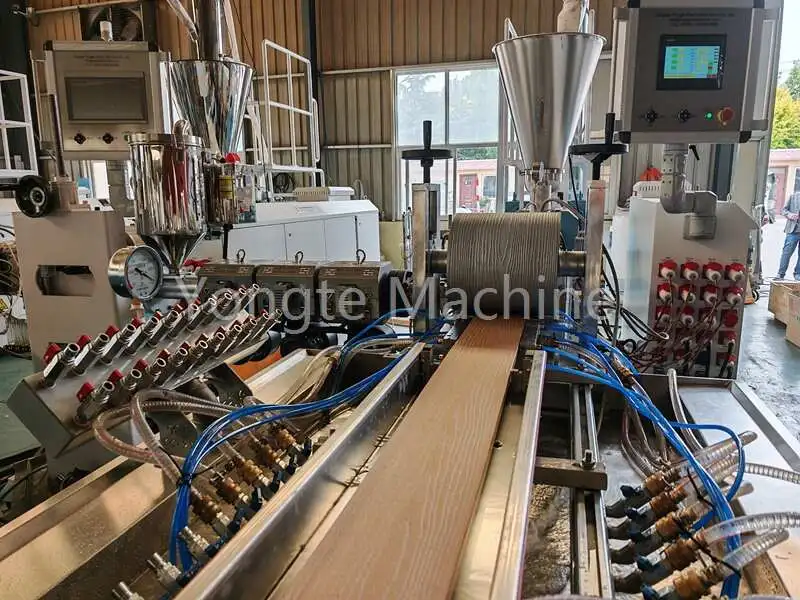
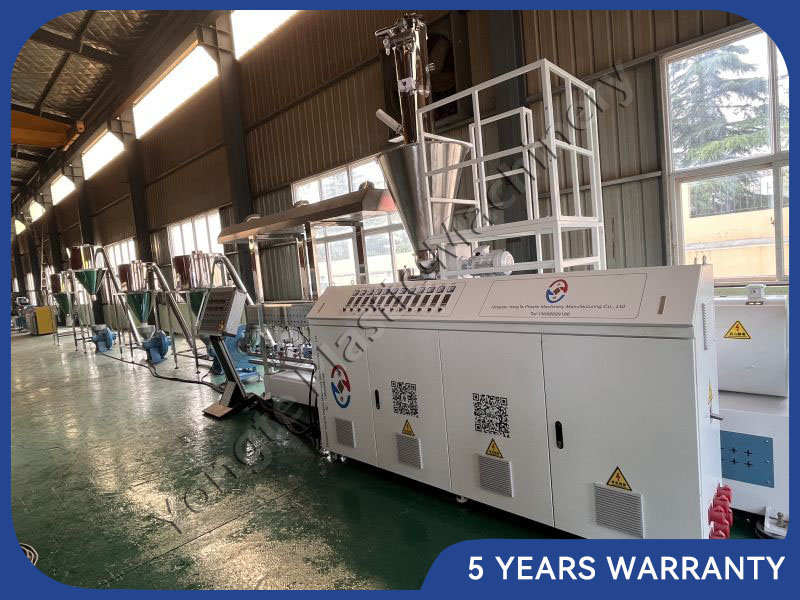
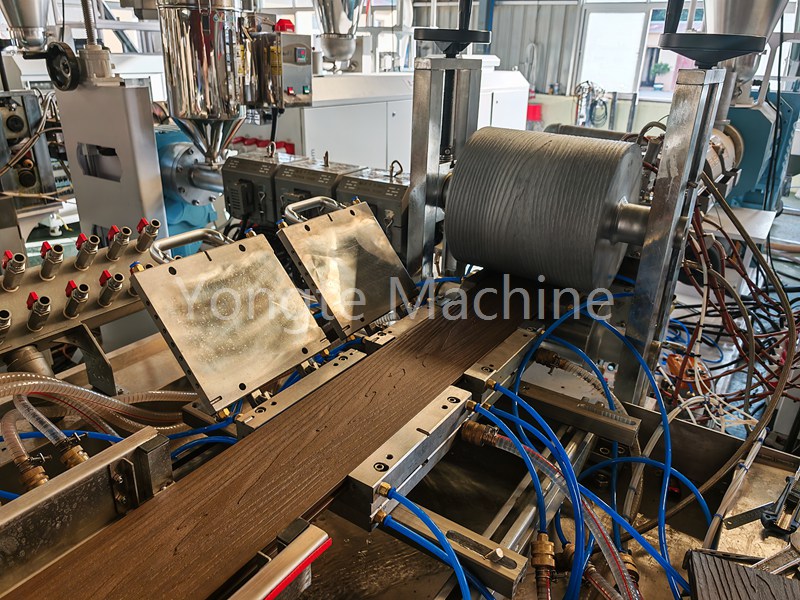
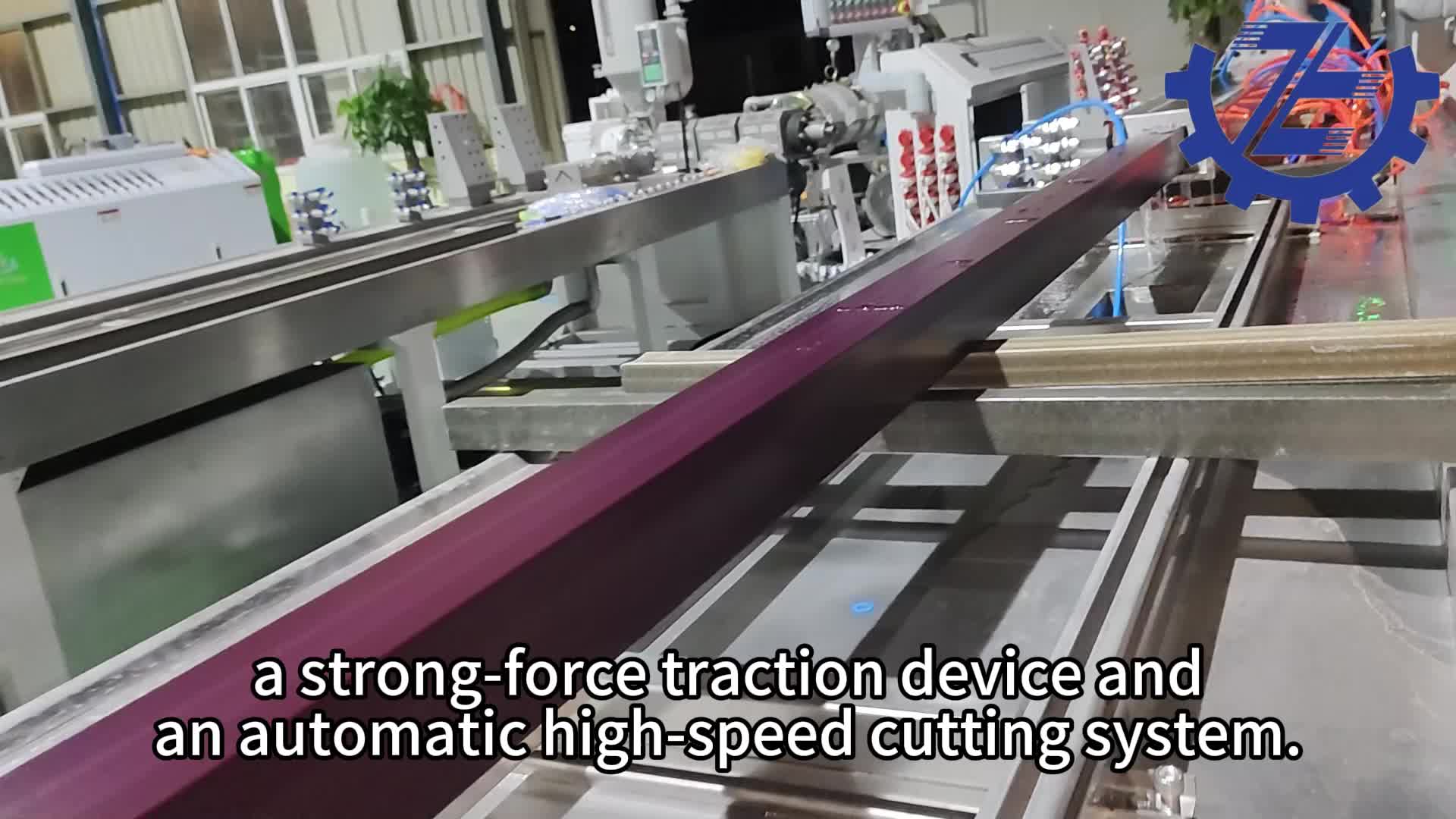
The Yongte WPC Decking Extrusion Line, output increased by 15–20% compared with standard WPC extrusion lines. it is really the core equipment in this entire production line setup. This line includes high effeiency conical twin-screw extruder, WPC decking molds, Calibration and cooling table, traction and cutting machine, automatic electric control system.
This whole setup, it supports the production of decking boards, which can be solid or hollow, depending on various factors. Temperature control. Yes, it is essential. And screw design, yes, that too matters a great deal. Not to forget the mold structure, which is also quite important, ensuring, or at least trying to ensure, a stable output. The output is supposed to have uniform density and an excellent surface finish, or so they claim.

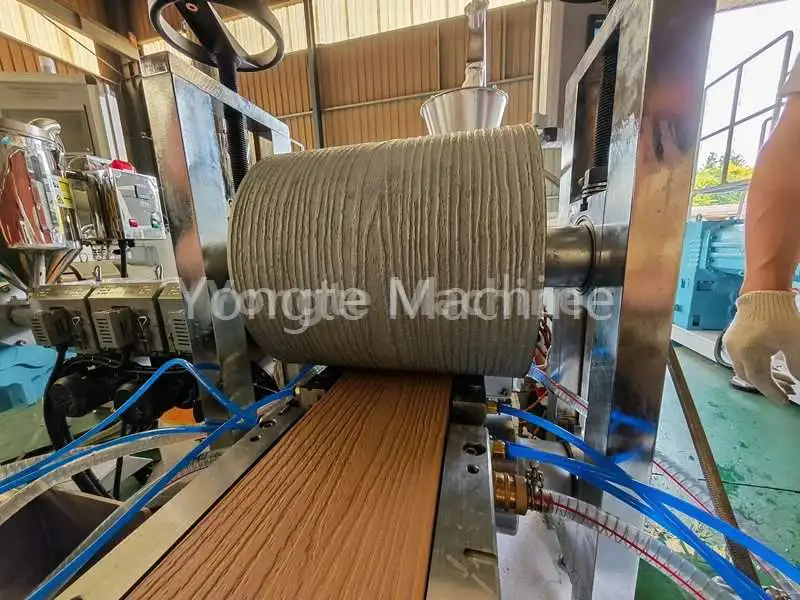
6, The WPC products can be processed for surface treatment by embossing machine, we have both online embossing machine and offline embossing machine. online embossing machine is equipped in the extrusion line after mold and before product cooling, so it can make very deep 3D embossing pattern, so it is good accepted by customers.

7, If customers like rough touching feeling of WPC surface, then sanding and brushing machine can work for it. there are many different types of sanding and brushing machine, we are professional to equip the right machine to customer according to his production requirements.

All of these WPC manufacturing plant machines and processes contribute to creating textures that resemble genuine wood, or so it is said. This, in turn, enhances aesthetics—this word is often used, isn’t it?—and also outdoor durability, which is quite necessary, especially for outdoor products. So, there you have it, a series of machines and processes, each with its own role, all working together in a somewhat chaotic manner to produce something that might resemble decking boards.
Application of WPC products
The WPC products that is made by our WPC manufacturing plant, which we have, is something that finds many uses in various places. It is often used for outdoor flooring, which is, in fact, outside, and also in gardens, which are places where plants grow and people like to walk. Then, we have parks, which are also outdoor spaces where one can enjoy nature, and swimming pool decks, which are around pools where people swim and relax.
Furthermore, this decking is suitable for public walkways, which are paths for everyone to walk on in a public setting. Balconies and terraces, those areas attached to buildings where people can stand outside, also benefit from this material. Then there is landscape architecture, which involves planning and designing outdoor spaces, and this decking can be part of that, too.
In addition, it can be used for fencing and railing systems, which are structures that help keep areas secure or provide boundaries. The stability of this decking, which means it does not easily break or change, along with its long lifespan, which is how long it lasts, makes it a good choice for many different kinds of projects, whether they are in residential areas, which are homes, or commercial areas, which are for business. So, it is quite versatile and fits into various outdoor projects.


Advantage of Yongte WPC manufacturing plant
The process shows high levels of efficiency and results remain consistent across production. This allows ongoing manufacturing with substantial output, and this approach appears suitable for medium to large-scale plants that produce wood plastic material. The process allows use of broad raw materials. These include plastic material that is recycled, specifically PP and PE, and also wood powder. The materials also include biomass from agriculture, and this biomass involves rice husk and straw and bamboo powder. The manufacturing approach provides eco-friendly production. The process repurposes plastic waste and wood waste, and this supports initiatives relating to circular economy.
Wood powder content typically 60–70% for stronger wood-like texture.The decking solutions that use wood plastic material provide robust performance. The boards that are completed display properties that are important for use. These demonstrate resistance to water and moisture. The boards contain agents that provide anti-corrosion protection and anti-termite protection. The material shows absence of cracks and deformation. The boards demonstrate steadiness when exposed to ultraviolet conditions, and this makes them suitable for external application. These require basic upkeep only.
A single WPC manufacturing plant provides various applications. Altering molds allows creation of different products. These include decking boards that use wood plastic material. The products include defence panels and wall covering. These also include handrails and pergolas. The machine produces profiles for garden furniture.
The support provided is comprehensive for turn-key operations. The provision includes design of plant layouts. This includes guidance on formula for raw materials. The support involves installing equipment and educating personnel. This also provides post-sale assistance and replacement components.
Related Category
WPC Profile Making Machine
WPC Door Making Machine
WPC Board Making Machine
WPC Auxiliary Processing Machine
Send Inquiry
Please Feel free to give your inquiry in the form below. We will reply you in 24 hours.