
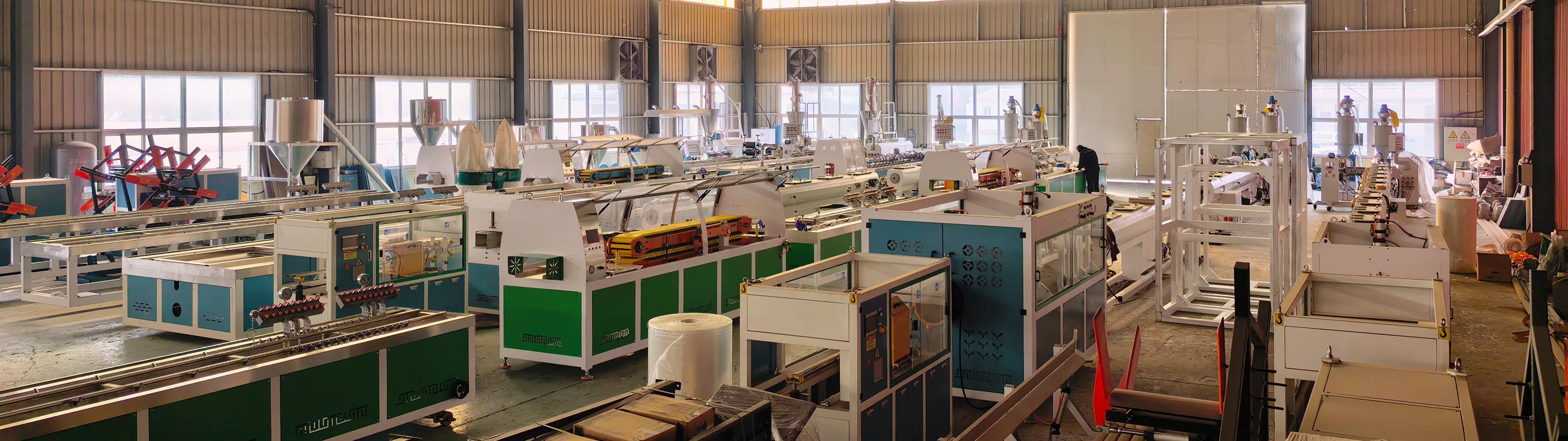
How Does a PE Pipe Production Line Improve Modern Pipe Manufacturing Efficiency?
Article Summary:
A PE Pipe Production Line plays a critical role in producing high-quality polyethylene pipes used in water supply, gas transportation, agricultural irrigation, mining, and industrial applications. This article explains how a modern PE pipe manufacturing system works, the challenges manufacturers commonly face, and how advanced production technologies help improve efficiency, product consistency, and long-term operational value. By understanding the key components, production process, and selection considerations, companies can make better decisions when investing in pipe extrusion equipment.
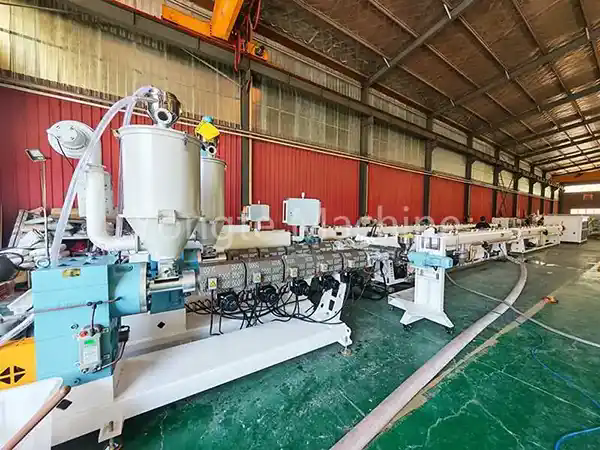
Table of Contents
- 1. Overview of PE Pipe Production Line
- 2. Why PE Pipe Production Lines Are Important
- 3. How Does a PE Pipe Production Line Work?
- 4. Main Components of a PE Pipe Production Line
- 5. Key Advantages of Using Advanced PE Pipe Production Equipment
- 6. Common Manufacturing Challenges and Solutions
- 7. How to Choose the Right PE Pipe Production Line
- 8. Why Choose Yongt PE Pipe Production Solutions
- 9. Frequently Asked Questions
1. Overview of PE Pipe Production Line
A PE Pipe Production Line is a complete extrusion system designed to manufacture polyethylene pipes with stable dimensions, excellent durability, and reliable performance. Polyethylene pipes have become an essential solution for many industries because they offer corrosion resistance, flexibility, lightweight properties, and long service life.
Unlike traditional metal piping systems, PE pipes do not easily suffer from rust or chemical corrosion. They are widely applied in municipal water projects, natural gas distribution networks, agricultural irrigation systems, drainage projects, and industrial fluid transportation.
The production quality of PE pipes depends heavily on the capability of the extrusion line. A well-designed production line ensures uniform pipe thickness, smooth inner and outer surfaces, accurate diameter control, and efficient manufacturing output.
2. Why PE Pipe Production Lines Are Important
The increasing demand for reliable pipeline solutions has encouraged manufacturers to improve production technology. A PE Pipe Production Line allows factories to achieve continuous production while maintaining strict quality standards.
For pipe manufacturers, production efficiency directly influences competitiveness. An outdated system may cause problems such as unstable extrusion speed, inconsistent pipe dimensions, excessive material waste, and increased maintenance costs.
| Manufacturing Challenge | Impact on Production | Production Line Solution |
|---|---|---|
| Uneven pipe thickness | Reduced pipe strength and quality issues | Precise extrusion control system |
| High energy consumption | Increased operating expenses | Energy-efficient motors and heating systems |
| Material waste | Higher production costs | Optimized material feeding technology |
| Low production speed | Reduced factory capacity | Automated continuous extrusion process |
3. How Does a PE Pipe Production Line Work?
A PE Pipe Production Line operates through several coordinated stages. Each stage is designed to transform raw polyethylene materials into finished pipes that meet application requirements.
-
Raw Material Feeding:
Polyethylene resin is supplied into the extrusion system through an automatic feeding device. Proper feeding ensures stable material flow and consistent production. -
Plasticizing and Extrusion:
The extruder heats and melts polyethylene materials before pushing them through the specially designed die head. The extrusion process determines the basic pipe shape and quality. -
Pipe Forming:
The molten PE material enters the mold and forms a continuous pipe structure with accurate diameter and wall thickness. -
Cooling and Calibration:
The pipe passes through vacuum calibration tanks and cooling tanks. This process helps maintain dimensional accuracy and improves surface quality. -
Hauling and Cutting:
The haul-off unit controls the movement speed of the pipe, while cutting equipment produces pipes according to required lengths. -
Collection and Inspection:
Finished pipes are collected and inspected to ensure they meet customer specifications.
4. Main Components of a PE Pipe Production Line
A complete PE pipe manufacturing system consists of multiple machines working together. Each component influences production efficiency and final product performance.
| Component | Main Function |
|---|---|
| Extruder | Melts and transports polyethylene material to create continuous pipe output. |
| Die Head | Controls pipe shape, size, and material distribution. |
| Vacuum Calibration Tank | Maintains accurate pipe dimensions during forming. |
| Cooling Tank | Rapidly cools pipes and improves structural stability. |
| Haul-Off Machine | Provides stable pulling force for continuous production. |
| Cutter | Cuts pipes into required lengths. |
| Control System | Monitors production parameters and improves automation. |
5. Key Advantages of Using Advanced PE Pipe Production Equipment
Modern PE Pipe Production Line technology provides significant benefits for manufacturers looking to improve productivity and product reliability.
- Higher Production Efficiency: Continuous extrusion technology reduces downtime and improves output capacity.
- Better Product Consistency: Advanced control systems help maintain stable pipe dimensions throughout production.
- Lower Material Waste: Accurate processing reduces unnecessary consumption of raw materials.
- Longer Equipment Service Life: Reliable components and optimized designs reduce maintenance requirements.
- Flexible Production Capability: Manufacturers can produce different pipe sizes according to market demands.
6. Common Manufacturing Challenges and Solutions
Although PE pipe manufacturing has many advantages, producers may still experience operational challenges. Selecting suitable equipment and optimizing production processes are important for overcoming these problems.
| Problem | Possible Cause | Recommended Solution |
|---|---|---|
| Pipe surface defects | Incorrect temperature control or unstable extrusion | Adjust processing parameters and improve equipment control |
| Diameter deviation | Calibration problems | Optimize vacuum calibration and cooling processes |
| Frequent machine shutdown | Poor equipment reliability | Choose professional manufacturing equipment |
| High operating costs | Low automation level | Upgrade to efficient production systems |
7. How to Choose the Right PE Pipe Production Line
Selecting suitable pipe extrusion equipment requires careful consideration of production requirements, pipe specifications, and future business development.
- Production Capacity: Choose equipment according to expected output requirements.
- Pipe Size Range: Confirm that the machine supports the required diameter range.
- Material Compatibility: Ensure the system can process different grades of polyethylene materials.
- Automation Level: Higher automation can reduce labor requirements and improve stability.
- Technical Support: Reliable after-sales service helps maintain long-term operation.
8. Why Choose Yongt PE Pipe Production Solutions
Yongt focuses on providing advanced plastic extrusion equipment designed to support efficient and stable pipe manufacturing operations. With professional experience in extrusion technology, Yongt develops PE Pipe Production Line solutions that help customers improve production efficiency, maintain consistent product quality, and reduce operational challenges.
The equipment solutions provided by Yongt are designed with practical manufacturing requirements in mind, including stable performance, convenient operation, and adaptability for different production environments.
By combining reliable machinery design with customer-focused service, Yongt helps pipe manufacturers build efficient production systems suitable for competitive markets.
9. Frequently Asked Questions
Q1: What materials can a PE Pipe Production Line process?
A PE Pipe Production Line mainly processes polyethylene materials such as HDPE and MDPE. Different material grades can be selected according to application requirements.
Q2: What industries use PE pipes?
PE pipes are widely used in water supply, gas transportation, irrigation, mining, drainage, and industrial pipeline systems because of their durability and corrosion resistance.
Q3: How can manufacturers improve PE pipe production efficiency?
Manufacturers can improve efficiency by using advanced extrusion equipment, optimizing production parameters, maintaining machines regularly, and selecting reliable production line suppliers.
Q4: What factors affect PE pipe quality?
Pipe quality depends on raw materials, extrusion temperature, cooling accuracy, machine stability, and production control systems.
Q5: Why is automation important in PE pipe manufacturing?
Automation improves production stability, reduces manual errors, increases output efficiency, and helps manufacturers maintain consistent product quality.
Conclusion
A reliable PE Pipe Production Line is essential for manufacturers who want to produce high-quality polyethylene pipes efficiently. From material processing and extrusion to cooling, cutting, and inspection, every stage affects final product performance.
Choosing advanced equipment from an experienced supplier can help businesses reduce production challenges, improve operational efficiency, and achieve long-term manufacturing benefits.
Yongt provides professional PE pipe extrusion solutions designed to meet different production requirements. If you are looking for reliable equipment, customized solutions, and professional technical support, please contact us today to discuss your PE pipe production needs and discover the right solution for your business.