
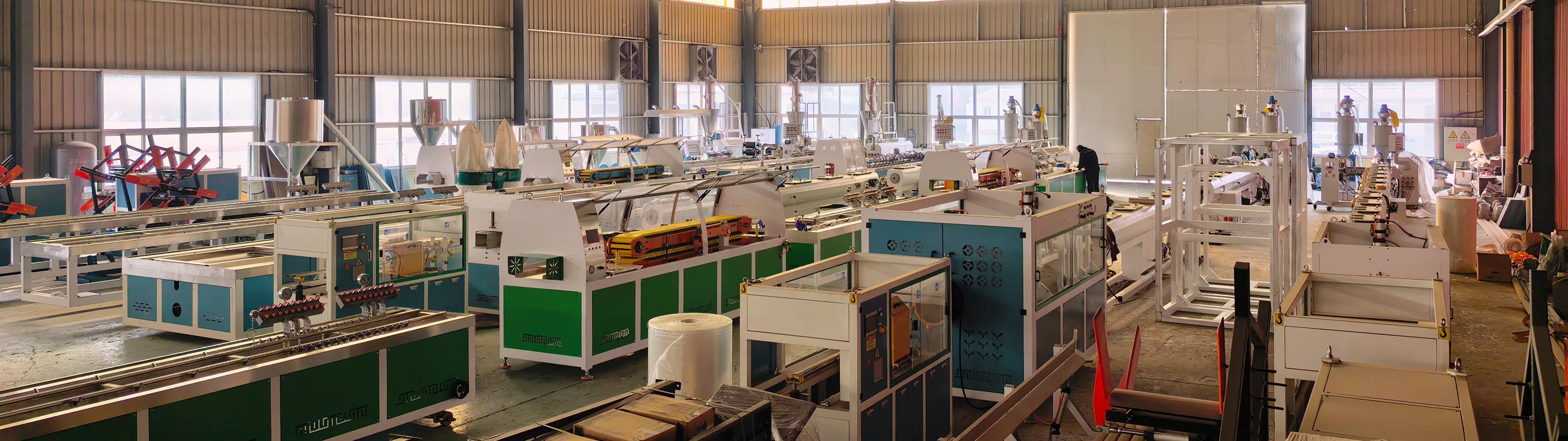
Core technologies of Yongte's plastic recycling and reuse solution
What are the core technologies of Yongte's plastic recycling and reuse solutions?
Qingdao Yongte Plastic Machinery Co., Ltd. has developed a comprehensive plastic recycling and reuse solution, with its core technologies focusing on critical processes such as plastic waste regeneration, including mixing, extrusion, molding, and modification. The system is adaptable to various raw materials, including recycled plastics combined with wood powder, glass fiber, used clothing, pure plastic waste, and rubber-plastic blends. Integrated with energy-saving and automated design, it ensures both product quality and production efficiency. The core technologies are categorized into four key areas: extrusion molding technology, raw material composite modification technology, molding and shaping process technology, and energy-efficient intelligent control technology. Each technology is specifically optimized to address the processing challenges of recycled waste, as detailed below:
1. Core Technology of Conical Double Screw Extrusion: Efficient Plasticizing Mixing of High-Filling Regenerated Raw Materials
This constitutes the core technology of Yongte's recycling and reuse solution. All key equipment in the production line are equipped with high-performance conical twin-screw extruders, specifically engineered for processing high-filling, high-viscosity, and complex material compositions like recycled plastics. These extruders effectively address issues in traditional extrusion equipment, including uneven material mixing, suboptimal plasticization, and low product precision during waste processing. Core advantages:
1. High-shear mixing: The tapered screw's variable-diameter design generates enhanced shear forces, effectively breaking down wood flour, glass fibers, and waste textile fibers to facilitate their thorough integration with recycled plastic matrices. This system supports composite formulations with up to 70% wood flour combined with recycled PP/PE or waste glass fibers/waste textiles, while efficiently processing high-filling (40%-60%) recycled PVC raw materials.
2. Low-degradation plasticization: Through a precision temperature control system and optimized screw compression ratio design, this process prevents localized overheating-induced degradation of raw materials during plasticization of recycled plastics. It also effectively removes volatile components and gases from waste materials, thereby enhancing the density and durability of recycled products.
3. High adaptability: The modular screw element assembly design allows flexible adjustments based on waste types (e.g., pure plastic waste, plastic + wood powder, film bag waste) without requiring complete equipment replacement. This design accommodates diverse raw material recycling categories for different clients, thereby shortening the process debugging cycle.
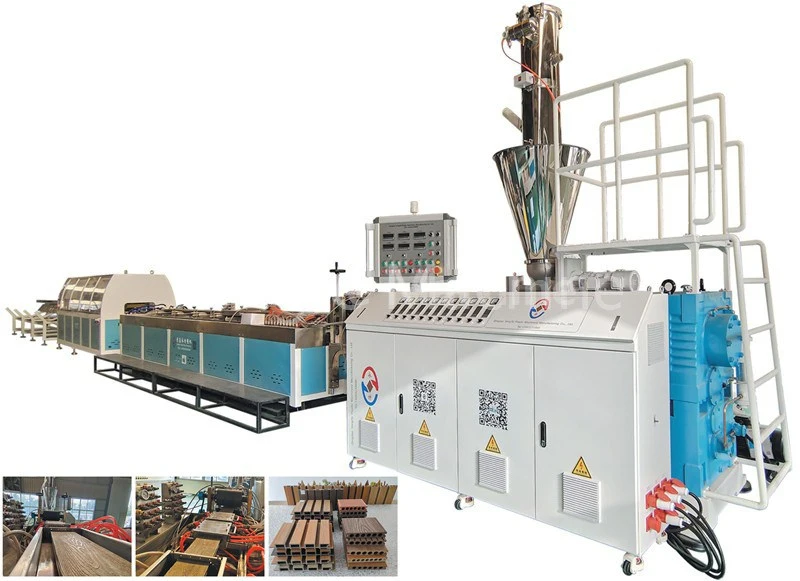
II. Multi-category Raw Material Composite Modification Technology: Expanding the Utilization Boundaries of Recycled Waste
To address the unique characteristics of different plastic waste types, Yongte has developed specialized composite modification technologies that transform low-value waste into high-value products. The core technologies encompass three key areas:
1. Customized Wood-Plastic Composite (WPC) formulation technology: The system dynamically adjusts the ratio of recycled PP/PE plastics to wood powder and calcium carbonate fillers in response to global raw material cost fluctuations, while optimizing interfacial bonding processes. This enables WPC products to combine wood grain with the weather resistance and waterproofing properties of plastics, meeting the stringent standards of the construction industry.
2. Waste Glass Fiber/Waste Clothing Co-recycling Technology: Through specialized mixing processes, this technology integrates waste glass fiber, waste clothing, and recycled plastics to address the challenge of uneven material blending. For instance, incorporating waste glass fiber into WPC flooring enhances the mechanical strength of the product. Similarly, combining waste clothing with plastic to produce WPC building materials enables the synergistic recycling of textile and plastic waste.
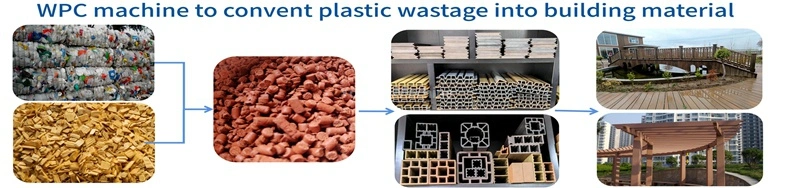
3. Rubber-plastic blending molding technology: For mixed raw materials of waste rubber powder and plastic waste, we have developed a specialized plasticizing process to ensure full integration of both waste materials. This produces rubber irrigation pipes with nano-porous foam structure, guaranteeing stable water permeability and toughness of the pipes.
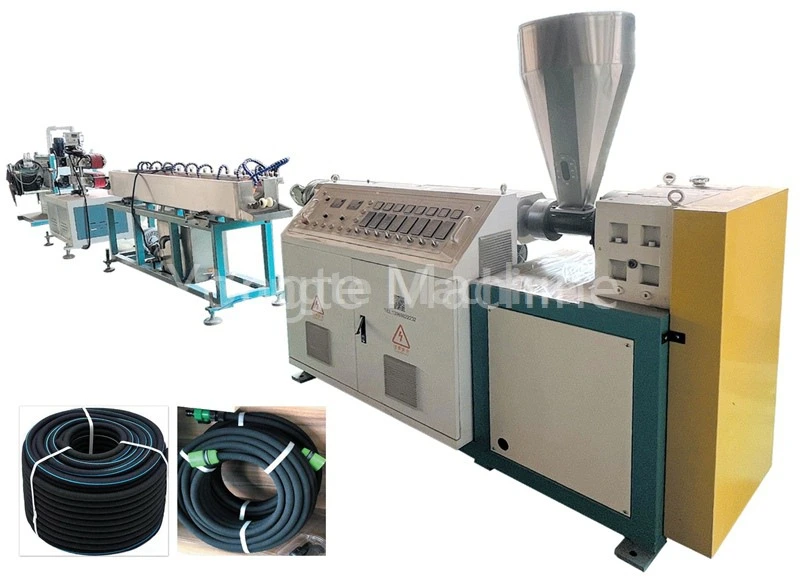
III. High-Precision Molding and Stamping Technology: Ensuring Dimensional and Performance Compliance of Recycled Products
Recycled plastic waste contains complex components, often causing dimensional deviations and poor molding quality in products. Yongte addresses this challenge through specialized molds and advanced cooling technology for precise shaping. Core technology:
1. Precision Molds and Multi-Cavity Forming Technology: Custom-developed molds for recycled product manufacturing, including four-cavity molds for 10mm-diameter hollow WPC pipes and molds for PVC/PPR pipes of various specifications, ensuring dimensional accuracy in single-step molding. The PPR pipe production line achieves ±1mm precision cutting, meeting industry standards for water supply, drainage, and heating pipelines.
2. Vacuum sizing + High-efficiency water cooling technology: Featuring a high-efficiency vacuum sizing system and rapid water cooling system, this technology ensures quick shaping of extruded recycled pipes and profiles, minimizing deformation. For example, the WPC door frame production line customized for Indian clients utilizes this technology to rapidly cool solid products over 50mm thick, boosting production efficiency by 30%.
3. Multi-layer co-extrusion and surface modification technology: In the production of WPC wall panels, flooring, and other products, multi-layer co-extrusion technology is employed to create UV-protective surfaces, enhancing the UV resistance and aging resistance of recycled products. Concurrently, online 3D embossing technology is integrated to achieve customized wood grain surface formation, improving the appearance and utility value of high-value recycled products.
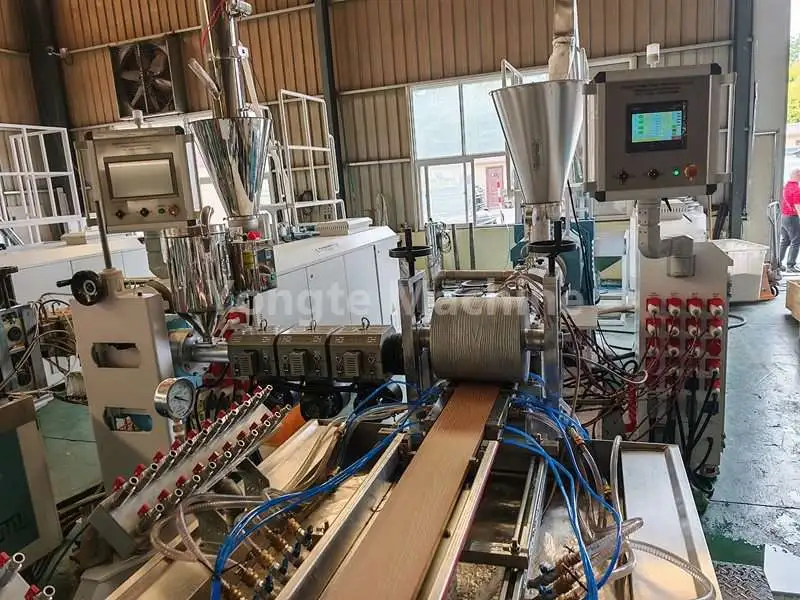
IV. Energy-saving Automation and Intelligent Control Technology: Reducing Energy Consumption and Operational Threshold in Regenerative Processing
To address the cost control needs of recycling and processing enterprises, Yongte integrates energy-saving technologies and high-automation control into its core equipment, while also meeting the operational requirements of small and medium-sized processing enterprises. Core technologies:
1. Servo motor energy-saving drive technology: Core equipment (e.g., PPR pipe production lines) equipped with servo motors achieves 15-20% energy savings while enhancing operational stability and ensuring batch consistency of recycled products.
2. Full-process automation technology: An integrated system featuring automatic feeding, mixing, extrusion, traction, and cutting reduces manual intervention while meeting continuous production demands for recycled material processing. Examples include fully automated continuous operations for plastic lumber production lines and PVC pipe manufacturing lines.
3. Nanoporous foam structure molding technology: In the production of rubber irrigation pipes, specialized process control is employed to achieve a uniform nanoporous foam structure in the pipes, ensuring stable water permeability while reducing raw material consumption and further lowering recycling and processing costs.
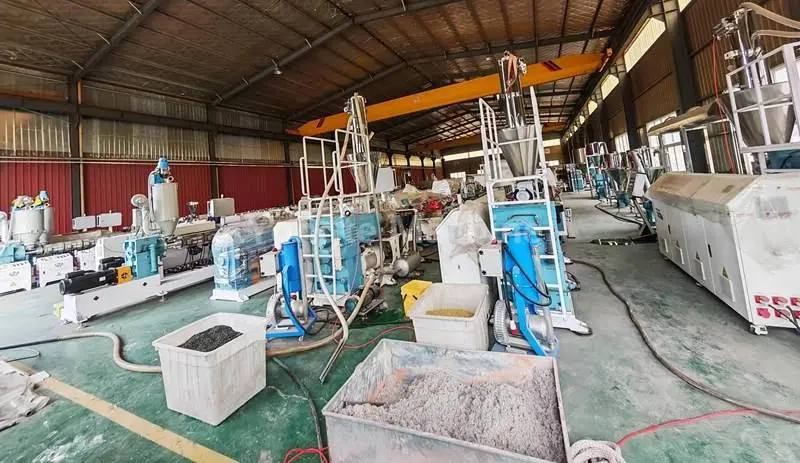
V. Core Technology of Granulation Pretreatment: Providing High-Quality Raw Materials for Regenerated Extrusion
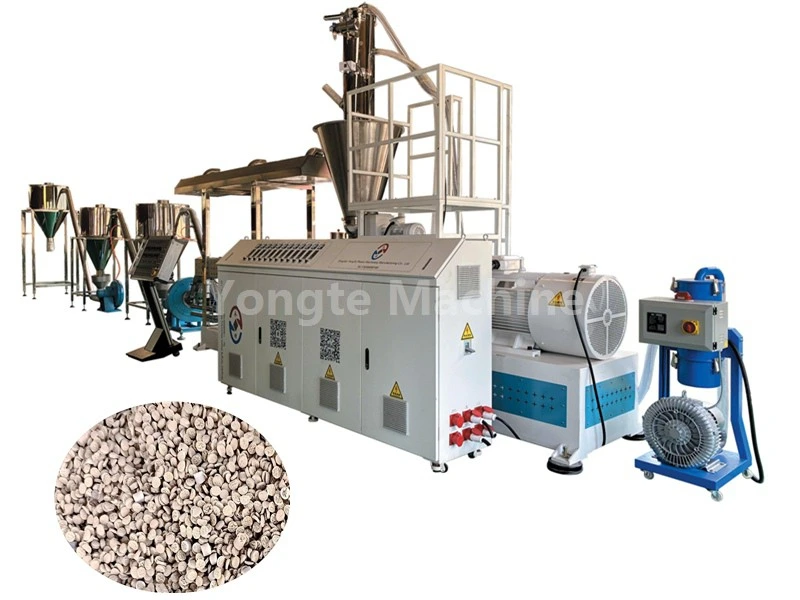
For the preliminary processing of various plastic waste materials, Yongte's WPC pelletizing machines (e.g., Model SH75) are equipped with proprietary pelletizing technology, serving as a critical pre-treatment step in recycled extrusion. Key advantages:
1. High-capacity uniform granulation: Produces 400-500kg/h of recycled WPC pellets with exceptional uniformity, effectively preventing extrusion molding issues caused by uneven raw material particle sizes.
2. Direct processing of waste: The recycled PP/PE plastic blended with 70% wood powder can be directly pelletized without complex pretreatment, reducing processing costs and providing high-quality, easy-to-process recycled material for subsequent extrusion molding.
Through synergistic integration of these core technologies, Yongte has developed a comprehensive end-to-end plastic recycling system. This solution effectively addresses industry pain points including complex composition of recycled plastic waste, processing challenges, and substandard product quality. By implementing energy-efficient automation designs, the system significantly reduces processing costs. Furthermore, through technological innovations such as customized formulations and expanded raw material boundaries, it enables large-scale, high-value utilization of diverse plastic waste. These capabilities form the cornerstone of Yongte's solution, which not only helps clients reduce costs amid rising virgin plastic raw material prices but also achieves a win-win balance between environmental protection and economic benefits.