
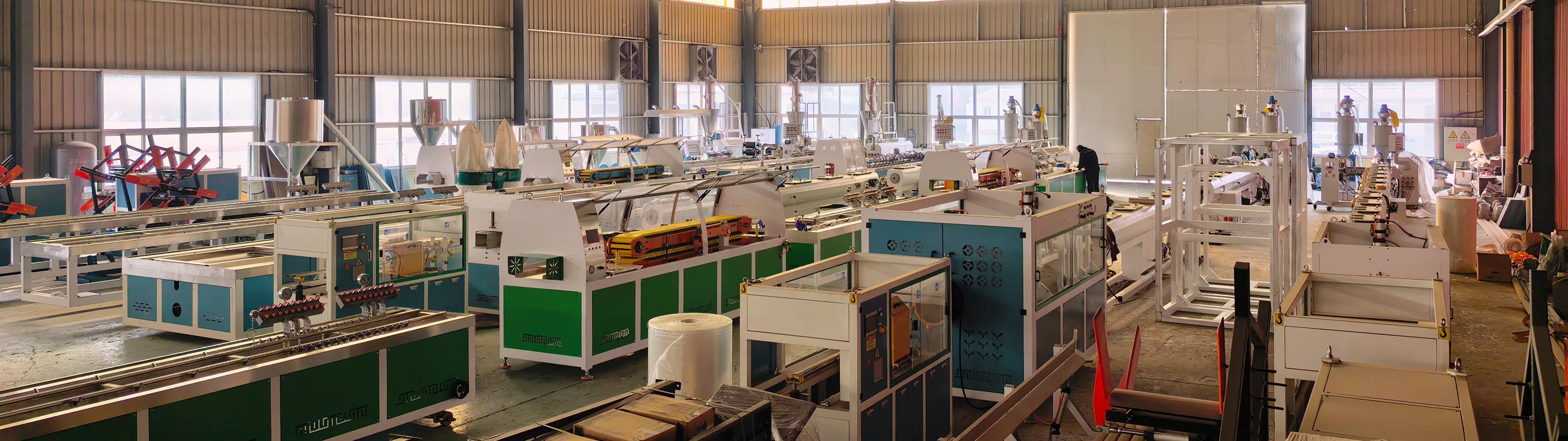
How to Maintain PPR Pipe Extrusion Machine?
How to Maintain PPR Pipe Extrusion Machine: Practical Tips for Fault Prevention and Longevity
PPR pipe extrusion machines are the core equipment in plastic pipe production, and their stable operation directly affects production efficiency and product quality. However, many manufacturers overlook scientific maintenance, leading to frequent failures, reduced output, and shortened equipment lifespan. Industry experts point out that proper daily maintenance can reduce 70% of common faults and extend the machine’s service life by 50%. Here are practical maintenance guidelines for PPR pipe extrusion machine users.
Daily Maintenance: The Foundation of Stable Operation
Daily maintenance should be carried out in three stages: pre-operation check, in-operation monitoring, and post-operation cleaning, which takes only 15-20 minutes but ensures safe production.
- Before starting the machine, focus on two key points: lubrication and tightness. Check the lubricating oil level of the reducer and extrusion motor—if it is below the standard line, add No. 46 mechanical oil in time. For the screw, barrel, and guide rail, apply high-temperature resistant lubricating grease to avoid dry friction. At the same time, inspect the connecting bolts of the feed hopper, die head, and cutting device; tighten any loose parts to prevent vibration during operation.
- During operation, real-time monitoring of parameters is essential. Through the PLC control screen, track the temperature of each section of the barrel (which should be stable at 180-220℃ for PPR materials) and the extrusion pressure. If the temperature fluctuates by more than ±5℃ or the pressure suddenly rises, stop the machine for inspection immediately to avoid material carbonization or screw jamming. Additionally, observe the uniformity of the pipe surface—abnormalities such as pitting or unevenness may indicate blockage in the die head, requiring timely cleaning.
- After shutting down, thorough cleaning is a must. Empty the remaining raw materials in the feed hopper and barrel to prevent PPR from solidifying and adhering to the screw. Use a copper brush to clean the die head and sizing sleeve, avoiding hard tools that scratch the inner wall. Finally, wipe the machine surface with a dry cloth and cover it with a dust cover to prevent dust accumulation.
Fault Prevention: Targeted Solutions for Common Issues
Most faults of PPR pipe extrusion machines are predictable and preventable. Blockage of the die head and abnormal heating are the two most frequent problems, and targeted prevention is effective.
To prevent die head blockage, strictly control the quality of raw materials. Screen out impurities and agglomerated PPR particles before feeding, and avoid mixing recycled materials with a moisture content exceeding 0.03%. For machines that have been shut down for more than 8 hours, preheat the barrel for 30 minutes before restarting to ensure the residual material is fully melted.
For abnormal heating, regularly check the heater and thermocouple. Replace aged heating rings every 6-8 months, and calibrate the thermocouple monthly to ensure accurate temperature measurement. If the cooling system fails, such as weak water flow in the sizing sleeve, clean the water pipe and filter in time to prevent scaling from affecting heat dissipation.
Lifespan Extension: Focus on Key Components
The service life of a PPR pipe extrusion machine depends on the maintenance of key components. The screw and barrel, as the core parts, should be inspected every 3 months. If there are obvious scratches or wear on the screw surface, use a grinding machine for repair; the inner wall of the barrel should be measured for diameter—when the wear amount exceeds 0.5mm, it needs to be replaced to ensure plasticizing effect.
The cutting knife and bearing are vulnerable parts. Replace the cutting knife every 2-3 months to ensure smooth pipe cutting. For the bearing of the traction device, add lubricating oil once a week and replace it completely every year. In addition, conduct a comprehensive overhaul every 6 months, including checking the electrical lines, replacing aging wires, and testing the sensitivity of the emergency stop button.
“Scientific maintenance is not an additional cost but an investment in efficiency,” said a senior engineer from a leading PPR equipment manufacturer. By adhering to standardized daily maintenance and targeted fault prevention, manufacturers can significantly reduce maintenance costs and ensure the PPR pipe extrusion machine maintains high-efficiency operation for a long time.