Waste Wood Recycling and Reusing Solution
Waste Wood Recycling and Reusing Solution
Yongte WPC Equipment: Realize Circular Regeneration of Waste Wood & Recycled Plastics
Abstract
Yongte wood-plastic composite (WPC) full production plant are customized for the resource recovery of all kinds of waste wood biomass, perfectly matching recycled PP/PE/ABS plastics, agricultural film scraps, and industrial fiber waste. We provide one-stop turnkey equipment integrating waste wood crushing, grinding, drying, compound granulation and profile extrusion, building a complete closed-loop circular economy system that converts low-value waste wood residues into high-strength, long-service-life WPC finished products. This article elaborates the core material adaptability, full-process production flow and unique application advantages of Yongte waste wood recycling WPC production lines.
1. Introduction: The Urgency of Waste Wood Recycling & WPC Industrial Value
Every year, the global timber processing, construction, agriculture and furniture industries generate hundreds of millions of tons of waste wood resources, including sawmill sawdust, discarded building wood, waste furniture panels, crop straw, rice husk and bamboo scraps. Most lignocellulosic waste is directly landfilled, incinerated or discarded, causing huge biomass resource waste and carbon pollution. Meanwhile, waste glass fiber and mixed plastic scraps from manufacturing bring extra industrial disposal pressure.
WPC composite technology provides a green circular solution: it takes massive waste wood fiber as the main reinforcing filler, matched with recycled plastic matrix, to produce new eco-composite materials. Compared with pure solid wood manufacturing, the WPC production route drastically cuts deforestation demand, slashes overall carbon emissions by about 30%, and maximizes the reuse of waste biomass and plastic waste.
As a top Chinese manufacturer specializing in extrusion and WPC machinery, Yongte independently develops dedicated recycling equipment to process diverse waste wood raw materials into high-value WPC profiles such as outdoor decking, guardrails, garden facilities and building decorative boards.
2. Core Raw Material Compatibility: All Waste Wood Resources Processable by Yongte WPC Equipment
Yongte’s screw and barrel structure are customized for high-filler wood fiber formula, with ultra-wide adaptability to various waste biomass and auxiliary recycled plastic materials:
2.1 All Categories of Waste Wood & Agricultural Biomass (Main Filler, 50%–70% Formula Ratio)
- Timber processing waste: Sawdust, wood shavings, offcuts, discarded wood pallets, waste furniture panels, construction formwork scraps
- Agricultural lignocellulosic waste: Rice husk, wheat straw, corn stalk, bamboo scraps, palm fiber, fruit branch residues
- Other biomass waste: Broken garden pruning wood, waste log leftovers
2.2 Recycled Plastic & Industrial Auxiliary Waste (Matrix Carrier, 20%–40% Formula Ratio)
- Rigid recycled plastics: Waste PP/PE bottles, damaged plastic containers, industrial hard plastic scraps, ABS electronic shell waste
- Flexible plastic waste: Waste agricultural mulch film, shopping bags, packaging LDPE/LLDPE film
- Industrial fiber waste: Glass fiber leftover scraps, composite material trimming waste, wind turbine blade fiber waste
2.3 Key Technical Advantage
The Yongte WPC production line tolerates mixed recycled plastic raw materials with impurity content up to 5% after pre-cleaning; mixed waste wood of different tree species and mixed straw biomass can be directly fed without strict classification, greatly lowering pre-processing labor and sorting costs.
3. Turnkey Closed-Loop Process: Waste Wood → High-Quality WPC Finished Products
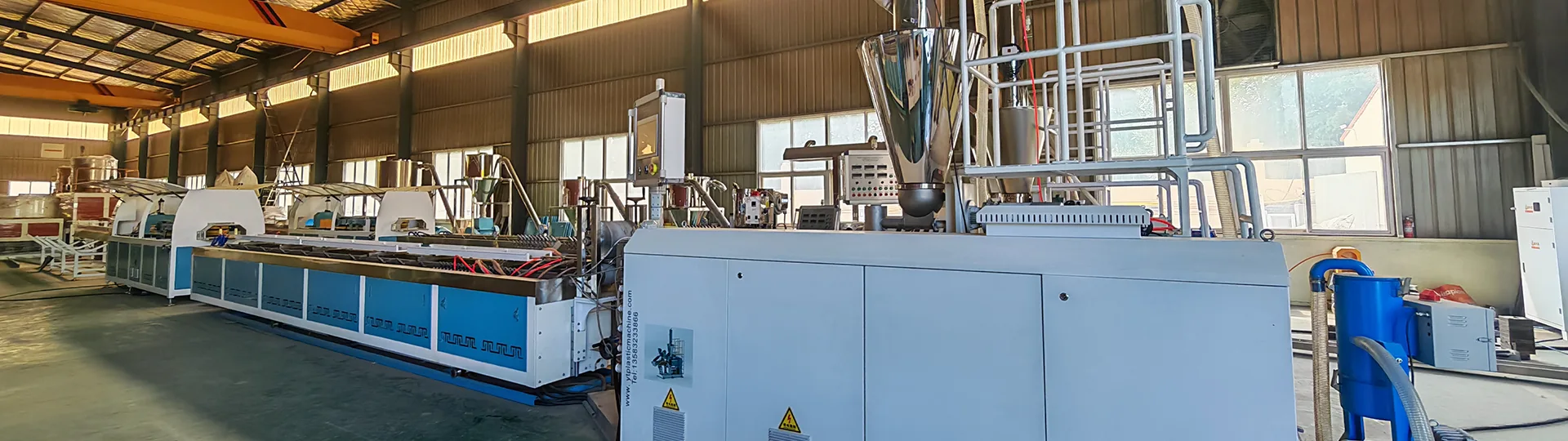
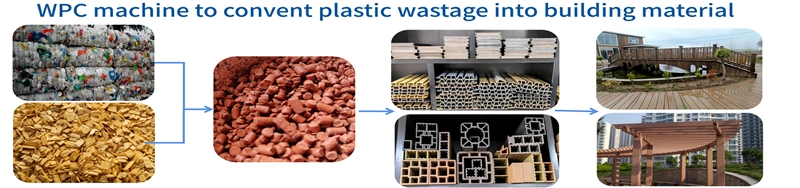
Yongte delivers a full-chain integrated solution covering waste wood pretreatment to finished profile cutting and surface finishing, achieving smooth automatic material transportation and minimal material loss during production.
3.1 Step 1: Waste Wood Pretreatment (Coarse Crushing → Fine Grinding → Washing & Drying)
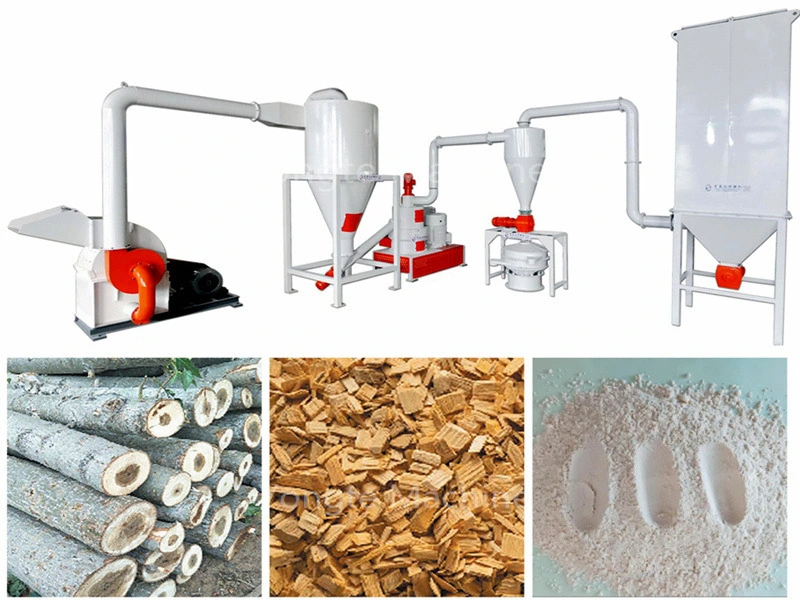
- Coarse crushing: Heavy-duty wood shredders break large waste wood boards, pallets and branches into uniform wood chips of 5–10mm
- Fine grinding: Special wood flour pulverizer processes wood chips into 40–100 mesh fine wood flour suitable for WPC compounding
- drying: double barrel drying system reduces wood flour moisture to ≤2%, which eliminates bubbling, stratification and cracking defects in subsequent extrusion molding
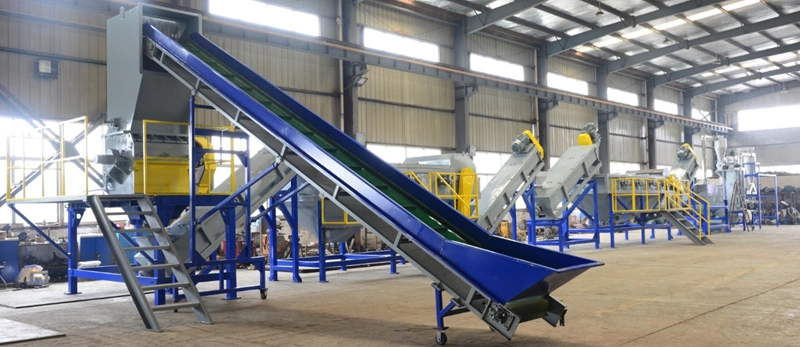
3.2 Step 2 : Waste Plastic Pretreatment (Crushing → Washing → Drying)
- Crushing: High-speed shredders reduce plastic films, rigid scraps, and glass fiber waste into 5–10mm flakesYongte.
- Washing: Friction washers and floating separation tanks remove dirt, adhesives, and non-plastic contaminants (e.g., paper, metal).
- Drying: Squeeze dryers and hot-air ovens lower moisture content to ≤2% (critical for preventing WPC bubbling during extrusion)Yongte.
3.3 Step3: High-Speed Mixing & WPC Compounding Granulation
-
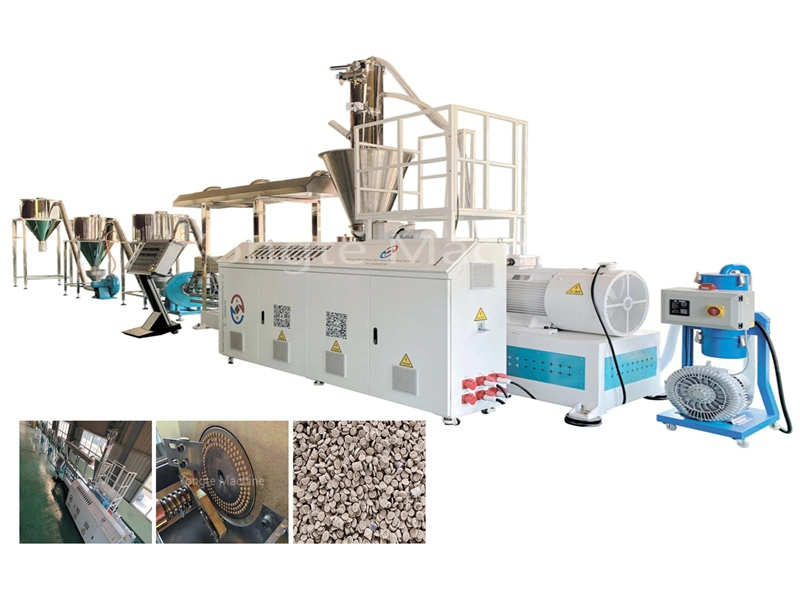
High-speed thermal mixing: Uniformly blend processed waste wood flour (50–70%), recycled plastic flakes (20–40%) and functional additives (coupling agent, PE wax, stearic acid, anti-UV stabilizer)
-
Parallel twin-screw granulation unit: Melt and homogenize the wood-plastic mixture at constant temperature 150–190°C, cut into uniform, stable WPC composite pellets for standby extrusion
3.4 Step 4: WPC Profile Co-Extrusion & Post Finishing
-
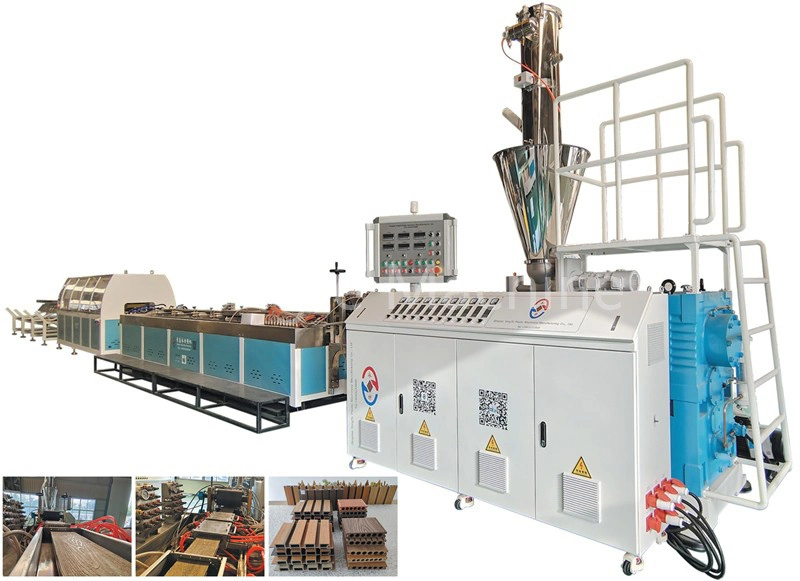
Co-extrusion molding: Single/twin-screw main extruder processes WPC pellets into solid/hollow profiles; co-extrusion head covers a compact wear-resistant surface layer to boost weather resistance and texture
-
Online Embossing for 3D wooden pattern: Achieved through advanced thermal pressing technology, this process replicates the natural grain and texture of real wood with remarkable precision. The embossed surface not only enhances visual depth but also provides improved slip resistance, making it ideal for outdoor applications such as decks, patios, and pool surrounds. Unlike traditional printing methods, online embossing integrates the pattern during production, ensuring long-lasting durability without peeling or fading over time.
-
Cooling calibration & automatic cutting: Water cooling vacuum shaping tank fixes profile dimensions precisely; servo automatic cutter ensures consistent finished product length
-
Surface treatment optional: Embossing, sanding and brushing machines simulate natural wood grain texture to upgrade appearance
3.4 Full Closed-Loop Recycling Feature
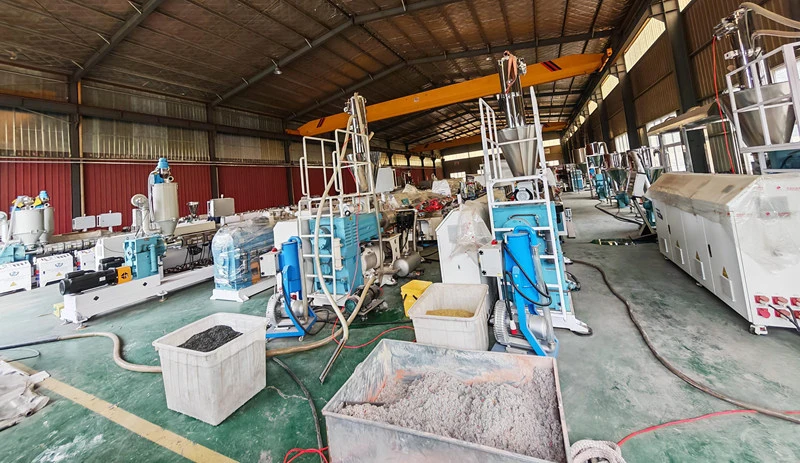
Scraps generated during WPC production and expired waste WPC finished products can be re-crushed, reground and re-extruded without obvious decline in mechanical performance, realizing 100% full-cycle recycling of wood-plastic composite materials.
4. Technical Advantages of Yongte Waste Wood Recycling WPC Equipment
4.1 Special Screw & Barrel Design for High Wood-Filler Formulas
- Conical twin-screw core configuration: Outputs ultra-high torque to realize stable processing of high-proportion waste wood fiber formulas (up to 70% wood flour content)
- Bimetallic wear-resistant barrel: Resists abrasion from hard wood fiber and glass fiber impurities, extending equipment service life by over 40% compared with ordinary barrels
4.2 High Production Efficiency & Obvious Operating Cost Reduction
- Wide capacity range: Single line output 300–800 kg/h, covering small pilot factories to large-scale industrial recycling plants
- Energy-saving design: Full servo drive motor + segmented intelligent heating system cuts comprehensive power consumption by about 20% versus traditional WPC equipment
- Raw material cost advantage: Waste wood and recycled plastic cost only 30%–50% of virgin plastic and solid wood raw materials
4.3 Excellent Finished Product Performance & Wide Application Coverage
- Stable mechanical indicators: WPC products made from waste wood raw materials reach flexural strength ≥25 MPa and impact strength ≥15 kJ/m², equivalent to products made from new wood flour
- Outstanding outdoor adaptability: Rot-proof, insect-resistant, anti-ultraviolet, no cracking or deformation, zero regular paint maintenance
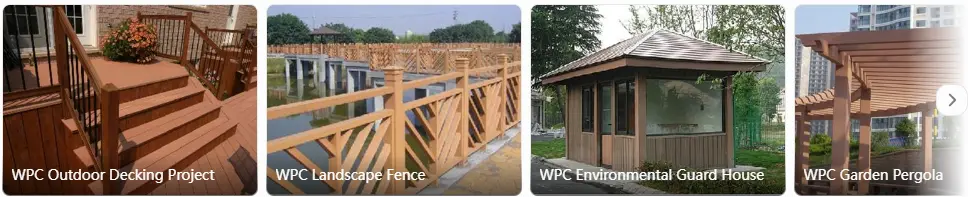
- Main product applications: Outdoor decking, landscape guardrails, garden pavilions, storage pallets, small environmental houses, wall decorative panels and other green building materials
5. Global Real-World Recycling Project Cases
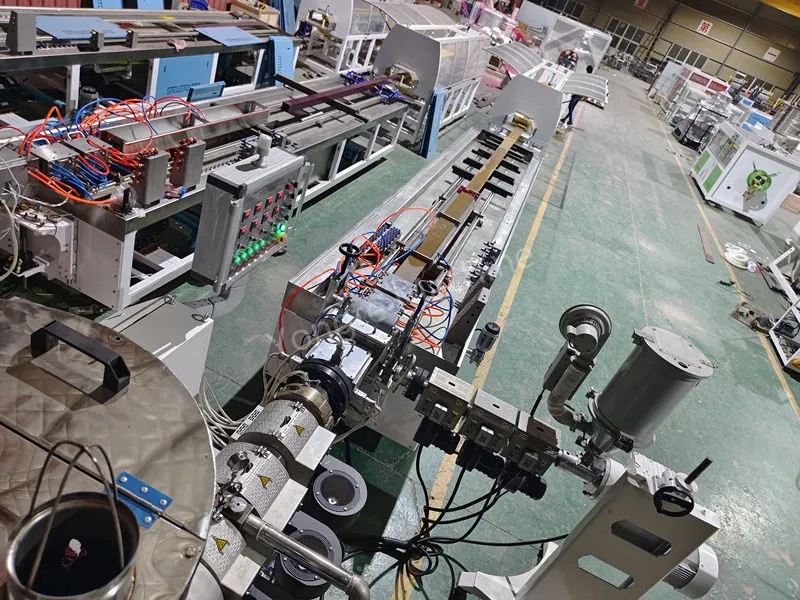
5.1 India Project: Construction Waste Wood + Agricultural Film into WPC Lumber
Yongte installed a full waste wood recycling line in India, taking local waste construction wood, mulch film and packaging plastic scraps as raw materials. The line runs at 500kg/h stable output to produce solid WPC lumber for farm guardrails and logistics pallets, thoroughly solving local dual pollution problems of waste wood and agricultural plastic film.
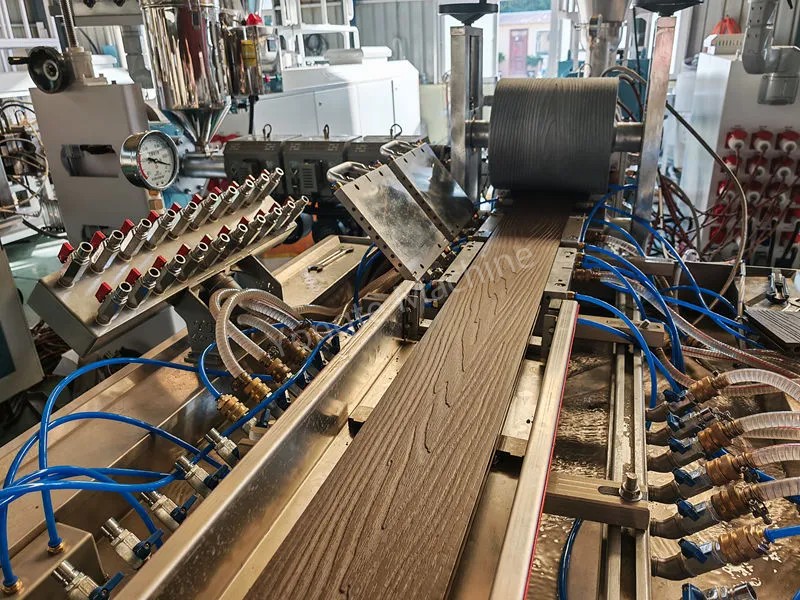
5.2 Canada Project: Industrial Glass Fiber + Waste Sawmill Wood for Premium WPC Decking
A Canadian environmental protection factory adopts Yongte’s high-filler wood-plastic line, matching 70% waste sawmill wood flour with 26% recycled PE/PP and waste glass fiber, producing high-performance co-extruded WPC decking. The products fully replace natural solid wood decking, with superior rot and insect resistance suitable for high-humidity outdoor scenes.
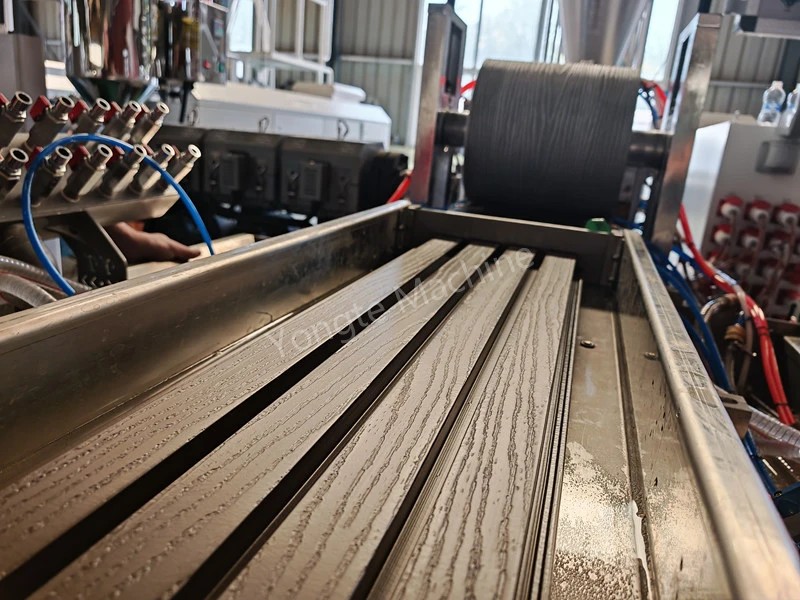
5.3 Farm Project: Crop Straw & Waste wood into Landscape Building Materials
Yongte waste wood recycling and reusing plant targets agricultural waste recycling, using 60–70% waste wood/rice husk/straw mixed with waste agricultural film to produce landscape WPC decking and garden fences, helping farms realize zero-waste disposal of crop biomass waste and create extra eco-material revenue.
6. Conclusion: Empower Circular Economy via Waste Wood Resource Regeneration
Yongte WPC recycling equipment is far more than a single set of extrusion machinery—it is a systematic sustainable solution for global waste wood biomass and mixed plastic waste treatment. Relying on full-process closed-loop recycling technology that fully utilizes waste wood resources, our equipment enables manufacturers to achieve multiple core benefits:
- Reduce landfill and incineration volume of biomass waste, lower enterprise carbon footprint
- Cut raw material procurement expenditure drastically by using low-cost waste wood and recycled plastics
- Manufacture high-margin, market-demanded eco WPC building and landscape materials
With the worldwide rising demand for circular economy and carbon neutrality solutions, Yongte keeps optimizing waste wood targeted WPC recycling technology, turning abandoned wood biomass waste into valuable green composite products, and jointly building a low-carbon, recyclable ecological future.