
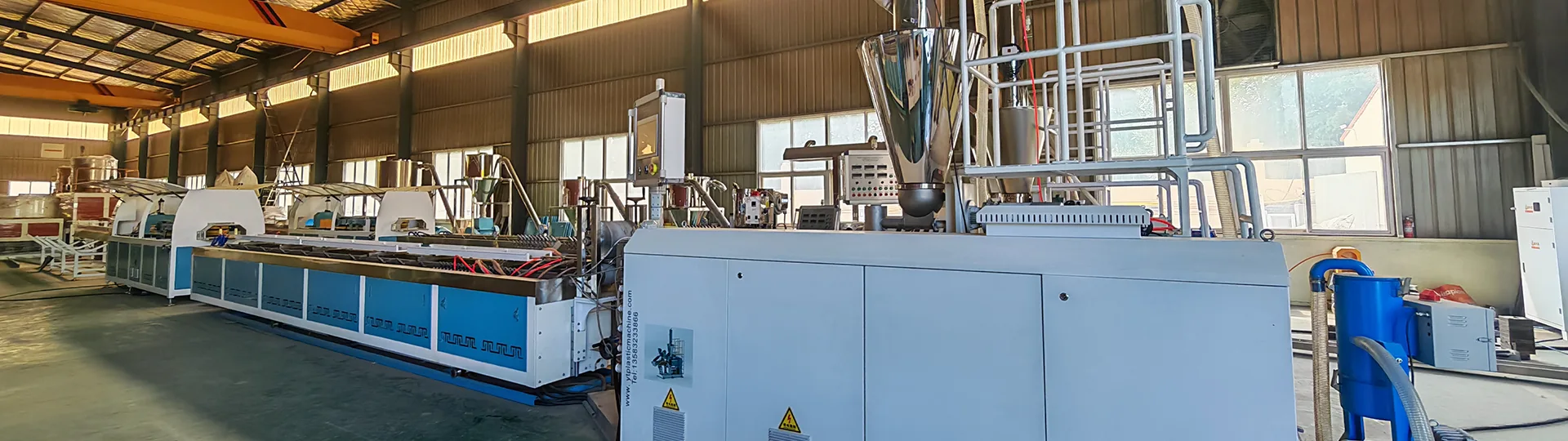
Waste PCB Recycling Solution to Produce WPC Products
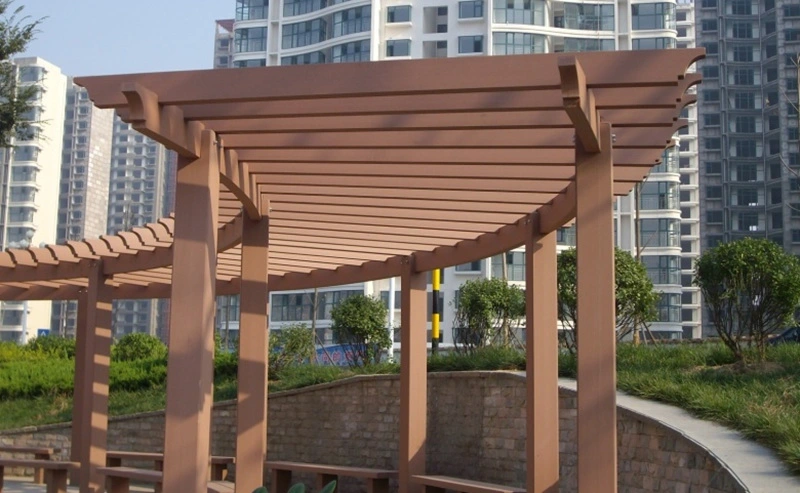
Yongte Full Solution for Waste PCB Recycling to Produce WPC decking/fence/pergola Profiles (Equipment + Technical Support)
1. Project Overview
This comprehensive solution independently developed and provided by Yongte focuses on the high-value green recycling of waste printed circuit boards (WPCBs). It innovatively converts non-metallic waste residues generated from waste PCB recycling into high-quality wood-plastic composite (WPC) products, realizing zero-waste disposal and resource cyclic utilization of electronic waste.Traditional waste PCB recycling mostly focuses on precious metal extraction, leaving a large amount of non-metallic fractions (including epoxy resin, glass fiber, and plastic fillers) to be landfilled or incinerated, which causes serious soil and air pollution and massive resource waste. Yongte’s integrated solution breaks through this industry bottleneck. Through professional physical separation, modification, compounding and extrusion molding technologies, the waste PCB non-metallic powder is fully reused as the core filling material for WPC production, replacing traditional wood flour and partial plastic raw materials.Yongte provides clients with one-stop turnkey services, covering full-set professional recycling and production equipment, standardized production processes, complete technical guidance, formula debugging, on-site commissioning and after-sales technical training, enabling clients to quickly build a standardized, environmentally friendly and profitable waste PCB recycling and WPC profile production line.
2. Core Recycling & Production Process Principle
The whole process adopts full physical recycling technology, without chemical pollution and secondary discharge, which is safe, environmentally friendly and efficient. The core principle is to separate valuable metals and non-metallic components from waste PCBs through mechanical crushing and precise physical sorting, then modify the non-metallic powder (epoxy resin + glass fiber) to improve its compatibility with plastic substrates, and finally compound it with auxiliary plastic raw materials and functional additives to produce high-performance WPC flooring.
The detailed technological flow is as follows:
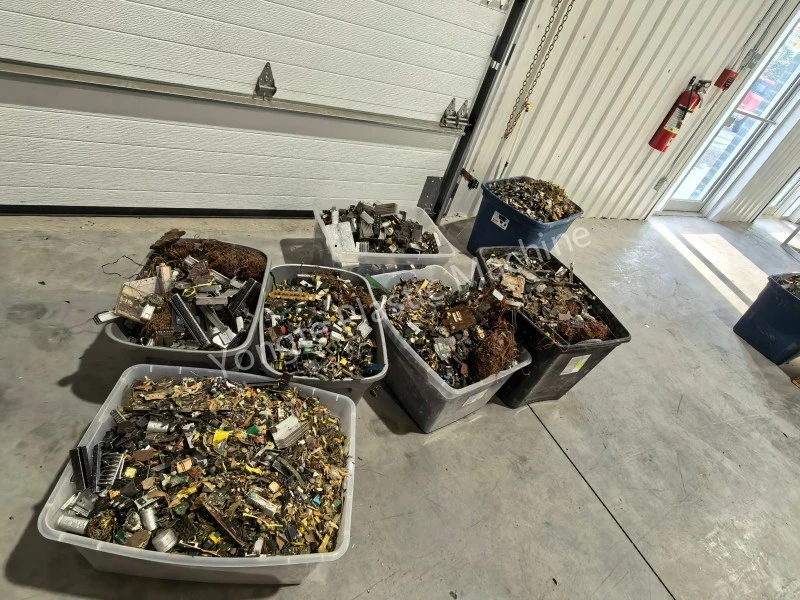
2.1 Waste PCB Pre-treatment: Remove residual electronic components, solder and impurities from waste circuit boards, and conduct preliminary sorting to screen out qualified PCB base materials.
2.2 Mechanical Crushing & Grinding: Adopt special low-temperature crushing equipment to crush PCBs into uniform fine particles, and further grind them into 60–120 mesh ultra-fine powder to ensure full separation of metal and non-metal components.
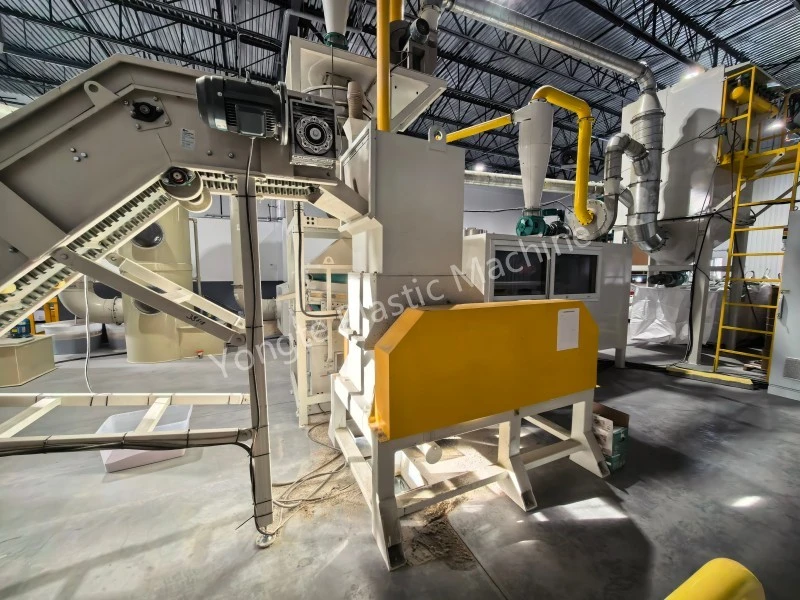
2.3 Precision Physical Separation: Utilize gravity sorting, electrostatic separation and air separation technologies to completely extract copper, gold, silver and other precious metals, with a metal recovery rate of over 99%. The remaining pure non-metallic powder is collected centrally for subsequent WPC production.
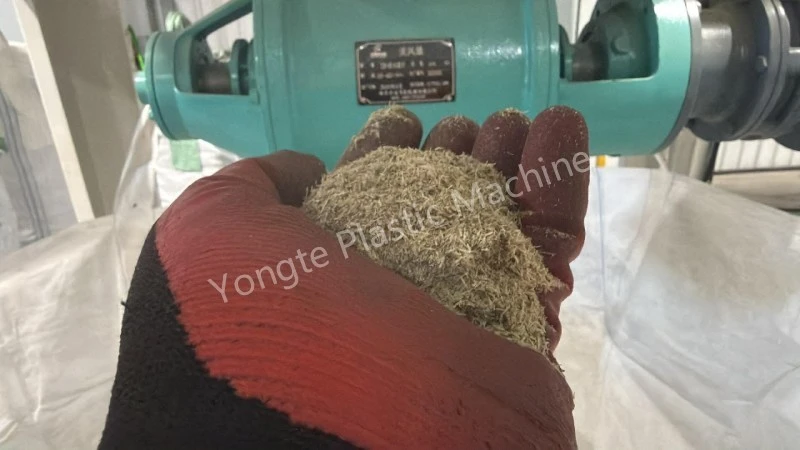
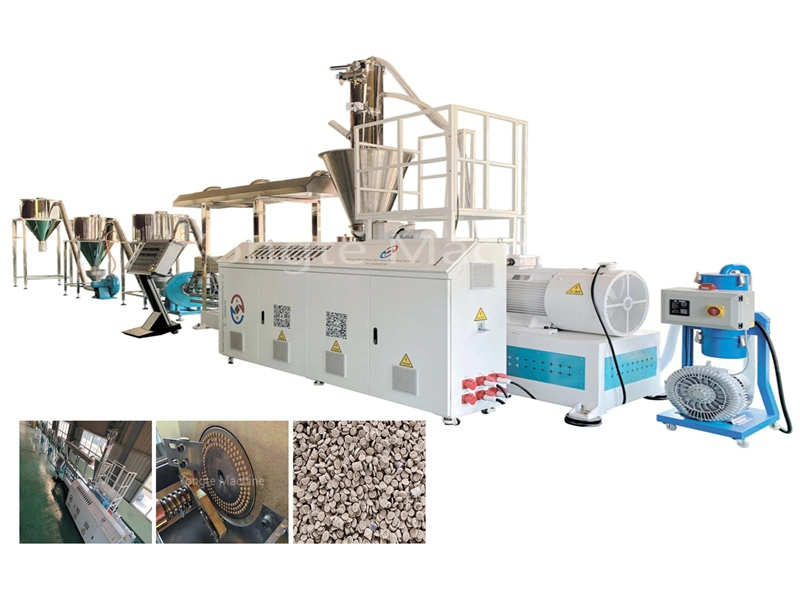
2.4 Material Modification & Compounding: Perform surface activation modification on PCB non-metallic powder to solve the compatibility problem between inorganic glass fiber/resin powder and organic plastic materials. Mix the modified powder with PP/PE plastic, plus weather-resistant, anti-aging and toughening additives according to exclusive formulas. and the mixture shall be made into compound granules by our WPC granulation machine
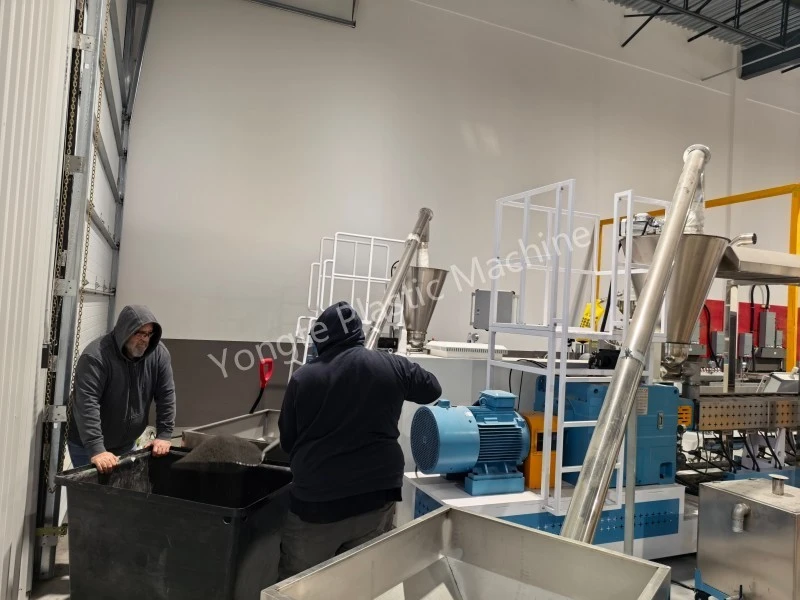
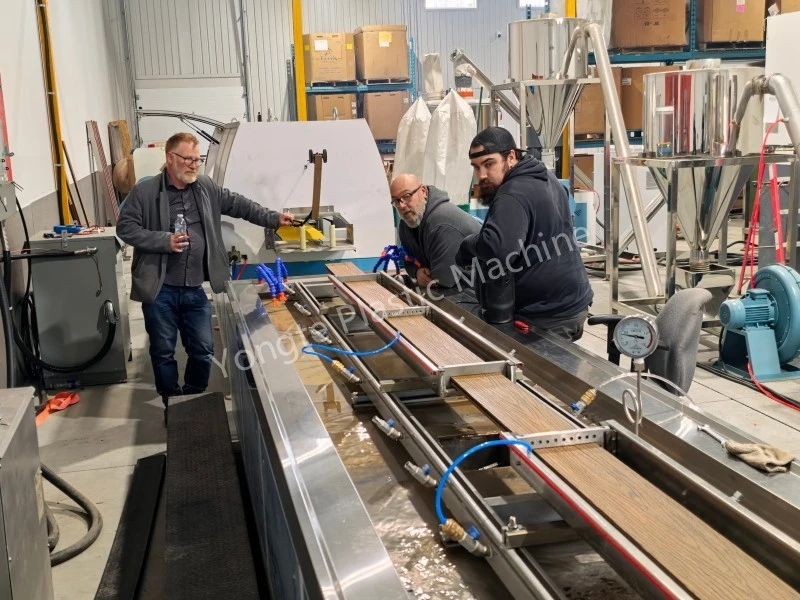
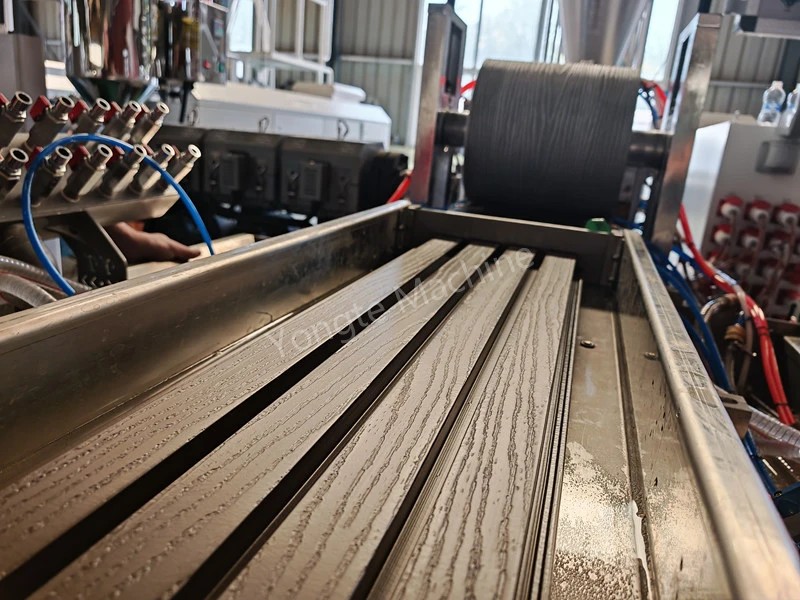
2.5 Extrusion Molding & Post-processing: Transport the composited WPC granules materials to a twin-screw extruder for high-temperature melting and one-time extrusion molding. After cooling, shaping, traction, cutting, surface embossing and anti-slip treatment, finished WPC products are obtained
3. Full Set of Supporting Equipment Provided by Yongte
Yongte supports customized full-scale production lines according to clients’ output requirements (small, medium and large capacities), covering all equipment required from waste PCB recycling to finished WPC flooring production, with stable operation, high automation and low energy consumption. The complete equipment list is as follows:
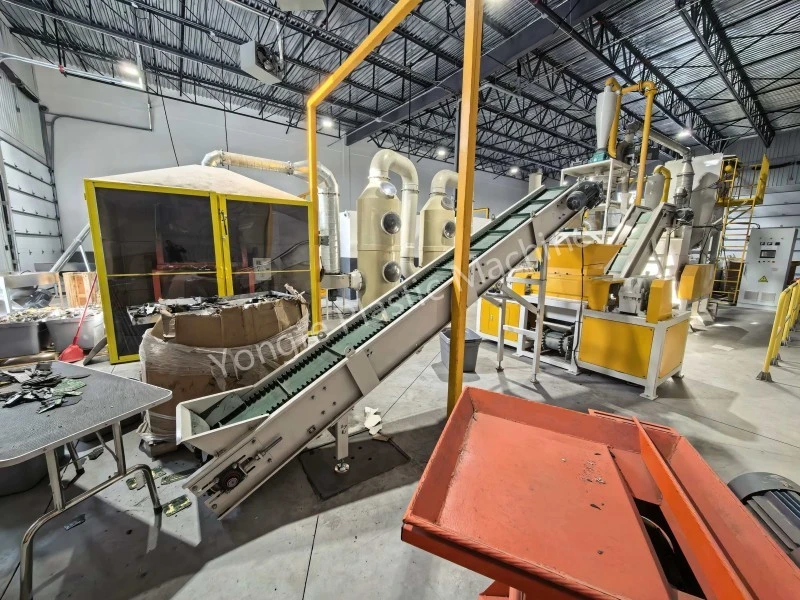
3.1 Waste PCB Recycling & Powder Processing Equipment
- Automatic PCB dismantling and sorting machine
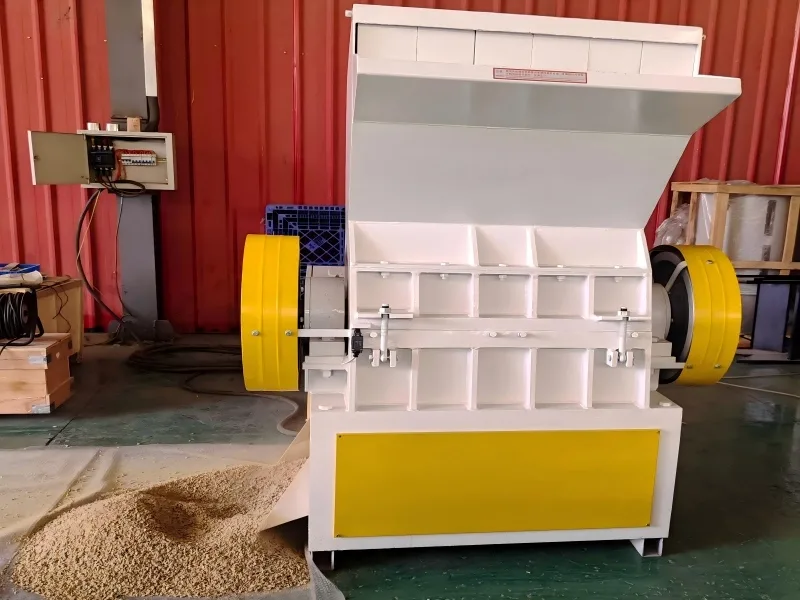
- High-efficiency low-temperature crusher
- Ultra-fine grinding mill
- Electrostatic separator & gravity sorting machine (for metal-nonmetal separation)
- Dust removal and centralized collection system (environmentally compliant)
3.2 Step 2: Compounding & Granulation
- High-speed mixing: Recycled plastic flakes (20–40%) are blended with wood flour/glass fiber (50–70%) and additives (3–5%: coupling agents, UV stabilizers, lubricants).
- Twin-screw granulation: Conical twin-screw extruders melt and homogenize the blend at 150–190°C, cutting it into uniform WPC pellets.
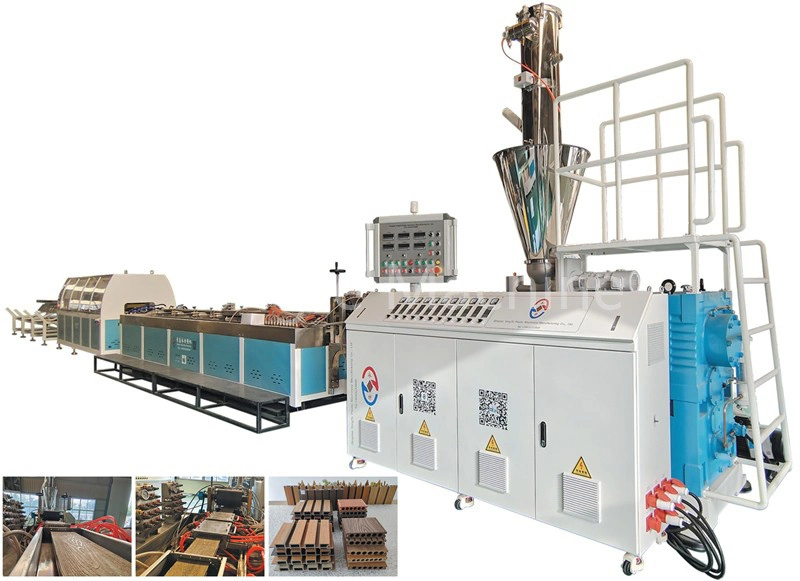
3.3 Step 3: WPC Extrusion & Finishing
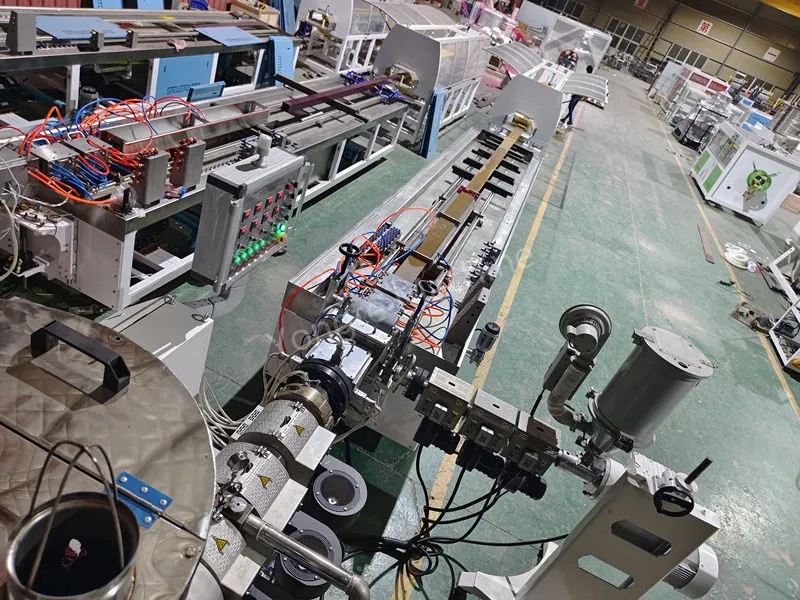
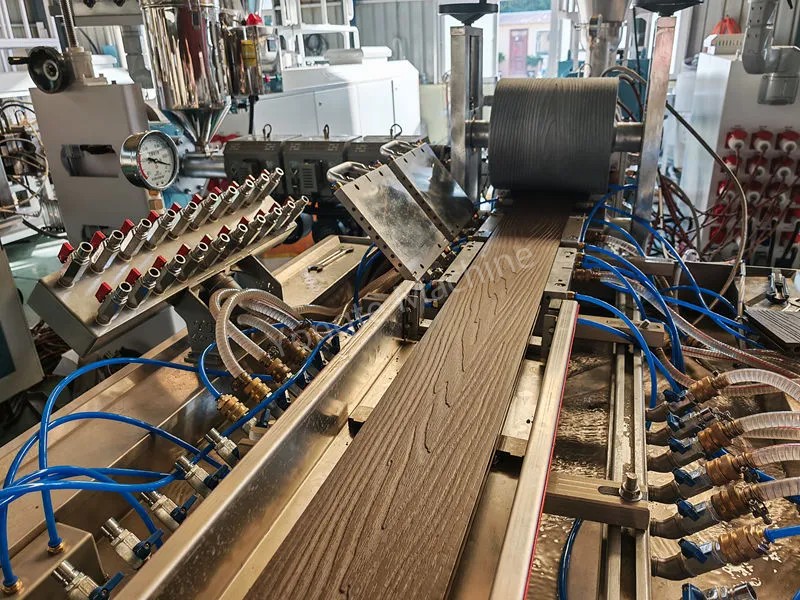
- Co-extrusion: Single/twin-screw extruders process WPC pellets into profiles (decking, fencing) with a smooth surface layer (co-extruded for durability).
- Calibration & cutting: Vacuum cooling tanks and automatic cutters ensure precise dimensions; embossing/sanding machines add wood-like textures.
3.4 Closed-Loop Feature
End-of-life WPC products can be re-crushed and re-extruded without significant performance loss, enabling a 100% circular system.
4. Full-Cycle Technical Support Services
In addition to complete equipment supply, Yongte provides exclusive and systematic technical support throughout the project cycle to ensure clients’ smooth production and stable product quality. All technologies are mature, industrialized and compliant with international environmental and production standards.
4.1 Pre-project Technical Services
- Customized project scheme design: formulate targeted equipment configuration and production process schemes according to clients’ site area, investment budget and annual output demand.
- Profit analysis and site layout planning: provide accurate cost accounting, profit prediction and scientific workshop layout design.
- Environmental compliance guidance: assist clients in understanding local electronic waste recycling and new material production environmental policies to ensure project compliance.
4.2 In-production Technical Support
- Exclusive material formula technology: provide mature PCB non-metallic powder modified formula and WPC flooring proportion formula, which can adjust product hardness, weather resistance and toughness according to market demand.
- On-site equipment installation, commissioning and debugging: arrange professional engineers to complete full-line installation, commissioning and trial production until qualified finished products are stably produced.
- Production process training: provide one-on-one professional training for clients’ operators, covering equipment operation, parameter adjustment, material proportion, daily maintenance and fault troubleshooting.
4.3 After-sales Continuous Technical Services
- Long-term free technical consultation and remote guidance
- Regular equipment maintenance guidance and component replacement technical support
- Continuous formula upgrade and product optimization technology update
- Support personalized product customization technology (anti-slip, flame-retardant, anti-UV, waterproof WPC flooring)
5. Real-World Case Studies
5.1 India: Plastic Road Waste to WPC Lumber
Yongte installed a line in India processing plastic road waste (including PE/PP films and packaging scraps) into solid WPC lumber. The system converts 500 kg/hour of waste into durable planks for fencing and pallets, solving local plastic pollution issues.
5.2 Canada: PCB Waste to WPC Decking
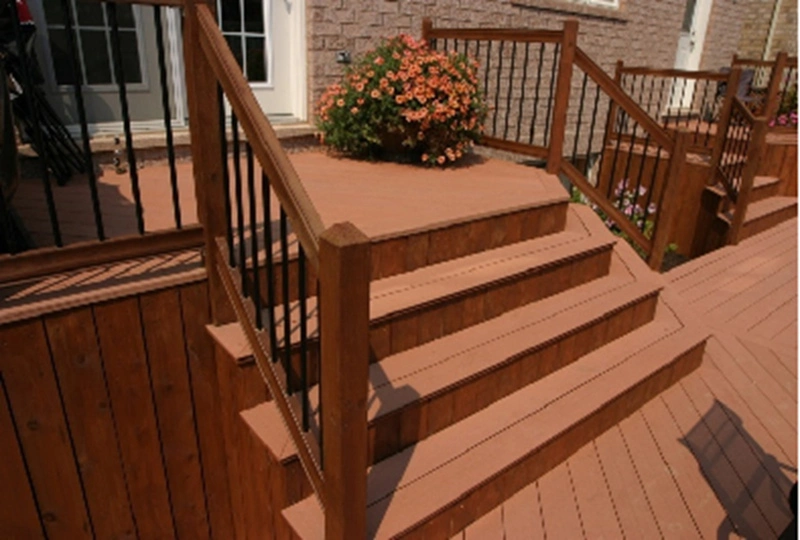
A Canadian plant uses Yongte’s WPC line to recycle waste fiberglass made from PCB wastage (70%) with recycled PE/PP (26%) into high-performance decking. The co-extruded products resist rot, UV, and insects, replacing traditional wood decking.
5.3 Agricultural Film Waste to Green Building Materials
Yongte’s YT-450 model processes waste agricultural films (60–70%) with wood flour into WPC decking and fencing. The line reduces farm plastic waste while producing eco-friendly building materials.
6. Finished WPC Product Advantages
The WPC products produced from waste PCB non-metallic powder has superior performance compared with traditional pure wood-plastic products, with higher market competitiveness:
- Excellent Physical Performance: The glass fiber and epoxy resin components in PCB powder significantly improve the flooring’s hardness, compressive resistance, impact resistance and structural stability, avoiding deformation and cracking in long-term use.
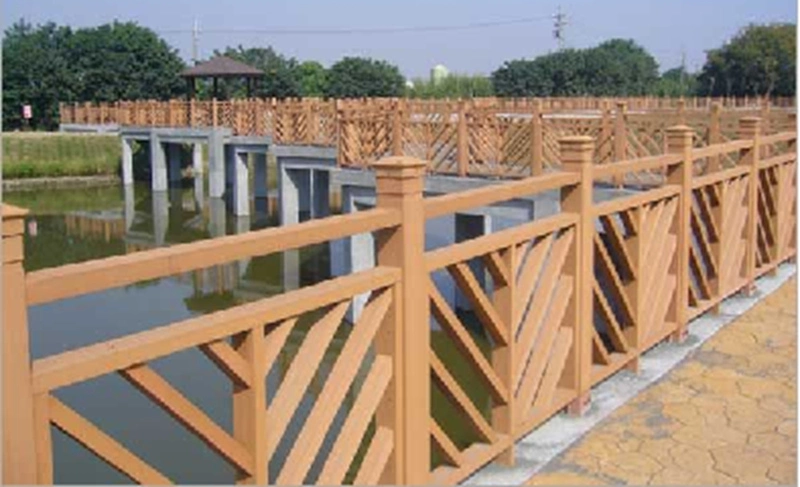
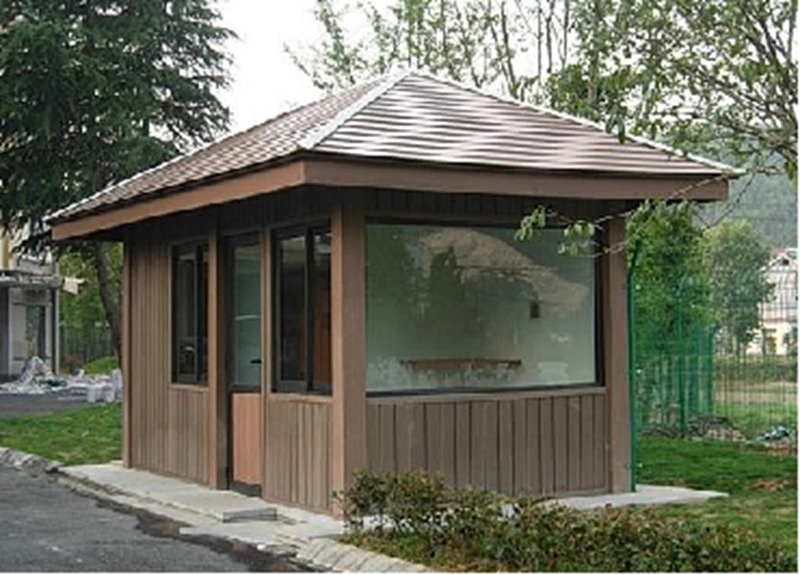
- Strong Environmental Adaptability: Good waterproof, moisture-proof, anti-corrosion and anti-mold properties, suitable for indoor and outdoor scenes such as gardens, balconies, parks and commercial venues.
- Green & Eco-friendly: The product realizes the reuse of electronic waste, reduces wood consumption, contains no formaldehyde or harmful substances, and meets EU environmental protection standards.
- Cost-Effective: Using waste PCB non-metallic powder to replace part of wood flour and plastic raw materials greatly reduces production costs while ensuring product quality.
- Durable & Low Maintenance: Wear-resistant, anti-aging, not easy to fade, no need for frequent painting and maintenance, with a service life of more than 15 years.
7. Environmental & Economic Benefits
7.1 Environmental Benefits
This solution realizes the full resource utilization of waste PCBs. It completely avoids environmental pollution caused by landfill and incineration of PCB non-metallic waste, reduces electronic waste stock pressure, and replaces traditional wood-based materials to reduce deforestation, conforming to global low-carbon, environmental protection and sustainable development concepts. The whole production process has no waste water, waste gas and solid waste discharge, achieving true zero-waste cyclic production.
7.2 Economic Benefits
8. Solution Highlights
- One-stop Turnkey Service: Integrates waste PCB recycling, material modification, WPC production equipment and full-process technology, no need for clients to coordinate multiple suppliers.
- Mature & Stable Technology: Adopts full physical recycling and modification technology, safe and pollution-free, with stable product quality and high pass rate.
- High Resource Utilization Rate: 100% utilization of waste PCB metal and non-metallic components, zero waste discharge.
- Customizable Solutions: Flexible equipment configuration and formula adjustment to meet different output requirements and product market positioning.
- Low Investment & High Return: Optimized production process to reduce energy consumption and raw material loss, with significant comprehensive economic benefits.
9. Conclusion
Yongte’s full-set equipment and technical solution for producing WPC flooring from recycled waste PCBs perfectly combines electronic waste recycling, resource regeneration and new material manufacturing. It solves the environmental pollution problem of waste PCB non-metallic waste, realizes high-value resource reuse, and provides a new profitable development direction for the waste recycling and new material industry. With complete equipment support, mature core technology and full-cycle professional services, this solution can help clients quickly build a green, efficient and profitable industrial production line, creating dual values of environmental protection and economic benefit.
Previous:WPC Door Turnkey Project Solution