
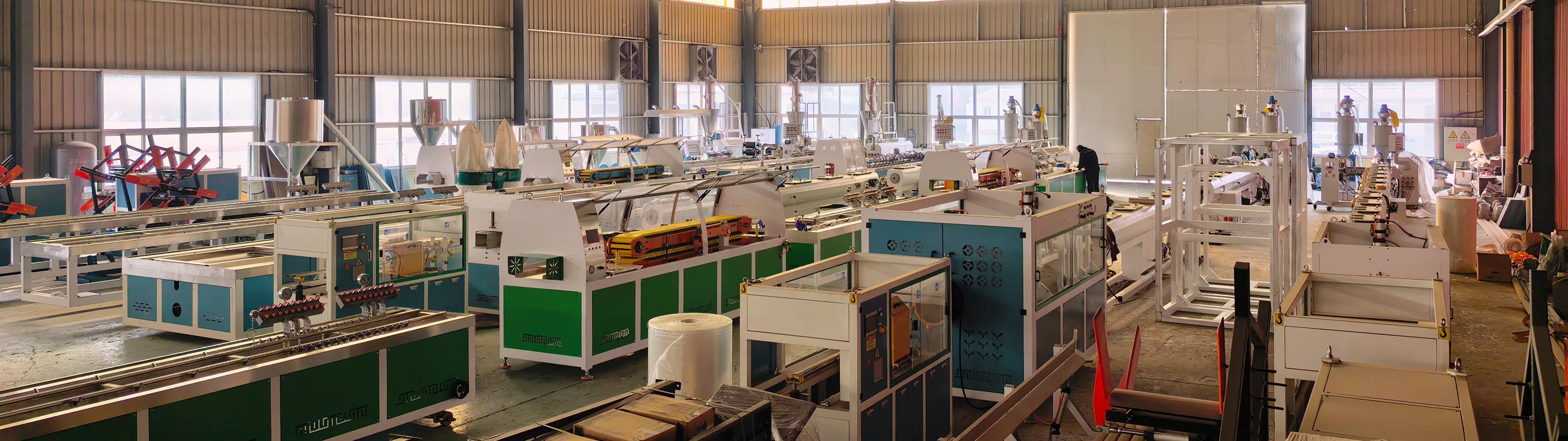
What are the required water temperatures for the vacuum sizing tank and the spray water tank during PE pipe extrusion production?
Water temperature control requirements for PE pipe vacuum water tanks and spray water tanks:
The core principles can be summarized as follows: the water temperature in the vacuum diameter-regulating tank should be maintained at a relatively high level, whereas the water temperature in the spray cooling tank should be gradually reduced; meanwhile, the temperature difference between each stage must be strictly controlled to prevent the piping materials from developing internal stresses, warping, or surface cracks during the cooling process.
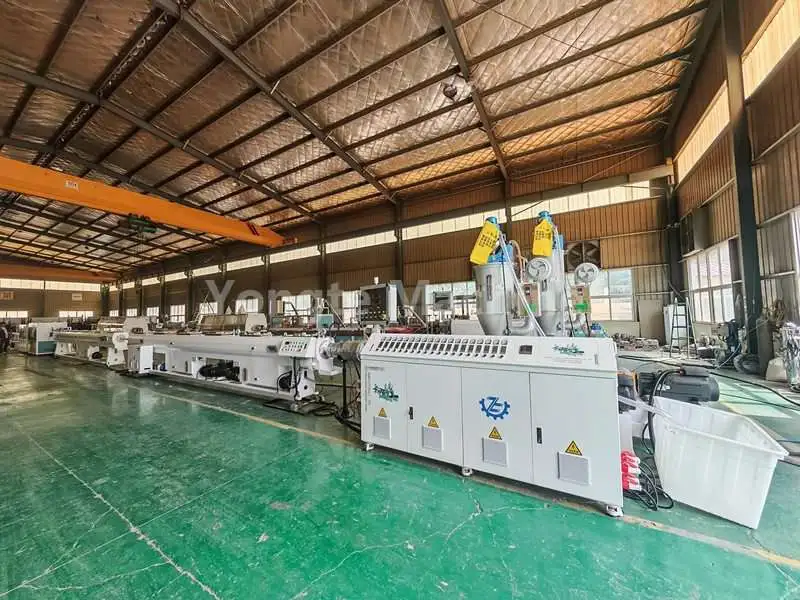
I. Vacuum sizing water tank (sizeing section)
Recommended water temperature: 30–50 °C. For conventional small-diameter PE water supply pipes, the temperature is typically maintained between 35–45 °C; for large-diameter thick-walled pipes, the temperature is preferably maintained between 45–50 °C.
1. Why the water temperature should not be too low: PE pipes freshly extruded from the die are still in a molten, soft state; if they come into direct contact with cold water, a hard shell may instantly form on the pipe wall while the interior remains in a molten state. This can generate significant internal stress, making the pipes more susceptible to cracking and increasing the risk of creep deformation in later stages of processing. Additionally, rapid cooling of the surface layer can lead to surface defects such as depressions, pitting, and orange-peel patterns. For thick-walled pipes, an excessive temperature difference between the inner and outer surfaces can further degrade the pipe's roundness.
2. Typical phenomena when the water temperature is too low or too high: when the water temperature falls below 25 °C, the internal stress in the piping material increases, making the pipes prone to bending and increasing the number of surface defects; when the water temperature exceeds 55 °C, insufficient cooling capacity slows the hardening rate of the pipe wall, and the vacuum effect can cause the pipe wall to thin, subsequently leading to fluctuations in the outer diameter and excessive ovality.
3. The vacuum chamber employs warm water for shaping, which allows a solid skin to gradually form on the surface of the pipe material, while utilizing negative pressure to stabilize the outer diameter.
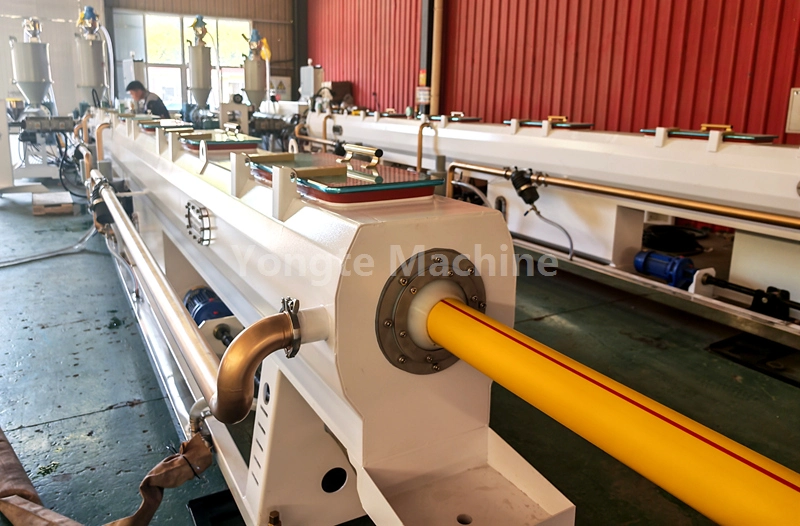
II. Spray cooling water tank (post-cooling; typically consists of 1–3 spray zones)
A staged cooling approach should be adopted; direct cooling with room-temperature cold water in a single step is not recommended.
1. The first stage of spraying is positioned near the vacuum chamber; the water temperature should be maintained between 25–35 °C, serving primarily as a transitional cooling step. The second stage of spraying should have a water temperature controlled between 20–28 °C. The final stage of spraying may utilize water at ambient temperature (18–25 °C), with the objective of ultimately reducing the overall temperature of the piping below 40 °C before proceeding to the pulling phase.
2. It should be noted that the temperature of tap water in summer can be as high as 28–32 °C, whereas in winter it may drop below 10 °C. In winter, cold water must not be sprayed directly onto the pipes immediately exiting the vacuum chamber; if the temperature difference exceeds 20 °C, the risk of quality issues will significantly increase.
3. The purpose of the spray section is to continuously facilitate heat conduction from the core layer of the pipe wall outward, allowing the temperatures inside and outside the entire pipe to gradually equilibrate, thereby achieving complete hardening and eliminating potential rebound bending that may occur following subsequent pulling and cutting operations.
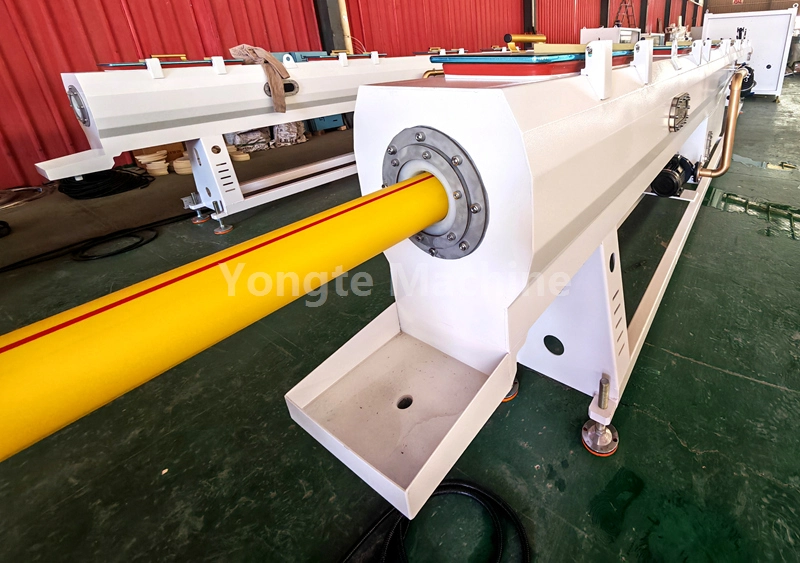
III. Key Differences Between Different Products
1. PE water supply pipes are typically thick-walled, pressure-rated piping; for vacuum chambers, the water temperature should preferably be within a higher range (40–50 °C), combined with segmented spraying, while strictly controlling the temperature differential to reduce internal stresses and ensure long-term static hydraulic performance.
2. For PE thin-walled pipes or conduit pipes, due to their relatively thin wall thickness and low heat storage capacity, the water temperature in the vacuum chamber can be maintained between 30–40 °C; under such conditions, the spray cooling parameters may be appropriately relaxed, although the use of abrupt cooling methods remains discouraged.
3. Large-diameter HDPE pipes generally refer to pipes with a nominal outer diameter exceeding 315 mm; these pipes feature greater wall thickness and higher heat capacity. Consequently, the water temperature in the vacuum chamber should be further increased to 45–50 °C, the number of spray stages should be correspondingly increased, and the cooling time should be appropriately extended; otherwise, if the inner wall cools too slowly, the pipes may easily deform.

IV. Practical Contraindications
1. Directly introducing low-temperature cold water into the vacuum water tank is strictly prohibited, as this is a primary cause of cracking and warping in piping materials; the temperature difference between the vacuum tank and the first spray section should not exceed 20 °C; otherwise, the risk to piping integrity will increase sharply. Additionally, the outlet water temperature at the final section must not be excessively high; if the piping remains too flexible when entering the traction stage, it may be excessively stretched during traction, leading to a reduction in wall thickness.
2. When production is operating stably, it is recommended to equip the vacuum chamber with a constant-temperature heating or heat exchange unit, while the spray circulation water system should be equipped with a cooling tower for temperature control.
3. In addition, during the production process, attention must be paid to the dynamic stability of the water temperature: fluctuations in ambient temperature between day and night, as well as the natural temperature rise of the water tank following continuous equipment operation, may cause the actual water temperature to deviate from the set range. Therefore, operators should conduct regular inspections and record findings, promptly adjust the parameters of the temperature control equipment, and prevent significant fluctuations in water temperature.
4. When switching to products of different specifications, the water temperature in each section of the water tank should be adjusted in advance; only after the temperature has stabilized should the machine be started and feed material introduced, thereby avoiding batch non-compliance caused by water temperatures failing to meet the required standards.
5. If the water hardness at the production site is excessively high, it is also necessary to regularly clean the scale deposits on the inner walls of the water tank to prevent scale from clogging the heat exchange piping, which could otherwise compromise the temperature control performance.