
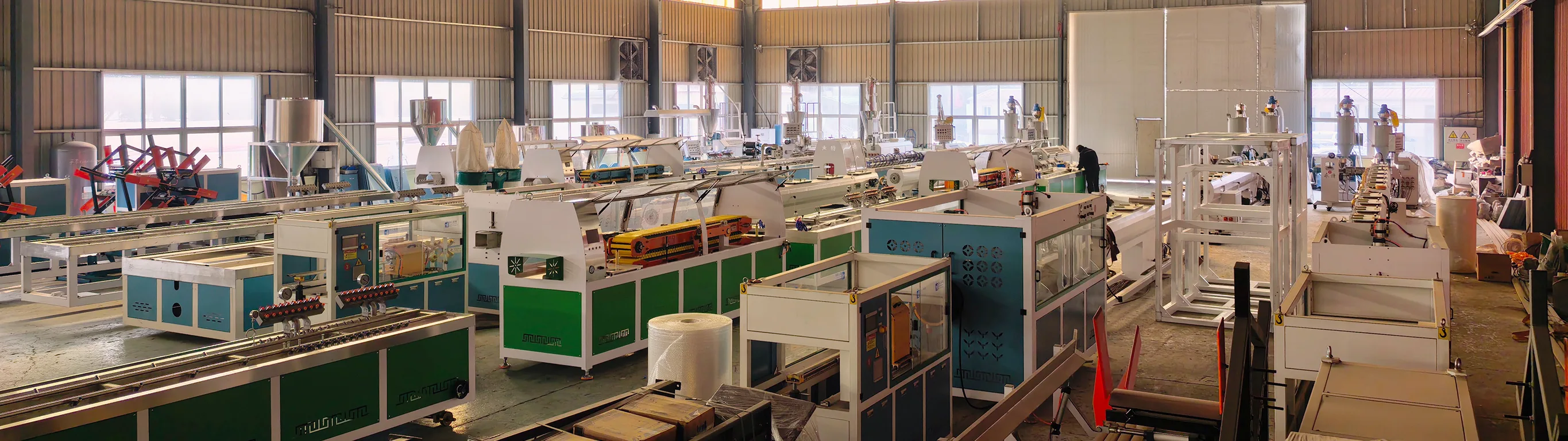
How Does a PVC SPC Floor Sheet Production Machine Work?
Article Summary
A reliable PVC SPC floor sheet production machine is essential for manufacturers looking to produce high-quality Stone Plastic Composite flooring with consistent dimensions, stable surface quality, and efficient production performance. From raw material preparation and extrusion to calendering, cooling, and sheet handling, every production stage affects the final product.
This guide explains how SPC floor sheet production equipment works, which components influence manufacturing quality, how to select suitable machinery, and what manufacturers should consider when planning a production line. It also explores common production challenges and practical ways to improve operational efficiency while controlling manufacturing costs.
Table of Contents
- How Does a PVC SPC Floor Sheet Production Machine Work?
- What Materials Are Used in SPC Floor Sheet Manufacturing?
- What Are the Main Components of an SPC Production Line?
- How Does Each Production Stage Affect Sheet Quality?
- What Factors Determine SPC Floor Sheet Quality?
- How Can Manufacturers Improve Production Efficiency?
- What Common Problems Occur During SPC Sheet Production?
- How Should You Choose the Right SPC Floor Sheet Machine?
- Why Is Equipment Maintenance Important?
- Frequently Asked Questions
1. How Does a PVC SPC Floor Sheet Production Machine Work?
A PVC SPC floor sheet production machine is an industrial manufacturing system designed to produce rigid core sheets used in Stone Plastic Composite flooring. These sheets typically consist of polyvinyl chloride (PVC), calcium carbonate, stabilizers, processing aids, and other functional additives.
Unlike traditional flexible vinyl flooring materials, SPC core sheets are designed to provide greater dimensional stability and rigidity. Their performance depends on the formulation, processing conditions, equipment configuration, and quality control throughout manufacturing.
The production process generally starts with preparing and mixing raw materials. The compound is then processed through an extrusion system, shaped into a continuous sheet, calibrated, cooled, and transferred to downstream equipment for cutting or further processing.
Typical SPC production workflow:
Raw Material Preparation → Mixing → Feeding → Extrusion → Calendering or Sheet Forming → Cooling → Haul-Off → Cutting → Inspection → Stacking
Each stage performs a specific function. Accurate temperature control, stable material feeding, uniform pressure, and synchronized line speed help manufacturers maintain consistent sheet thickness and surface quality.
For flooring producers, selecting an appropriately configured production line is not simply about purchasing an extruder. It involves evaluating the entire manufacturing process to ensure that the equipment matches the intended product specifications and production targets.
2. What Materials Are Used in SPC Floor Sheet Manufacturing?
Material formulation plays a major role in determining the mechanical properties, processing behavior, and final appearance of SPC flooring. A suitable production machine must be compatible with the manufacturer's selected raw material formulation.
2.1 Polyvinyl Chloride (PVC)
PVC is the primary polymer component in SPC flooring. It acts as the binding matrix that holds mineral fillers and additives together. Its processing characteristics influence melt behavior, fusion quality, and the mechanical performance of the finished core sheet.
2.2 Calcium Carbonate
Calcium carbonate is widely used as a mineral filler in SPC formulations. It contributes to the rigid structure of the core material and influences density, stiffness, and production costs.
Particle size, distribution, moisture content, and filler loading should be carefully controlled. Excessive or poorly dispersed filler may negatively affect material fusion and sheet strength.
2.3 Stabilizers and Processing Additives
Stabilizers help protect PVC during thermal processing, while processing aids support melt fusion and improve processing consistency. Lubricants, impact modifiers, and other additives may also be included depending on the product formulation.
| Material | Main Function | Important Consideration |
|---|---|---|
| PVC Resin | Provides the polymer matrix | Consistent resin quality and processing characteristics |
| Calcium Carbonate | Provides mineral filling and rigidity | Particle size and dispersion |
| Stabilizers | Improve thermal stability | Compatibility with the PVC formulation |
| Processing Aids | Support fusion and processing | Suitable dosage and formulation |
| Lubricants | Help control material flow and processing behavior | Balanced internal and external lubrication |
| Impact Modifiers | Improve impact-related performance | Compatibility and required product properties |
Manufacturers should establish a stable formulation before finalizing machine settings. Changes in raw material properties can affect extrusion pressure, melt temperature, output stability, and finished sheet dimensions.
3. What Are the Main Components of an SPC Production Line?
A complete PVC SPC floor sheet production line usually consists of several interconnected machines. The exact configuration depends on production capacity, sheet dimensions, formulation, and the manufacturer's finishing requirements.
3.1 High-Speed Mixing System
The mixing system combines PVC resin, calcium carbonate, and additives into a uniform compound. Proper mixing helps distribute ingredients evenly and reduces the risk of inconsistent material properties during extrusion.
3.2 Feeding System
Automatic feeding equipment transfers prepared materials into the extrusion system. Stable and consistent feeding is important because fluctuations in material supply can cause variations in output and sheet thickness.
3.3 Twin-Screw Extruder
The twin-screw extruder is a core component of many SPC sheet production lines. It transports, mixes, plasticizes, and conveys the material under controlled processing conditions.
Screw design, screw diameter, motor power, temperature zones, and extrusion capacity should be matched to the material formulation and required output.
3.4 Calendering and Sheet Forming Equipment
Calendering or other sheet-forming equipment helps shape the extruded material into a continuous sheet with the required width, thickness, and surface characteristics.
Roller alignment, temperature control, surface condition, and pressure distribution are important factors affecting sheet uniformity.
3.5 Cooling System
The cooling section reduces sheet temperature in a controlled manner. Proper cooling helps stabilize dimensions and prepare the material for subsequent handling.
3.6 Haul-Off and Cutting Equipment
The haul-off system maintains stable sheet movement, while the cutting unit produces sheets or sections according to the required dimensions.
3.7 Electrical Control System
A centralized control system allows operators to monitor and adjust important operating parameters, including temperature, speed, and other process settings. A well-designed control interface can simplify operation and improve production repeatability.
| Equipment | Primary Function | Quality Impact |
|---|---|---|
| Mixing System | Raw material blending | Material consistency |
| Feeding System | Stable material supply | Output consistency |
| Twin-Screw Extruder | Plasticizing and conveying | Melt quality and material fusion |
| Calendering Unit | Sheet forming | Thickness and surface uniformity |
| Cooling System | Controlled cooling | Dimensional stability |
| Cutting Unit | Dimension control | Finished sheet accuracy |
4. How Does Each Production Stage Affect Sheet Quality?
Understanding the relationship between production stages and finished product quality helps manufacturers identify problems before they lead to large amounts of material waste.
4.1 Raw Material Preparation
Raw materials should be weighed accurately and mixed according to the established formulation. Poor ingredient distribution may cause inconsistent material properties, unstable extrusion, or visible defects in the finished sheet.
4.2 Extrusion and Plasticization
During extrusion, PVC compound is heated and processed into a workable melt. Temperature settings must be appropriate for the formulation and equipment design.
Insufficient plasticization may lead to poor fusion and weak sheet structure. Excessive thermal exposure may cause PVC degradation, discoloration, or other processing defects.
4.3 Sheet Forming and Thickness Control
The forming section determines the geometry of the sheet. Uneven roller pressure, incorrect alignment, or unstable material flow can create thickness variations across the sheet width.
4.4 Cooling and Dimensional Stabilization
Cooling conditions influence the dimensional stability of the sheet. Rapid or uneven cooling may contribute to internal stress, warping, or dimensional changes.
4.5 Cutting and Final Inspection
Cutting accuracy affects downstream flooring production. Finished sheets should be inspected for thickness, width, length, surface appearance, flatness, and other customer-defined requirements.
Practical recommendation:
Establish inspection checkpoints after extrusion, sheet forming, cooling, and cutting. Detecting deviations early is generally more economical than identifying defects after further flooring processing.
5. What Factors Determine SPC Floor Sheet Quality?
High-quality SPC core sheets require a balance between material formulation, equipment performance, process control, and inspection standards.
5.1 Thickness Uniformity
Consistent thickness is essential for downstream flooring production. Variations can affect product assembly, finished flooring dimensions, and overall manufacturing yield.
5.2 Surface Quality
The sheet should have a uniform appearance without obvious scratches, bubbles, rough areas, contamination, or other visible defects. Surface quality depends on material cleanliness, melt condition, roller surfaces, and processing stability.
5.3 Dimensional Stability
SPC sheets should maintain their intended dimensions during cooling, storage, and subsequent processing. Material formulation and cooling conditions both influence dimensional behavior.
5.4 Mechanical Properties
Rigidity, impact resistance, and bending performance are important considerations for SPC core materials. Manufacturers should evaluate these properties through appropriate testing rather than relying solely on visual inspection.
5.5 Consistent Production Performance
Quality should remain consistent across different production batches. Stable material feeding, repeatable machine settings, and regular maintenance help reduce unexpected variations.
6. How Can Manufacturers Improve Production Efficiency?
For flooring manufacturers, production efficiency involves more than maximizing machine speed. A successful operation must balance output, product quality, energy consumption, labor requirements, and material utilization.
6.1 Optimize Material Formulation
Work with qualified material suppliers and establish a controlled formulation. Avoid frequent unnecessary changes to ingredient ratios, as they may affect processing stability and product performance.
6.2 Maintain Stable Processing Parameters
Monitor important parameters such as temperature, screw speed, extrusion pressure, roller conditions, and production speed. Keep records of successful operating settings for different product specifications.
6.3 Reduce Unplanned Downtime
Regular inspections of screws, barrels, rollers, bearings, motors, and electrical systems help identify potential failures before they interrupt production.
6.4 Improve Automation and Process Coordination
Automatic feeding, synchronized haul-off, centralized control, and automatic cutting can reduce manual intervention and improve production consistency.
6.5 Train Machine Operators
Operators should understand startup procedures, temperature adjustments, material handling, abnormal machine conditions, and shutdown requirements. Proper training reduces operating errors and material waste.
| Improvement Area | Recommended Action | Expected Benefit |
|---|---|---|
| Material Management | Standardize formulations and weighing procedures | More consistent material quality |
| Process Control | Monitor temperatures and production parameters | More stable production |
| Equipment Maintenance | Follow scheduled inspection plans | Reduced unexpected downtime |
| Automation | Coordinate feeding, forming, and cutting | Improved operating efficiency |
| Operator Training | Provide practical operating instructions | Fewer production errors |
7. What Common Problems Occur During SPC Sheet Production?
Even with a well-designed PVC SPC floor sheet production machine, manufacturers may encounter processing problems. Identifying their possible causes is an important part of maintaining production stability.
7.1 Uneven Sheet Thickness
Possible causes:
- Unstable material feeding.
- Incorrect roller alignment.
- Uneven pressure distribution.
- Fluctuations in extrusion output.
Recommended solutions: Check the feeding system, inspect roller alignment, monitor extrusion stability, and adjust the forming conditions according to the equipment manufacturer's instructions.
7.2 Surface Bubbles or Defects
Possible causes:
- Moisture or contamination in raw materials.
- Improper material processing conditions.
- Inconsistent material fusion.
- Contamination on forming rollers.
Recommended solutions: Check raw material storage and cleanliness, review the formulation, inspect roller surfaces, and evaluate the extrusion temperature profile.
7.3 Sheet Warping or Deformation
Possible causes:
- Uneven cooling.
- Residual internal stress.
- Unbalanced formulation.
- Improper handling after production.
Recommended solutions: Optimize cooling conditions, review the material formulation, and improve sheet handling and storage procedures.
7.4 Low Production Output
Possible causes:
- Insufficient extrusion capacity.
- Unstable material supply.
- Frequent equipment interruptions.
- Improper coordination between production units.
Recommended solutions: Evaluate the entire production line rather than increasing screw speed alone. Check feeding capacity, machine condition, forming limitations, and downstream handling speed.
Important:
Do not change several processing parameters simultaneously when troubleshooting. Adjust one variable at a time whenever practical, record the results, and follow safe operating procedures to identify the actual cause.
8. How Should You Choose the Right SPC Floor Sheet Machine?
Selecting an SPC floor sheet production machine is a long-term investment. Buyers should evaluate not only the initial purchase price but also production requirements, equipment reliability, technical support, and future expansion possibilities.
8.1 Define Your Production Requirements
Before requesting a quotation, clarify the following information:
- Required sheet width and thickness range.
- Target production capacity per hour.
- SPC material formulation and raw material characteristics.
- Expected operating hours per day.
- Available factory space and installation conditions.
- Local electrical supply and utility requirements.
8.2 Evaluate Extrusion Capacity
Extruder capacity should match the intended production output and formulation. Buyers should ask suppliers for practical output information under comparable operating conditions instead of relying exclusively on theoretical maximum figures.
8.3 Check Sheet Quality and Production Stability
Ask the manufacturer whether the machine can meet your required thickness tolerance, sheet width, surface finish, and dimensional specifications. Request sample production data or a machine test using a suitable formulation whenever possible.
8.4 Consider Energy Consumption
Heating systems, extrusion motors, cooling equipment, and auxiliary units all contribute to operating costs. Compare the expected energy consumption of the complete line rather than evaluating only the main extruder.
8.5 Evaluate Technical Support
Installation guidance, operator training, spare parts availability, troubleshooting assistance, and after-sales service are important considerations, especially for overseas buyers establishing a new SPC flooring production facility.
8.6 Compare Total Investment Costs
The overall investment may include more than the machine purchase price. Consider installation, transportation, electrical work, auxiliary equipment, raw material preparation, maintenance, and commissioning expenses.
| Evaluation Item | Questions to Ask the Supplier |
|---|---|
| Production Capacity | What is the practical output under the proposed formulation? |
| Product Dimensions | What sheet width and thickness ranges can the line produce? |
| Energy Consumption | What is the estimated total power consumption? |
| Automation | Which production stages are automated? |
| Installation | What installation and commissioning services are provided? |
| After-Sales Service | Are technical support and spare parts available? |
| Quality Assurance | Can the supplier provide testing and acceptance procedures? |
9. Why Is Equipment Maintenance Important?
Regular maintenance helps preserve equipment performance, reduce unexpected downtime, and extend the service life of a PVC SPC floor sheet production machine.
Daily Maintenance
- Inspect the machine before starting production.
- Check for unusual noise, vibration, or leakage.
- Clean accessible equipment surfaces and material contact areas.
- Monitor temperature, pressure, and operating conditions.
- Check the condition of safety devices and emergency stops.
Periodic Maintenance
- Inspect screws and barrels for wear.
- Check roller surfaces and alignment.
- Inspect bearings, transmission systems, and lubrication points.
- Check electrical connections and control components.
- Review cooling and heating system performance.
Maintenance intervals should follow the equipment manufacturer's recommendations and actual operating conditions. Before inspection or repair, isolate power sources and follow the required lockout and safety procedures.
10. Frequently Asked Questions
Q1. What is a PVC SPC floor sheet production machine used for?
It is used to manufacture rigid SPC core sheets from PVC resin, calcium carbonate, stabilizers, and other additives. These sheets are subsequently processed into SPC flooring products.
Q2. What is the main difference between PVC flooring and SPC flooring?
SPC flooring uses a rigid stone-plastic composite core, typically containing PVC and mineral fillers. Conventional flexible PVC flooring may use different formulations and structures. Their rigidity, dimensional behavior, and applications can therefore differ.
Q3. Why is a twin-screw extruder commonly used for SPC production?
A twin-screw extruder provides material conveying, mixing, and plasticization functions. Its configuration can be designed to handle highly filled PVC compounds used in SPC core sheet manufacturing.
Q4. What factors affect the output of an SPC sheet production line?
Output depends on extruder design, screw configuration, motor power, material formulation, feeding stability, processing conditions, and the capacity of downstream equipment.
Q5. Can one production line manufacture SPC sheets with different thicknesses?
Many production lines can accommodate different thickness specifications within their designed operating ranges. Buyers should confirm the available adjustment range and required tooling or configuration changes with the supplier.
Q6. How can manufacturers reduce SPC sheet production waste?
Use consistent raw materials, maintain stable extrusion conditions, monitor sheet thickness, optimize cooling, and inspect products throughout the production process. Early defect detection helps prevent unnecessary downstream waste.
Q7. What should buyers prepare before purchasing an SPC production machine?
Prepare your target sheet dimensions, expected output, raw material formulation, factory layout, electrical requirements, budget, and expected production schedule. These details help suppliers recommend a suitable configuration.
Q8. How long does it take to install and commission an SPC production line?
The installation and commissioning period depends on line configuration, equipment size, factory readiness, electrical connections, and operator training requirements. Buyers should request a project-specific schedule from the manufacturer.
Q9. Is automatic operation available for SPC floor sheet production?
Yes. Depending on the configuration, a production line can incorporate automatic feeding, centralized process control, synchronized conveying, and automatic cutting. The appropriate automation level depends on the manufacturer's production goals and investment budget.
Q10. How can I obtain a suitable SPC floor sheet production line quotation?
Contact an experienced equipment manufacturer and provide your target sheet specifications, required production capacity, raw material information, and factory conditions. A detailed requirement list helps the supplier evaluate the appropriate machine configuration.
Looking for a Reliable SPC Floor Sheet Production Solution?
Choosing the right PVC SPC floor sheet production machine can make a significant difference to your manufacturing efficiency, product consistency, and long-term operating costs.
Yongte is committed to providing machinery solutions for plastic processing and flooring production applications. Whether you are planning a new SPC flooring factory or upgrading your existing production facilities, selecting the right equipment configuration is an important first step.
Share your production requirements, sheet dimensions, target output, and material specifications with our team. We can help you explore a suitable production solution for your project.
Contact Us