
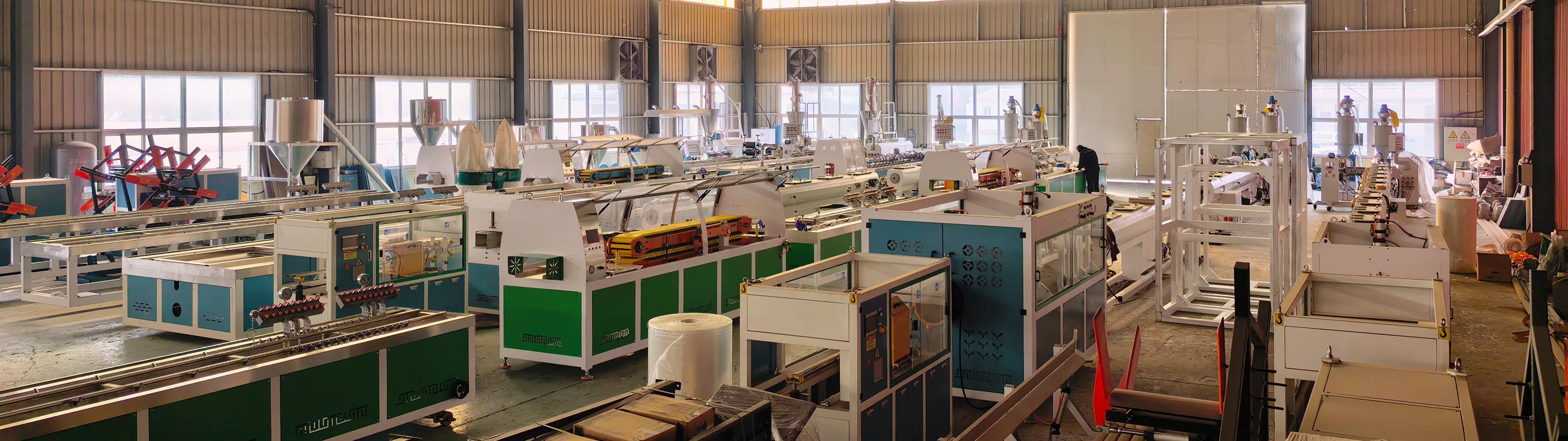
Wood plastic composite (WPC) co-extrusion has moved from a premium differentiator to a mainstream production standard. At Yongte, the technology has been deployed across three customer projects on three continents, each with a different feedstock strategy and a different performance target. The cases below illustrate how the co-extrusion "sandwich" structure—a wear-resistant surface layer, a tough intermediate structural layer, and a moisture-proof base layer—delivers measurable performance outcomes when adapted to local material realities.
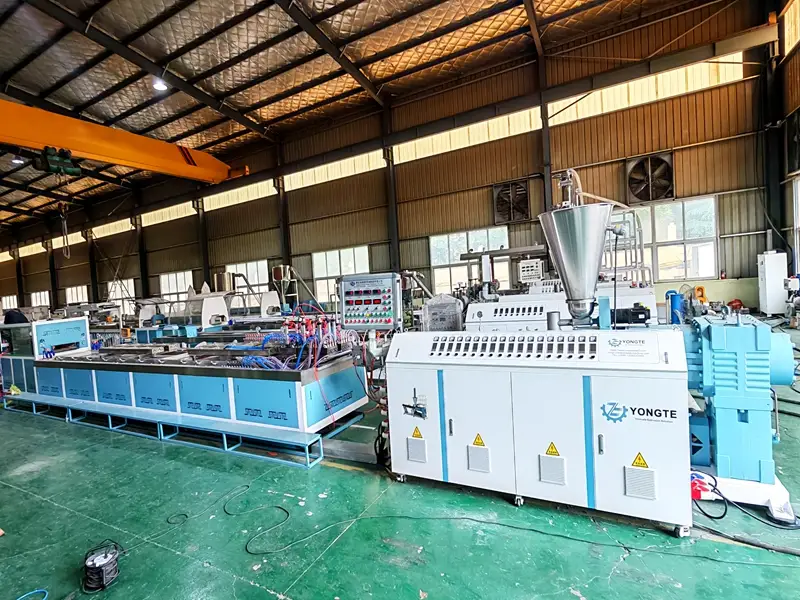
Case 1: Canada — Turnkey System for PCB Fiberglass Recycling
A Canadian customer engaged Yongte for a turnkey co-extrusion system designed to recycle PCB (printed circuit board) fiberglass into high-performance WPC decking. The core layer utilizes recycled plastic combined with PCB recycled fiberglass, while the surface layer is a weather-resistant material formulated for North American outdoor exposure. Yongte engineers completed on-site installation and commissioning of the complete WPC production line, which included a mixing machine, WPC granulation machine, co-extrusion line and molds, embossing machine, and sanding/brushing machine.[reference:0]
The Canadian customer noted that "the professionalism and efficiency of Yongte's engineers exceeded our expectations," adding that with the new line, "we are now ready to meet the growing demand for sustainable, durable WPC products in the North American market."[reference:1] The project demonstrates how co-extrusion enables the use of recycled fiberglass in the core without compromising the surface quality or weatherability of the finished product.
Case 2: India — Road Waste Core with Custom Anti-Aging Surface
For an Indian client, Yongte provided a WPC production system in which the core layer employs road waste mixed with various colored plastics, complemented by an anti-aging co-extruded surface layer featuring custom colors.[reference:2] This formulation addresses a dual challenge: diverting mixed plastic waste streams from roads and infrastructure projects, while producing WPC products with the color stability and durability required for India's hot-humid climate.
The Indian customer's equipment was installed and commissioned in 2024, and has been operating smoothly with "excellent performance."[reference:3] The core layer's use of road waste demonstrates the feedstock flexibility of the co-extrusion process: because the surface layer and the core layer are extruded simultaneously but can be formulated independently, the core can accommodate mixed and colored waste plastics that would be unsuitable for a single-material extrusion.
Case 3: Romania — Co-Extrusion Replacing Single-Layer WPC, Warranty Exceeds 10 Years
A Romanian customer has adopted Yongte's co-extrusion system to replace traditional single-layer WPC production, and now offers products with a warranty exceeding 10 years.[reference:4] This shift from single-layer to co-extruded production reflects a broader industry trend: co-extruded WPC products consistently outperform single-layer products in UV stability, color retention, and surface hardness, enabling manufacturers to extend warranty terms and compete in higher-value market segments.
The warranty extension is not a marketing claim alone. Co-extruded WPC products achieve a surface hardness of 82 HDB, offering 4–5 times greater wear resistance than standard wood-plastic composites.[reference:5] The co-extruded surface layer (e.g., ASA) exhibits a fading rate of ≤5% after 1,000 hours of UV aging testing, with some products maintaining grade 4 or higher appearance even after 10,000 hours of testing. The dimensional change rate under thermal cycling (82°C to -40°C) is ≤0.3%, effectively preventing warping and deformation.[reference:6]
Why Co-Extrusion Delivers: The "Sandwich" Structure Explained
The performance advantages of co-extruded WPC products stem from their multi-layer construction. The process enables synchronized extrusion of multiple material layers, forming a composite structure in which each layer serves a specific function:
- Surface layer: A high-density, wear-resistant, and weather-resistant cap—typically ASA (Acrylonitrile Styrene Acrylate)—provides UV stability, scratch resistance, and color retention. Premium products use a 0.5–0.8 mm ASA cap layer that encapsulates the core on all four sides, creating a molecular bond between cap and core that cannot peel or delaminate.[reference:7]
- Intermediate structural layer: A tough WPC composite that provides rigidity, impact resistance, and load-bearing capacity.
- Base layer: A moisture-proof layer with near-zero water absorption that blocks moisture penetration, preventing mold growth, rot, and cracking.
Each layer achieves high interfacial bonding strength—for example, 1.2 MPa—ensuring stable overall performance.[reference:8] The multi-layer composite structure also achieves a dimensional variation rate of ≤0.1%, exhibits minimal bending performance fluctuations, and meets B1 fire resistance rating, self-extinguishing when removed from flame without emitting toxic gases.[reference:9]
Feedstock Flexibility: The Commercial Case for Co-Extrusion
The three customer cases share a common thread: co-extrusion allows manufacturers to use lower-cost or recycled materials in the core layer while maintaining premium performance at the surface. This decoupling of core and surface formulation creates a direct cost advantage.
For the Canadian customer, the core incorporates PCB recycled fiberglass; for the Indian customer, road waste mixed with colored plastics; for the Romanian customer, the shift to co-extrusion enabled a warranty extension that supports premium pricing. In each case, the surface layer remains a high-performance material, while the core layer absorbs the cost-reduction and recycling objectives.
Beyond material costs, co-extruded WPC products require no painting or renovation—only regular water rinsing—significantly reducing long-term maintenance expenses for end users. The hollow co-extruded structure is also lightweight, reducing transportation and installation costs, making it suitable for large commercial projects.[reference:10]
What This Means for WPC Manufacturers
The convergence of these three cases points to a practical conclusion: co-extrusion is no longer a niche capability for high-end manufacturers. It is a production platform that can be adapted to different feedstock streams, different climate requirements, and different warranty targets. For manufacturers evaluating whether to invest in a co-extrusion line, the relevant question is not whether co-extrusion outperforms single-layer extrusion—the performance data makes that case—but which feedstock strategy and surface formulation align with their local material availability and target market.