
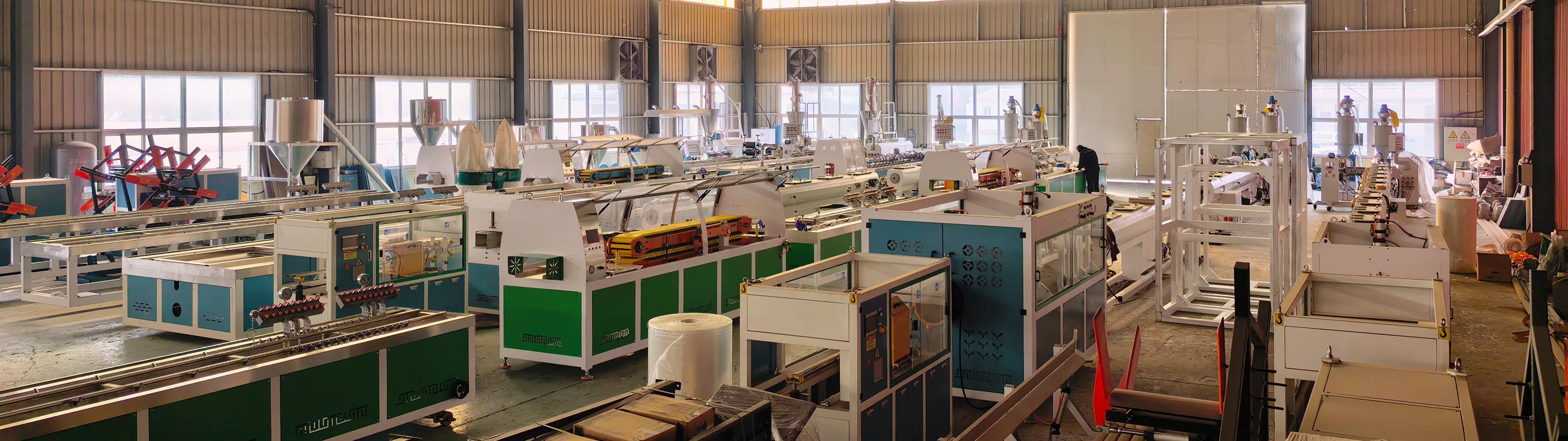
Types and Applications of Common Plastic Extruders
The plastics industry's most widely used extruders encompass single-screw, parallel twin-screw, and conical twin-screw models, each featuring unique structural designs and specialized application scenarios. As a professional manufacturer of plastic extrusion equipment, Yongte provides tailored extrusion solutions based on clients' specific material properties and product performance requirements.
I. Core Differences Among The Three Type of Extruders
· Single-screw extruder: Cost-effective, simple in design, and highly versatile—ideal for extruding pure materials and manufacturing finished products.
· Parallel twin-screw extruder: Exhibits excellent mixing performance and is suitable for modification, granulation, filling, and blending.
· Conical twin-screw extruder: Designed for high-torque, low-speed, high-pressure operation—specifically optimized for extruding rigid PVC (e.g., plastic-steel doors and windows, drainage pipes).
II. Detailed Comparison (Refer to this for model selection)
1. Single-screw Extruder
Structure: A screw rod rotates within the material cylinder. Key Advantages:
· Simple structure, cost-effective, and highly durable
· Stable discharge performance, ideal for producing finished products. Limitations:
· Limited mixing capability and inability to handle high-volume filler materials. Suitable Materials: PE, PP, ABS, PS, soft PVC, EVA, and recycled plastics for straightforward extrusion processes. Typical Products: Pipes, films, cables, profiles, and standard granules. Unsuitable Applications: High-filler compounding, intensive mixing processes, reactive extrusion, and rigid PVC production.
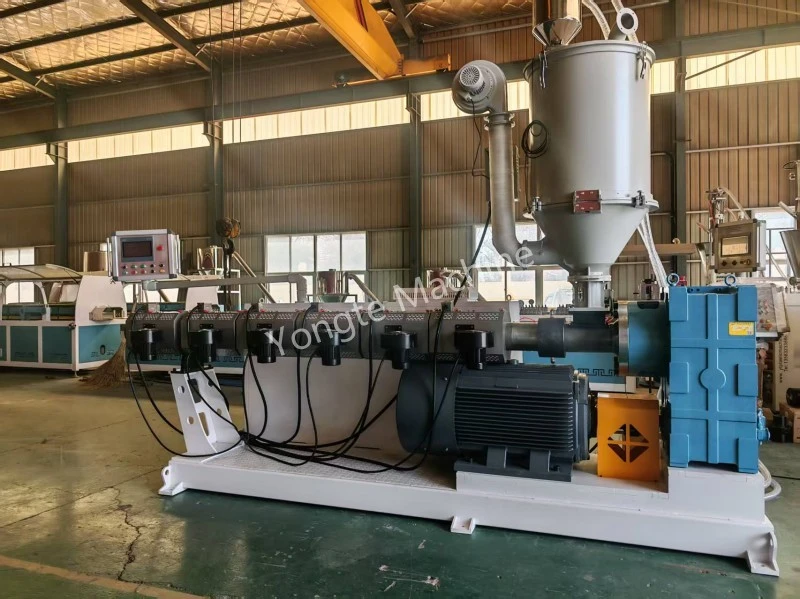
2. Parallel twin-screw extruder
Structure: Two screws of identical diameter are arranged in parallel and interlocked. Strength advantage:
· Demonstrates the strongest mixing, shearing, and dispersing capabilities
· Suitable for high filler content, glass fiber, masterbatch, and reactive extrusion applications. Weakness:
· High price
· Not suitable for rigid PVC (excessive shear force may cause decomposition). Suitable materials: PP/PE/ABS/PA/PC modified compounds, color masterbatches, filler masterbatches, biodegradable plastics, and recycled modified materials. Typical applications: plastic pelletizing, modification, blending, filling, and glass fiber reinforcement. Incompatible with rigid PVC products (e.g., doors/windows, pipe fittings).
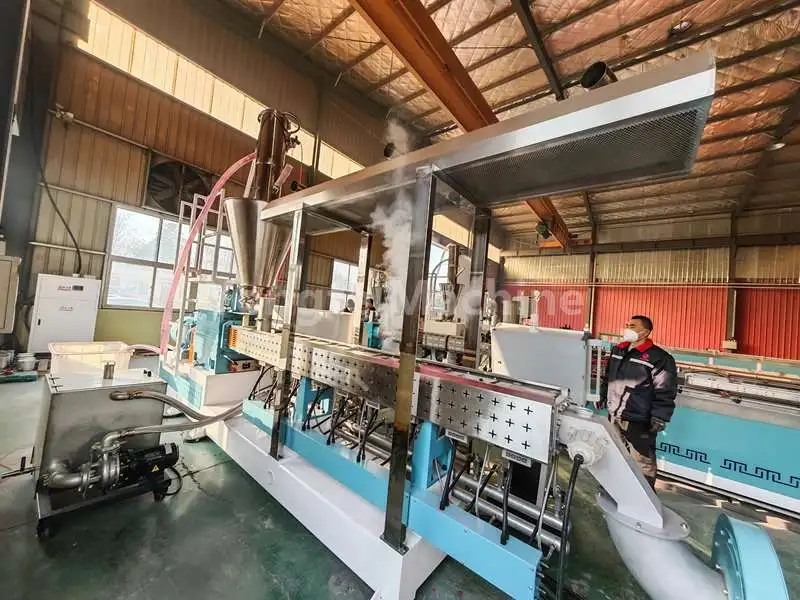
3. Conical Double Screw Extruder
Structure: Two screws arranged in a conical pattern from thick to thin. Strength advantage:
· High torque, high pressure, and moderate shear force
· Specifically engineered for rigid PVC, it maintains structural integrity without compromising performance.
· Primarily suitable for PVC applications due to limited versatility. Recommended materials: rigid PVC, PVC powder, calcium powder, and high-filling PVC. Typical products: PVC window and door profiles, PVC drainage pipes, PVC cable trays, and panel cladding. Unsuitable for: PE/PP granulation, modification, or film production.
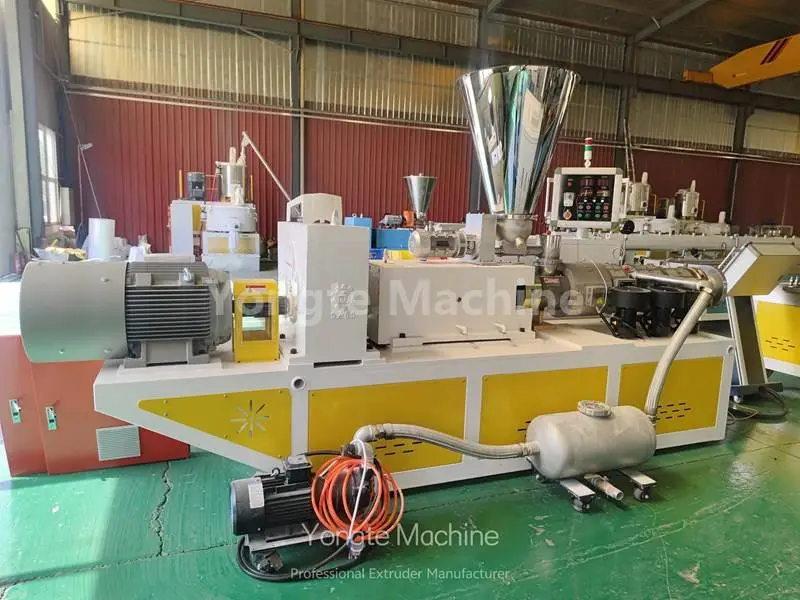
III. Extruder Performance Comparison Table
Type | Merit | shortcoming | best fit | Least suitable |
Single screw | Affordable, stable, and easy to maintain | Poor mixing performance
| Product Development: Tubes, Membranes, Cables | High filling, modified |
Parallel twin-screw | Exceptionally strong blending performance and a superior modification granulation tool | Expensive and unsuitable for PVC | Granulation, modification, masterbatch | Hard PVC product |
Conical twin-screw | High torque, suitable for PVC powder materials | Single use | Hard PVC profiles and pipes | PE/PP Granulation |