
PPR Pipe Extrusion Line Troubleshooting& Solution
PPR Pipe Extrusion Line Troubleshooting& Solution
Application: Intended for overseas operators and technical personnel.
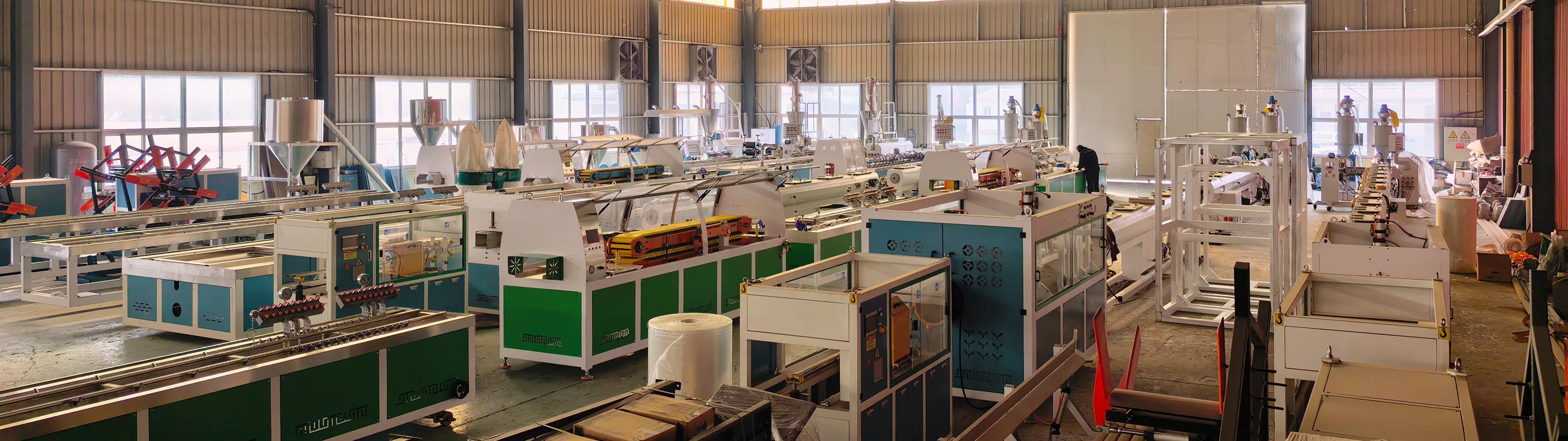
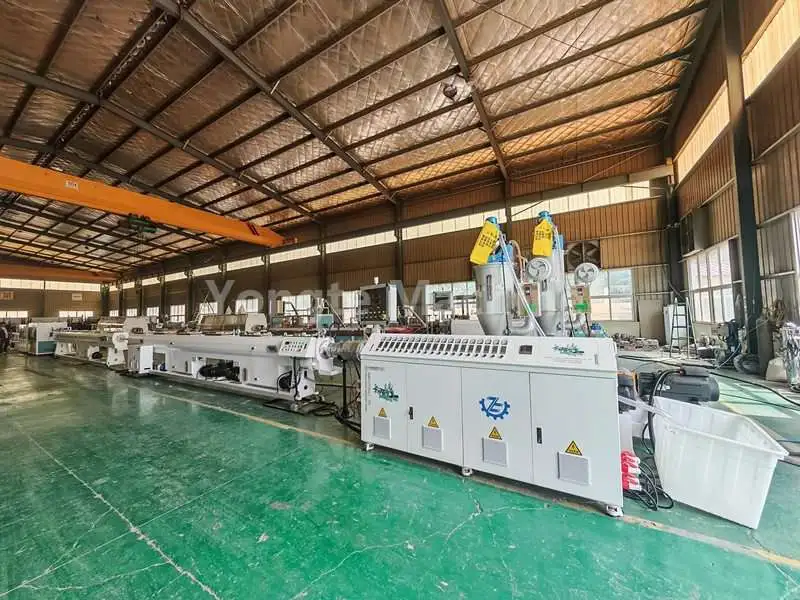
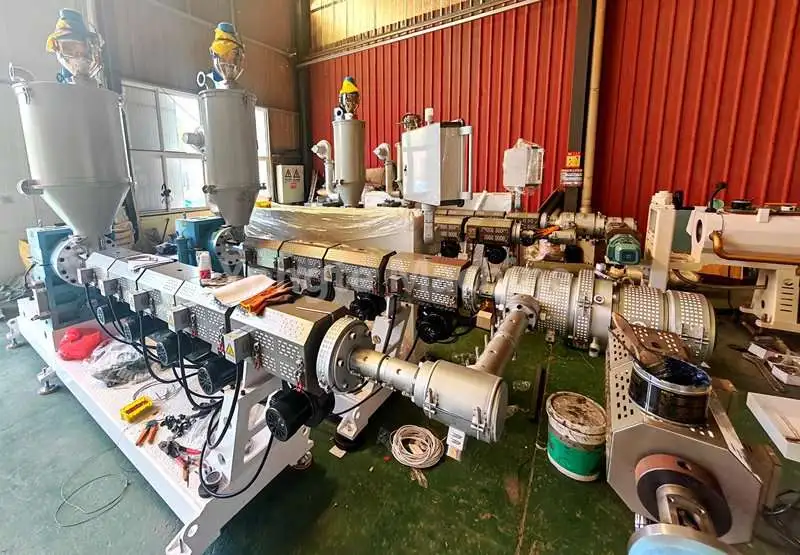
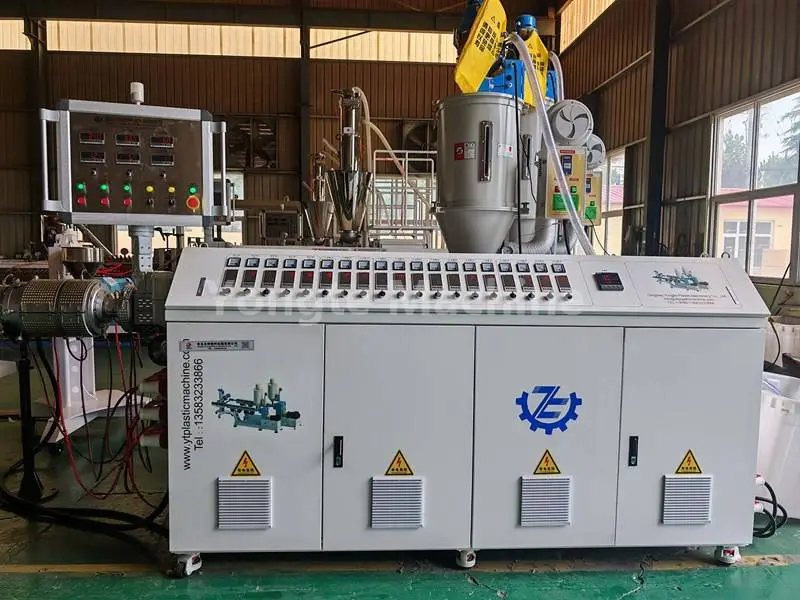
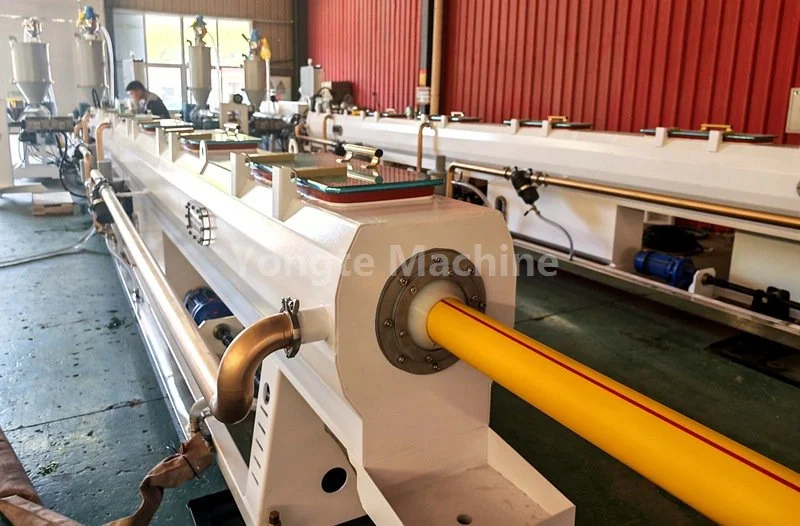
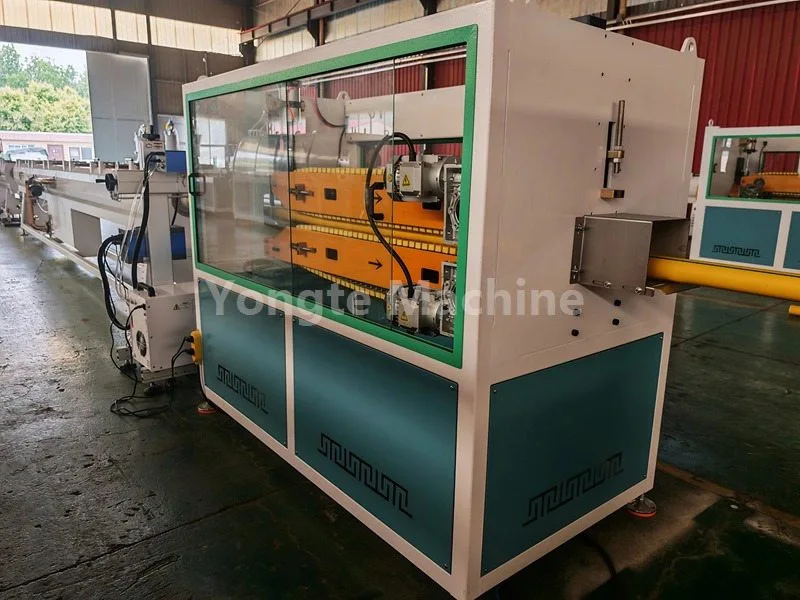
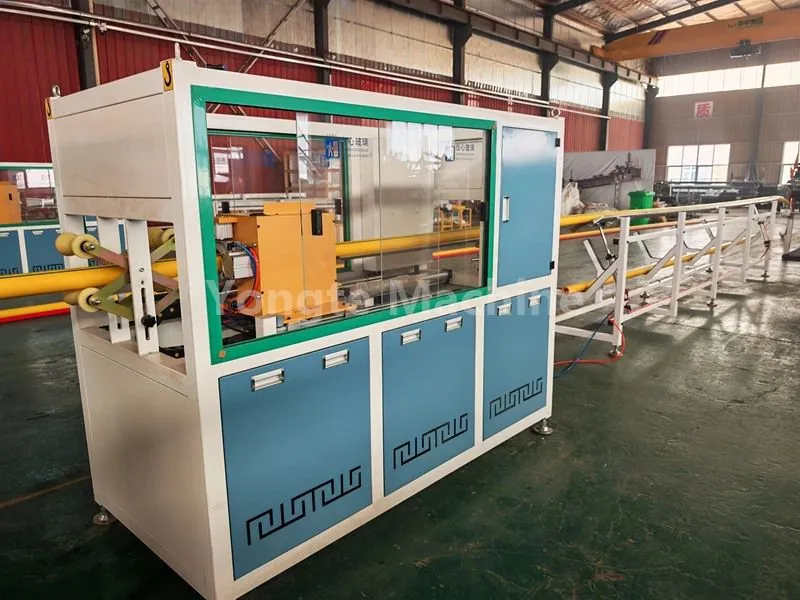
The Yongte PPR pipe extrusion line comprises core components: an extrusion system, a forming system, and a traction-cutting system. These units operate in coordination to complete the pipe manufacturing process, which includes melting, extrusion, shaping, cooling, traction, and cutting. This manual is intended for operators, technicians, and maintenance personnel involved with polypropylene random copolymer (PPR) pipe extrusion production lines. It offers guidance on common operational issues and troubleshooting methods for PPR pipe extrusion systems.
I. Extrusion System Faults
|
Troubleshooting |
Possible Causes |
Solution |
|
Extruder no discharge / sudden drop in output |
1. Hopper empty or raw material agglomeration blocking feed inlet 2. Metal impurities entering screw, causing jamming 3. Barrel temperature too low, insufficient melting of raw materials 4. Severe screw wear, decreased conveying capacity |
1. Check hopper stock, clear agglomerates; inspect feeding fan operation 2. Stop immediately, disassemble screw to clear impurities; replace feed inlet filter (recommended mesh size ≥80) 3. Increase barrel temperature in each section, keep warm for 30min before restarting 4. Measure screw outer diameter wear, replace if exceeding standard |
|
Unstable material flow, uneven pipe wall thickness |
1. Screw speed fluctuating, speed control system malfunction 2. Uneven melting of raw materials, unreasonable temperature setting 3. Mold filter clogged, uneven material flow resistance |
1. Check inverter parameters (1) calibrate screw speed sensor (2) fasten drive belt 2. Adjust barrel temperature gradient to stabilize homogenizing section temperature (1) check raw material dryness 3. Stop to replace mold filter (1) recommend multi-layer filter (80 mesh + 120 mesh) combination |
|
Extruder abnormal noise, severe vibration |
1. Screw and barrel misaligned, bearing wear 2. Hard foreign objects in barrel 3. Loose bolts of transmission components |
1. Stop to check screw coaxiality (1) replace worn bearings (2) recalibrate assembly position of screw and barrel 2. Clear foreign objects in barrel (1) check for metal particles in raw materials 3. Fasten connecting bolts of motor, reducer and barrel |
II. Calibration & Cooling System Faults
|
Troubleshooting |
Possible Causes |
Solution |
|
Excessive deviation in pipe roundness, local depressions /bulges |
1. Uneven vacuum distribution in vacuum shaping box 2. Worn shaping sleeve, uneven inner wall 3. Cooling water temperature too high, insufficient pipe cooling 4. Pipe eccentricity when entering shaping sleeve |
1. Adjust vacuum zone valves to ensure consistent vacuum (0.03–0.06MPa) in each zone; check for vacuum pipeline leakage 2. Replace worn shaping sleeve, polish inner wall scratches 3. Reduce cooling water temperature to 15–25℃, increase cooling water flow 4. Adjust coaxiality of mold and shaping sleeve, use centering device to fix pipe |
|
Rough pipe surface, pitting |
1. Excessively high vacuum, over-suction of pipe surface 2. Impurities in cooling water adhering to pipe surface 3. Carbonized material remaining on inner wall of shaping sleeve |
1. Appropriately reduce vacuum, observe pipe surface until smooth 2. Clean cooling water tank, replace cooling water; install water pipeline filter 3. Disassemble shaping sleeve, remove carbonized material and residual materials |
|
Deformation and bending of shaped pipe |
1. Uneven cooling, large temperature difference between upper and lower parts of pipe 2. Uneven traction force of tractor 3. Shaping box and tractor not in the same straight line |
1. Adjust cooling water spray angle to ensure 360° uniform cooling of pipe 2. Adjust tractor fixture pressure to ensure consistent tension on both sides 3. Calibrate installation positions of shaping box and tractor to keep center lines coaxial |
III. Traction & Cutting System Faults
|
Troubleshooting |
Possible Causes |
Solution |
|
Tractor slipping, pipe unable to move forward at constant speed |
1. Insufficient traction track pressure 2. Severe wear of track surface, decreased friction 3. Water stains on pipe surface causing slipping |
1. Increase air pressure/hydraulic pressure of traction fixture, avoid excessive pressure damaging pipe 2. Replace worn traction track, or add anti-slip lines on track surface 3. Add air-drying device before traction to remove water stains on pipe surface |
|
Uneven pipe cut, burrs |
1. Worn and blunt blade 2. Mismatch between cutting speed and traction speed 3. Pipe not fully cooled, cut deformation |
1. Grind or replace cutting blade, adjust blade gap 2. Calibrate cutting frequency to ensure synchronization between cutting action and traction speed 3. Extend length of cooling water tank to ensure pipe is cooled to room temperature before cutting |
|
Large error in cutting length |
1. Length sensor malfunction (1) inaccurate counting 2. Fluctuating traction speed 3. Loose cutting positioning device |
1. Calibrate or replace length sensor, reset cutting length parameters 2. Stabilize traction speed, eliminate speed control system faults 3. Fasten cutting positioning baffle, check if positioning sensor is normal |
IV. Product Quality Defects Faults
|
Troubleshooting |
Possible Causes |
Solution |
|
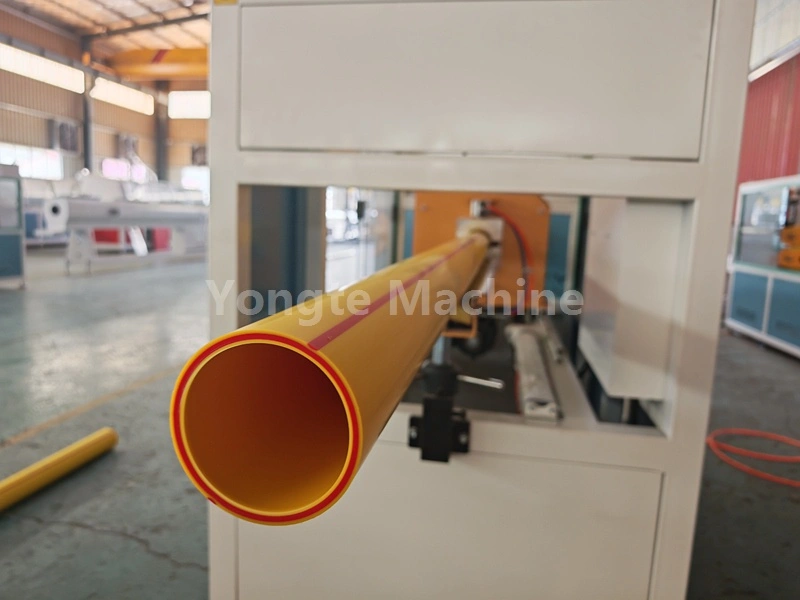
Bubbles and pinholes inside pipe |
1. Insufficient raw material drying, excessive moisture content (>0.02%) 2. Excessively high barrel temperature causing raw material thermal decomposition 3. Poor hopper sealing, raw material moisture absorption |
1. Extend drying time to 2–3h, increase drying temperature to 80–90℃; test raw material moisture content 2. Reduce temperature of homogenizing section and machine head (≤215℃) to avoid raw material decomposition 3. Seal hopper, install dry air purging device to prevent raw material moisture absorption |
|
Black lines and carbonized spots on pipe surface |
1. Residual carbonized material in barrel or mold carried out by material flow 2. Long-term high-temperature retention of raw materials causing thermal decomposition 3. Excessively slow screw speed, long residence time of materials in barrel |
1. Stop to clean carbonized material in barrel, screw and mold; clean system with cleaning material before startup 2. Adjust temperature parameters to shorten residence time of materials in high-temperature zone 3. Appropriately increase screw speed to match traction speed |
|
Substandard pipe mechanical properties (low hydrostatic strength, easy to break) |
1. Wrong raw material grade, non-extrusion-grade special PPR material 2. Excessively high extrusion temperature damaging raw material molecular structure 3. Excessively fast traction speed causing excessive pipe stretching |
1. Replace with standard extrusion-grade PPR raw material (melt flow rate 0.3–0.6g/10min) 2. Reduce barrel temperature to restore integrity of raw material molecular chain 3. Reduce traction speed, adjust matching ratio of traction and extrusion to avoid excessive stretching |
V. General Fault Troubleshooting Principles
1. From Simple to Complex: Prioritize the inspection of easily adjustable parameters, such as raw materials, temperature, and vacuum, before examining the mechanical components of the equipment.
2. Cool Down Before Shutdown: When disassembling the screw and mold, ensure the temperature has dropped below 100°C to prevent scalding.
3. Regular Prevention: Implement daily maintenance to reduce the probability of faults, including (cleaning carbonized material, replacing filters, and calibrating sensors.