What benefits does microcellular foaming bring to recycled plastic lumber extrusion line?
Technical Note: Microcellular Foaming on Yongte Plastic Lumber Extrusion line
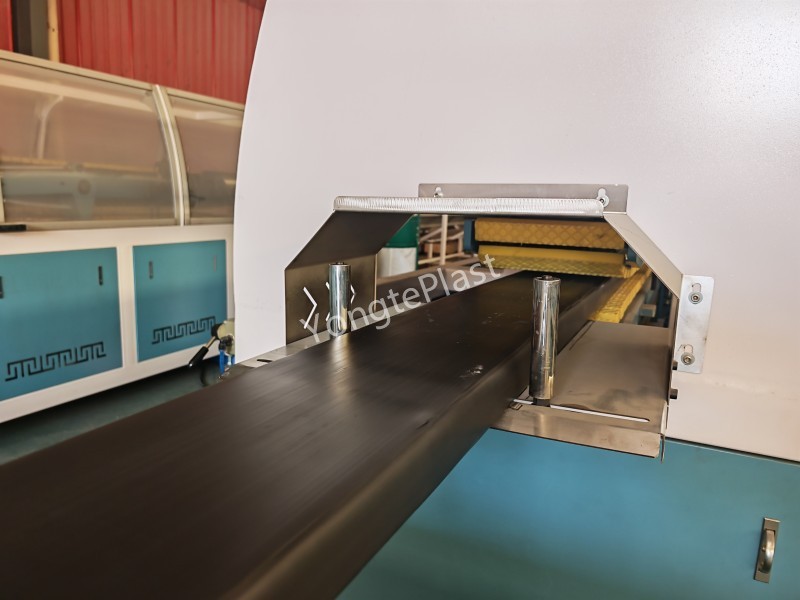
Plastic lumber, also known as recycled plastic profile, is generally produced from post-consumer recycled PP and PE feedstock by our Plastic lumber extrusion line. Compared with virgin resin, recycled polyolefin materials feature inconsistent melt index, impurity content and material composition, which brings a series of tough challenges to the extrusion forming process. So we recommend integrating microcellular foaming technology into the design of our plastic lumber extrusion line. With over 20 years of experience in plastic extrusion, Yongte designs these lines specially for recycled PP/PE feedstock. We deploy microcellular foaming as a key process compensation technology, not just for weight reduction.
The core benefits are as follows:
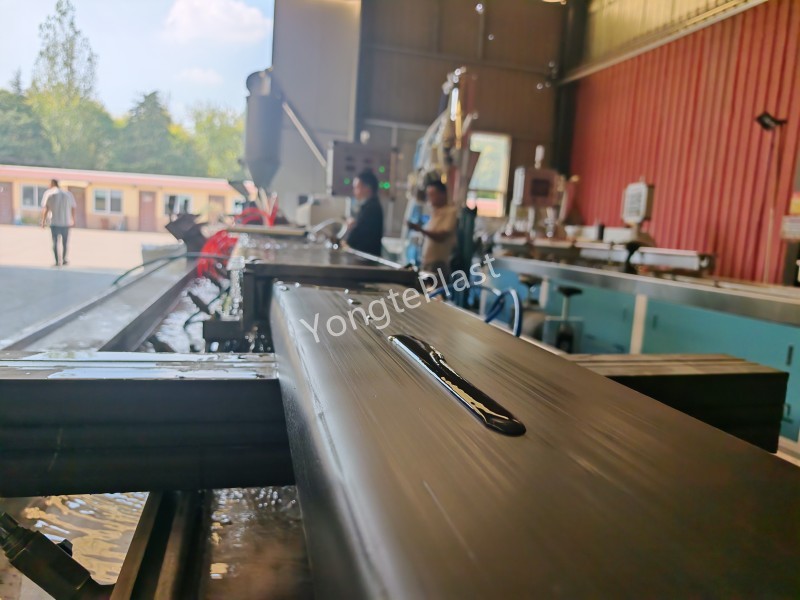
- Stabilize fluctuating extrusion pressure and melt flow Recycled PP/PE has inconsistent melt quality and impurities, causing unstable pressure and output. The microcell structure acts as an internal buffer, smoothing flow swings and broadening raw material tolerance. A Qatar customer using mixed local PE scrap achieved stable continuous production on our line, which was impossible with conventional solid extrusion.
- Balance uneven die discharge (fast center flow, slow edge flow) Thick lumber dies naturally suffer uneven melt velocity. Controlled foaming expansion offsets the speed gap between the center and edges, minimizing wavy edges and thickness variation and reducing tedious die adjustment work. Our 200×50 mm profile trials have validated this improvement.
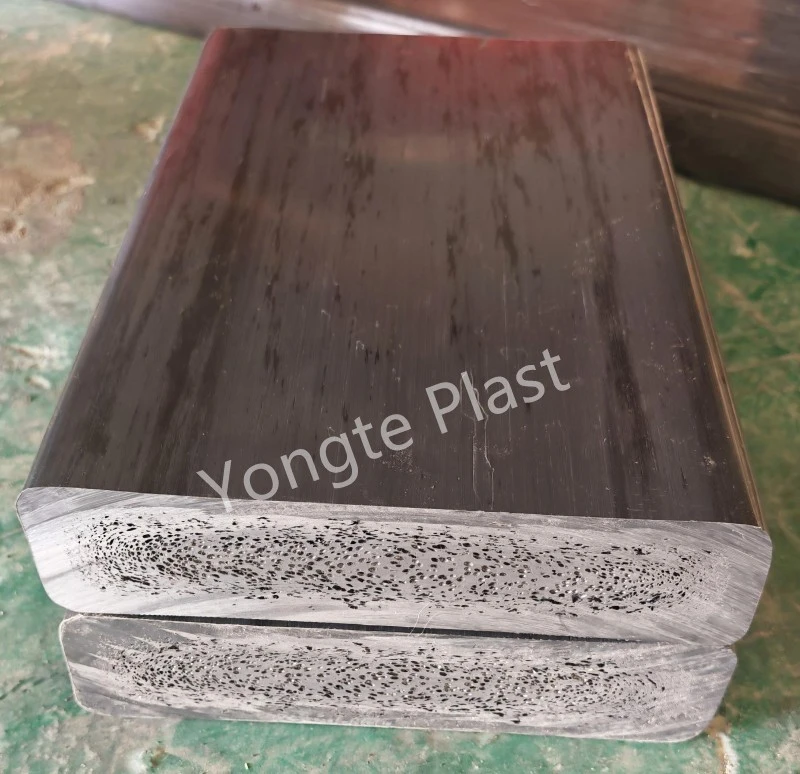
- Minimize thermal shrinkage and warpage Closed microcells dispersed inside the profile absorb internal stress generated during cooling and temperature cycling. Finished lumber delivers superior dimensional stability and far less thermal bending under hot outdoor conditions, well received by our Middle East clients for fencing and slats.
- Solve core bulging by enhancing internal heat dissipation Plastic is a poor heat conductor. Thick solid lumber cools quickly on the skin while the core stays hot, leading to center swelling. Micro-pores accelerate core heat release and synchronize cross-section cooling, effectively eliminating the bulging defect.
Yongte Line & Case
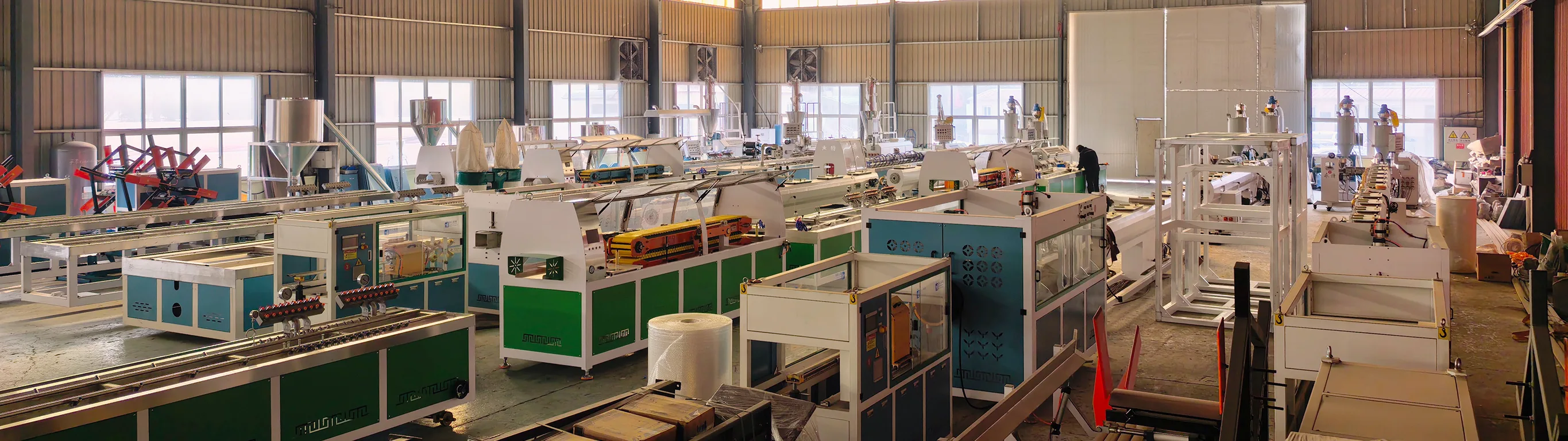
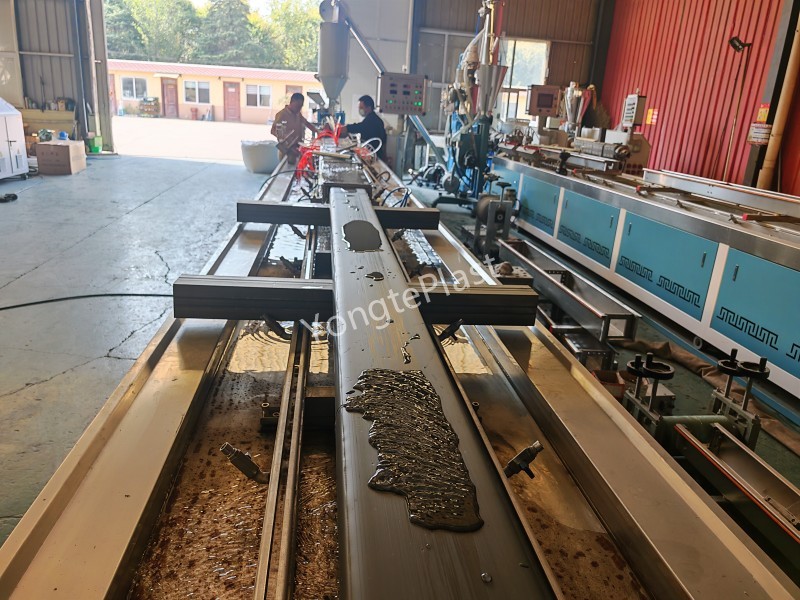
Our turnkey package includes custom extruder, precision micro-foam metering & injection system, optimized flat die, calibration, haul-off and servo-controlled cutting units with HMI centralized setting. Our 2024 Qatar double-cavity project (50×20 mm fencing lumber) is a typical reference. The customer’s scrap feed previously caused high scrap rates from unstable pressure, edge distortion and core bulging. After commissioning our foaming system, yield rose significantly and profiles remain dimensionally stable in high-temperature outdoor use. We also operate references for African and South Asian recyclers handling variable mixed PP/PE waste.
Conclusion
For Yongte plastic lumber machines, microcellular foaming directly addresses four major recycled extrusion challenges: unstable flow, uneven die output, thermal deformation and core bulging. It boosts yield, profile flatness and dimensional consistency, enabling recyclers to convert low-grade PP/PE waste into premium outdoor lumber.