
How to Solve the problem of yellowing during PVC pipe extrusion?
PVC pipe discoloration during extrusion: Principle + Troubleshooting Sequence + Solutions
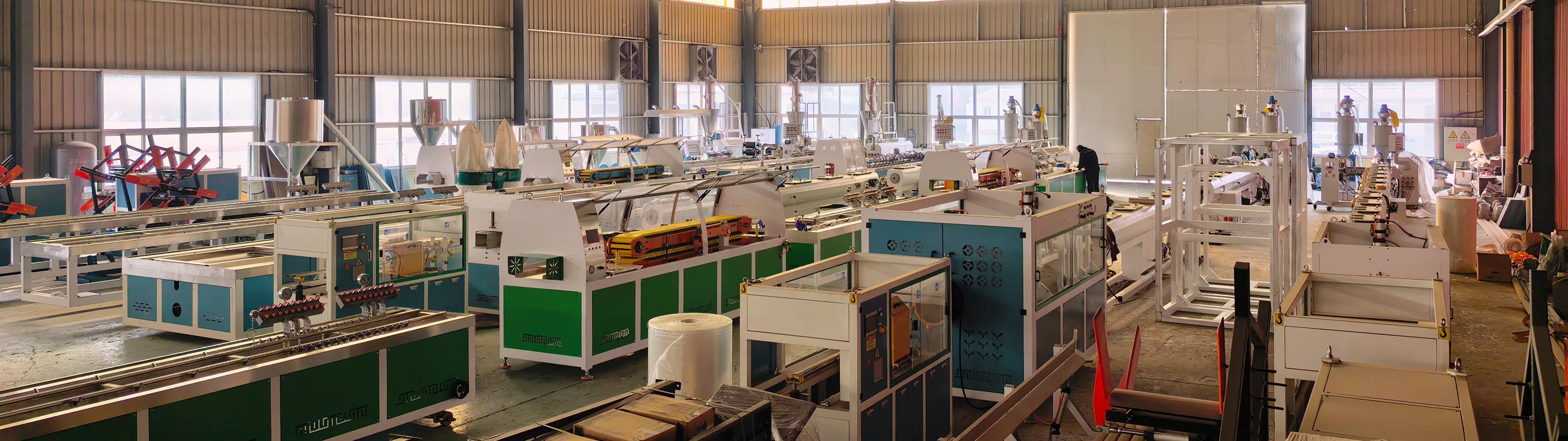
The Yongte PVC pipe production line is structurally optimized to address the common issue of discoloration during PVC pipe extrusion. The screw flow channel features rounded transitions to minimize material stagnation in dead zones, effectively preventing localized material retention, degradation, or discoloration. The equipment is also equipped with an independent screw cooling temperature control system that enables precise temperature regulation, preventing internal material overheating caused by accumulated frictional heat in the screw. When paired with the integrated online temperature monitoring module for the production line, this system can collect real-time temperature data from each section of the barrel and head, promptly detect anomalies such as thermocouple drift or localized overheating, and assist production personnel in quickly identifying the root causes of discoloration, thereby reducing production downtime associated with this issue.

The root cause of PVC yellowing: heating or shear stress induces the release of HCl from PVC, leading to the formation of conjugated double bonds; this HCl then accelerates further degradation (zipper-type decomposition); for calcium–zinc systems, care must be taken to prevent zinc burn (the strong catalytic decomposition of ZnCl₂). Quick diagnostic approach: overall uniform yellowing is typically due to issues related to temperature, stabilizers, or residence time; yellow streaks or localized yellowing indicate material accumulation in the mold or at the screw dead zone; yellowing after startup or shutdown is caused by material retention within the heating zone, leading to degradation.
I. Process Adjustment (Prioritize process adjustments – these entail the lowest cost modifications)
1. Temperature control (most common)
Rigid PVC-U extrusion zone reference: Die temperature: 155–170°C; Head/Mold temperature: 165–175°C; It is strictly prohibited for the mold temperature to exceed 180°C for extended periods.
1. Gradually reduce the temperatures of the barrel, flange, and die; prioritize lowering the temperature of the die and die head (as the die is most susceptible to material buildup and overheating).
2. Verify the thermocouple and heating coil: Thermocouple drift may cause the displayed temperature to appear normal while the actual local temperature may be elevated; inspect the cooling fan.
3. Screw cooling oil circuit: Failure of internal screw cooling, accumulation of frictional heat, and internal overheating of the material (which appears yellowed) – these phenomena are often easily overlooked.
2. Shear rate and residence time
1. Reduce the main motor speed, appropriately increase the feeding rate, minimize shear heating, and shorten the material residence time; the higher the rotational speed, the greater the shear heating.
2. Do not leave the machine idle for extended periods; when stopping operation, the material bin must be emptied. It is strictly prohibited to leave material trapped inside the hot machine bin – leaving it there for just a few minutes will cause the material to degrade and turn yellow.
3. Recycled material ratio control: Since recycled material undergoes multiple heating cycles, which increases the consumption of stabilizers, it is recommended that the recycled material content be ≤15%; the recycled material should be sieved to remove any coke particles; excessive amounts of recycled material may cause continuous yellowing.
3. Blending stage (often overlooked by many manufacturers)
· The final mixing temperature should not be excessively high (typically 110–120°C), and the mixing time should not be too long; the discharge temperature after cold mixing should be ≤50°C.
· Insufficient cooling of the hot-mixed compound leads to premature degradation of the stabilizer, making the extruded product prone to yellowing; moisture absorption by calcium carbonate can also interfere with the plasticizing and stabilizing systems.

II. Formula Optimization (When the product remains yellow after process adjustment – then adjust the formula)
1. Thermal stabilizer (Core)
· Lead salt system: Increase the amount of stabilizer and select a long-lasting thermal stability grade.
· Calcium–zinc system: Avoid simply adding excess zinc salts, as this may lead to zinc burn; combine with auxiliary stabilizers (polyols, β-diketones, hydrotalcite) to complex ZnCl₂ and inhibit catalytic degradation; add a small amount of hindered phenol antioxidant (1010).
Sudden yellowing after changing the stabilizer batch – prioritize determining whether the stabilizer quality or effective content is insufficient.
2. Lubrication Balance (Very high frequency! The fluid may also turn yellow if the stabilizer is insufficient)
Insufficient external lubrication: materials adhere to metal surfaces, excessive plasticization, increased shear stress – resulting in yellowing and brittleness of the pipe; excessive external lubrication: poor plasticization, rough inner wall surface.
· Internal lubrication (stearic acid, esters): reduces internal friction within the melt; External lubrication (PE wax, oxidized wax): prevents the melt from adhering to the screw or die metal surfaces.
· The calcium–zinc system is more sensitive to lubrication conditions; the internal and external sliding parameters must be properly matched – it is not sufficient to simply adjust the stabilizer.
3. Filler and Pigment
· Calcium carbonate: Use calcium powder with low levels of heavy metals and low iron content; iron ions can catalyze PVC degradation; the calcium powder should be dried if it becomes damp.
· Titanium dioxide: For water supply systems or outdoor piping applications – use rutile-TiO₂, which offers excellent weather resistance; anatase-TiO₂ is susceptible to photo-induced aging and may turn yellow over time; insufficient titanium dioxide content results in poor whiteness and a visually yellowish appearance.
· Fluorescent whitening agents: These are visual complementary agents that do not address the issue of thermal degradation itself; they only improve the surface whiteness and cannot serve as substitutes for stabilizers.

III. Equipment and Cleaning (Focus on striped yellowing and intermittent yellowing)
1. Screw, barrel, shunt shuttle, and die dead zones: Perform shutdown disassembly and inspection to remove accumulated carbon and coked deposits; stagnant material will be continuously carried into the molten mass, forming yellow lines or strips.
2. Screw wear: Increased screw/cylinder clearance leads to material recirculation, prolonged residence time, and repeated thermal degradation; severe wear requires repair or replacement of the screw.
3. Metallic impurities: Iron filings or rust mixed into the barrel; metallic ions catalyze the decomposition of PVC; the mixing system should be equipped with an iron removal process.
IV. Rapid Troubleshooting Procedure (On-site Operational Sequence)
1. Observe the yellowing pattern: uniform yellow → manufacturing process/conservative additive; yellow stripes → material retention due to mold screw; yellowing upon startup or shutdown → issue related to material retention time
2. Temperature verification: Confirm whether the thermocouple and screw cooling system are functioning properly; conduct a trial run by slightly reducing the machine head temperature.
3. Reduce the main motor speed, maintain stable feeding, and minimize shear heat.
4. Clean the screw and die head of coke residue.
5. Check the recycling material addition ratio; temporarily suspend the recycling material trial production verification.
6. Verify the cold-hot mixing process and the moisture content of calcium powder.
7. Final adjustment of the stabilizer and lubrication system formulation

V. Common Pitfalls & Warnings
1. Even when additional stabilizers are added, the lubricant still turns yellow due to an imbalance; blindly increasing the amount of zinc salts in the calcium-zinc formulation may result in short-term whitening, followed by blackening of the zinc layer over time.
2. Fluorescent whitening agents merely provide visual masking and cannot prevent the thermal degradation of PVC; high-temperature extrusion will still lead to decomposition.
3. An improper die compression ratio or flow channel dead zones can cause localized material stagnation, leading to the persistent appearance of a yellow line.