
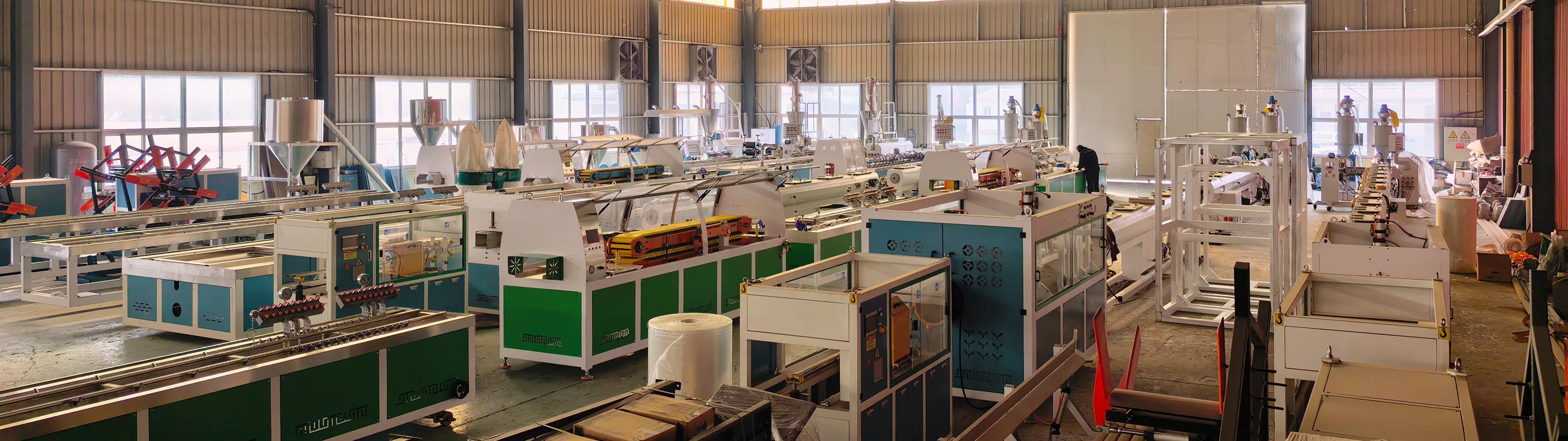
How to Prolong the Service Life of Screw and Barrel for WPC Extruders
Expert Tips to Prolong the Service Life of Screw and Barrel for WPC Extruders | By Yongte
Abstract
Wood-Plastic Composite (WPC) extrusion faces severe equipment abrasion and corrosion challenges due to the unique processing characteristics of raw materials, including wood fiber powder, plastic resin, and various inorganic fillers. The screw and barrel are the core wearing components of WPC extruders; their service life directly affects production efficiency, product quality, and enterprise operating costs. As a professional manufacturer specializing in WPC extrusion equipment and wearing parts, Yongte summarizes targeted and practical optimization suggestions to help manufacturers effectively reduce component wear, lower replacement frequency, and cut overall production costs.
1. Introduction
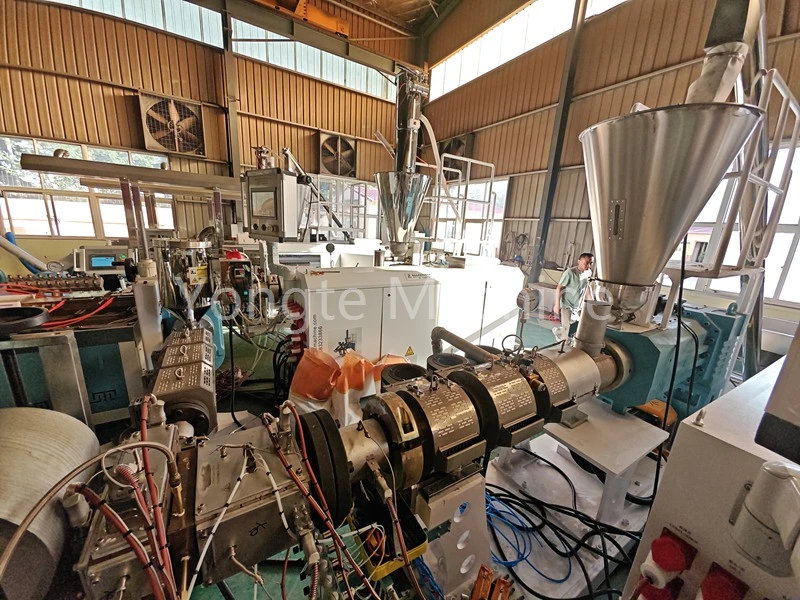
Different from ordinary plastic extrusion, WPC materials contain high-proportion lignocellulosic fibers and abrasive additives. During continuous high-temperature and high-shear extrusion, the internal environment of the machine barrel features strong abrasiveness and weak chemical corrosiveness. Long-term improper operation and unreasonable part selection will accelerate wear, scratch, corrosion and carbon deposition damage to the screw and barrel. Once the matching gap between the screw and barrel exceeds the standard range, problems such as unstable plasticization, uneven material discharge, and frequent material jams will occur, which not only disrupt daily production but also bring additional maintenance expenses. Therefore, standardized maintenance and scientific part selection are essential for long-term stable operation of WPC extrusion equipment.
2. Professional Maintenance & Optimization Strategies
2.1 Adopt High-Performance Nitrided & Bimetallic Screw and Barrel
Component material is the fundamental factor determining the service life of screws and barrels. Conventional carbon steel parts are difficult to adapt to the harsh processing environment of WPC materials and are prone to rapid surface wear and rust corrosion.
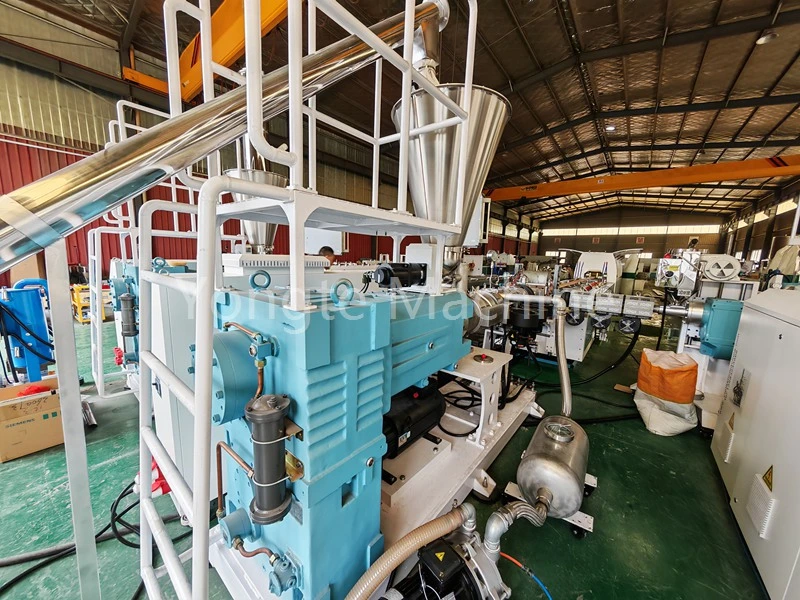
Yongte recommends two mainstream high-performance configurations for WPC production lines. The first one is nitrided screw and barrel. After deep nitriding treatment, the surface forms a high-hardness nitride layer, which boasts excellent anti-abrasion performance and low friction coefficient, suitable for conventional WPC profiles with low filler content. The second option is bimetallic wear-resistant and corrosion-resistant screw and barrel. Its inner wall and screw working surface are welded with high-alloy wear-resistant layers. This structure can effectively resist composite damage caused by fiber abrasion and additive corrosion, and is the optimal choice for high-filling, high-output WPC extrusion scenarios. Compared with ordinary parts, these two types of customized accessories can extend the service cycle by 2-3 times.
2.2 Strictly Control Raw Material Purity to Avoid Foreign Matter Intrusion
Hard impurities represented by metal fragments are the main cause of sudden damage to screws and barrels. Mixed iron blocks, steel scraps and other hard foreign matters in wood powder, recycled plastic particles and other raw materials will produce strong cutting friction between the screw flight and the barrel inner wall during extrusion, directly causing irreversible scratches, tooth collapse and even component scrapping.
To eliminate such risks, manufacturers need to establish a complete raw material screening mechanism. First, install high-strength magnetic separators and filtering screens at the feeding port to intercept metal impurities and large particulate debris in advance. Second, inspect raw materials regularly before feeding, and prohibit unqualified materials with mixed hard impurities from being put into production. Third, clean the feeding system and hopper regularly to prevent fallen mechanical parts and workshop sundries from falling into the machine barrel. This simple measure can effectively avoid accidental damage to wearing parts and reduce unnecessary maintenance losses.
2.3 Implement Scientific Temperature Control to Prevent Dry Friction & High-Temperature Ablation
Temperature parameter setting is closely related to the degree of screw and barrel wear. Abnormal temperatures will trigger two major damage problems: dry friction and high-temperature ablation.
On the one hand, if the processing temperature is too low, the WPC materials cannot be fully melted and plasticized. Unmelted solid materials will directly rub against the screw and barrel, resulting in severe dry friction and accelerating uniform wear of parts. On the other hand, excessive local temperature will lead to thermal aging and ablation of the metal surface of accessories; meanwhile, excessive high temperature will cause partial carbonization of WPC materials, and the generated carbon deposits will polish and corrode the inner wall of the barrel for a long time.
Yongte’s technical team suggests formulating segmented temperature parameters according to the material formula. Operators should preheat the equipment slowly before startup, avoid rapid temperature rise and frequent temperature fluctuation. In addition, prolonged idling of the extruder without materials is strictly forbidden, as empty rotation will lead to direct dry friction between the screw and barrel and cause rapid wear within a short time.
2.4 Standardize Shutdown Operations and Purge Residual Materials Timely
Residual materials inside the barrel after shutdown are easily carbonized, which is a hidden danger that cannot be ignored for long-term part wear. WPC materials remaining in the dead corner of the barrel and screw gaps will undergo thermal degradation and carbon deposition after long-term high-temperature storage. These hard carbonized substances will not only affect the plasticizing quality of subsequent products but also continuously scratch the screw flight and barrel inner wall during the next startup.
The standardized shutdown process formulated by Yongte is as follows: Firstly, gradually reduce the feeding amount and screw speed. Secondly, use special cleaning materials to replace the residual WPC materials inside the extruder until the pure cleaning materials are stably discharged from the die. Finally, cut off the power after cooling down the equipment to a safe temperature. Regular purging can completely eliminate residual carbon deposits, reduce corrosion and friction damage, and form effective protection for screws and barrels.
3. Conclusion
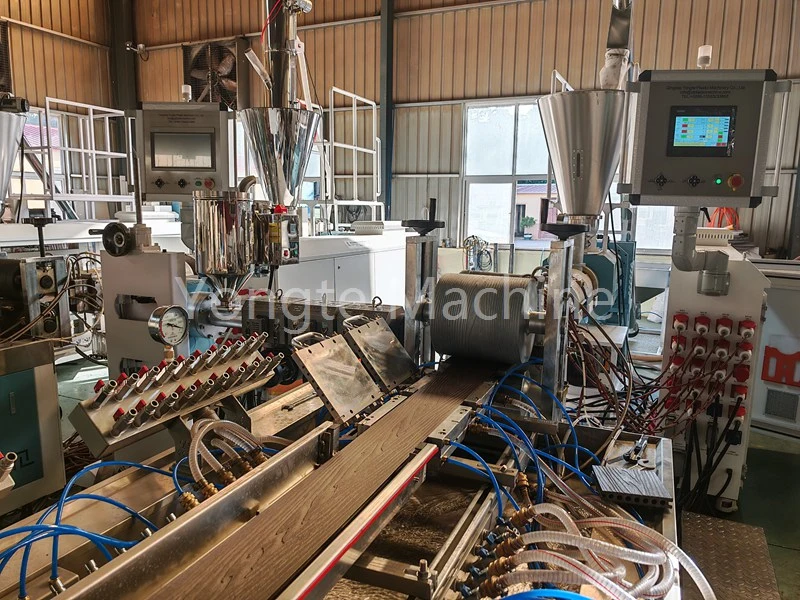
Extending the service life of WPC extruder screws and barrels is a systematic work covering part selection, material management, parameter control and daily operation. Adopting high-quality nitrided or bimetallic accessories is the foundation of anti-wear and anti-corrosion; strict impurity control, scientific temperature regulation and standardized shutdown purging are the core of daily maintenance.
As a reliable WPC extrusion equipment manufacturer, Yongte has rich practical experience in equipment R&D, production and after-sales maintenance. We provide customers with one-stop solutions including customized wear-resistant screws & barrels, operational technical guidance and daily maintenance training, helping global WPC producers maximize equipment utilization, lower production costs and gain greater market competitive advantages.
About Us
Yongte is a professional integrated manufacturer focusing on R&D, production and sales of wood-plastic extrusion equipment and core wearing parts. Our product portfolio covers complete WPC extrusion production lines, customized nitrided/bimetallic screws and barrels, auxiliary supporting accessories, etc. We are committed to providing cost-effective equipment solutions and professional technical support for global wood-plastic processing enterprises.