Waste Clothes Textiles Recycling and Reusing Solution
With the global emphasis on environmental protection and the urgent need for circular economy development, the recycling and reuse of waste clothes textiles have become a key focus of industrial upgrading. Yongte has successfully developed and delivered a complete production line dedicated to manufacturing Wood Plastic Composite (WPC) products using recycled old clothes as the core raw material. This turnkey solution integrates all production processes from old clothes recycling and crushing, granulation, mixing with wood powder, compounding to extrusion molding, realizing the green transformation of waste textiles into high-value WPC products. The project not only solves the environmental pressure caused by the accumulation of old clothes but also provides a sustainable and cost-effective production solution for the customer, achieving win-win results in environmental protection and economic benefits.
Advantages
① We supply the complete production line that covers the entire process from old clothes recycling to WPC products finished products, with no need for additional equipment procurement or process complementation.
② The production line effectively handle various types of old clothes (including cotton, polyester, denim, and blended fabrics), solving the problem of poor compatibility of different textile materials during processing.
③ Ensure stable production efficiency, qualified product quality, and compliance with international environmental protection and building material standards.
④ Achieve cost control in raw materials and production, maximizing the economic benefits of waste recycling.
Customized Solution by Yongte
Yongte customized high-efficiency, energy-saving, and environmentally friendly complete waste clothes recycling and reusing WPC production line, integrating advanced technology and mature equipment to ensure the smooth operation of the entire production process. The core configuration of the production line includes the following key equipment and processes:
1. Production Process Flow
The production line follows high automated process, with clear division of labor and smooth connection between each link, ensuring high efficiency and stable quality. The specific process flow is as follows:
Waste Clothes Pretreatment: Collect and sort clothes wastage, remove non-textile impurities (buttons, zippers, metal accessories), and classify them by material to improve processing efficiency.
Crushing: Feed the pretreated waste clothes into the shredder and crusher to obtain uniform fibrous fragments, which are then conveyed to the granulation link.
Textiles Pelletizer: The crushed fibrous fragments are melted, and cut into recycled granules, which are stored for later use after quality inspection. This process will make the textiles into pellets form which will be easy for next steps of granulation and extrusion.
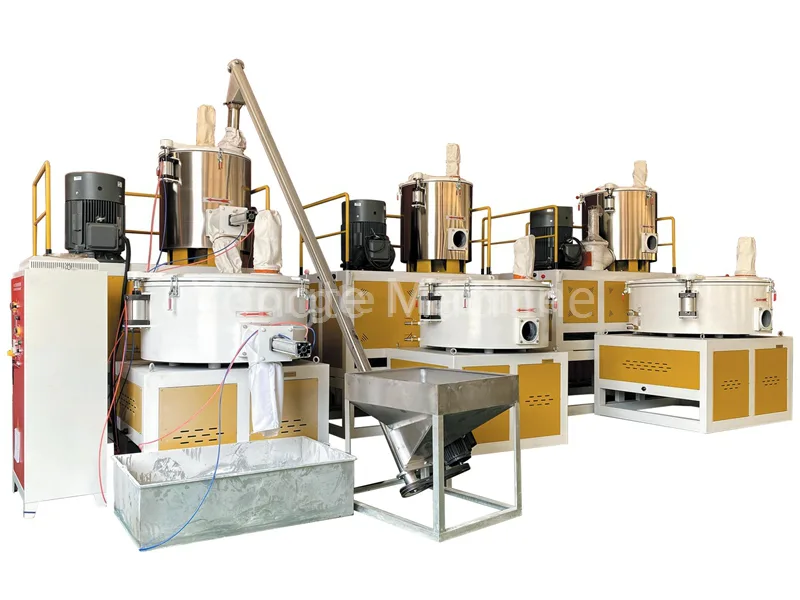
Mixing material: According to the preset formula, mix the recycled clothes granules with recycled PP/PE plastic and chemical additives and other additives in a high-speed mixer to form a uniform mixture material.
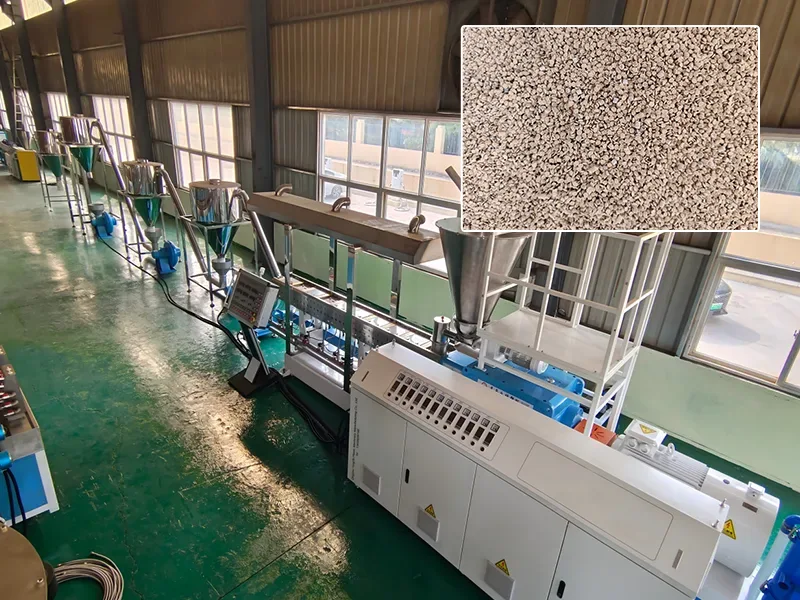
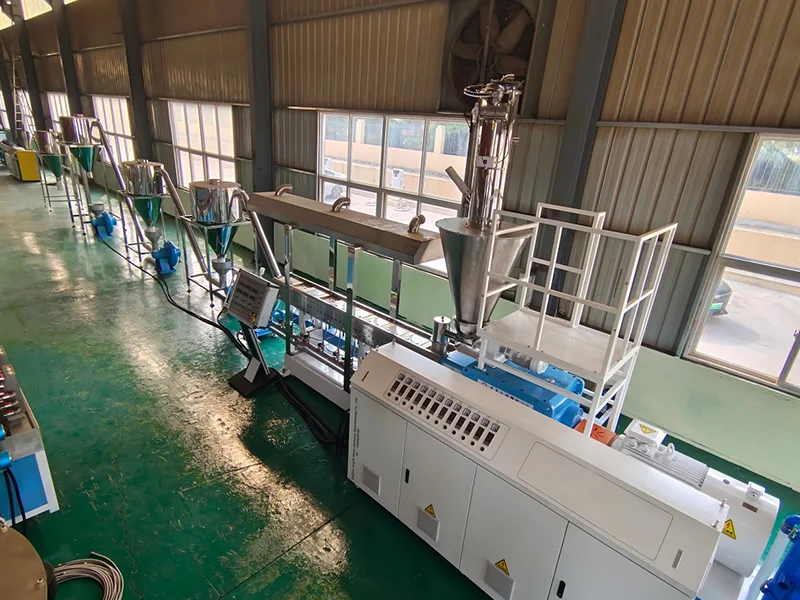
WPC Compound Granulation: The mixture will be made into granules by parallel twin screw extrusion machine with hot pelletizing and air blow cooling system. The granulation step significantly enhances the interfacial bonding between wood and plastic components, thereby improving the mechanical strength, weather resistance, and dimensional stability of the final WPC products, enabling their extensive use in construction, landscaping, automotive interiors, and packaging sectors.
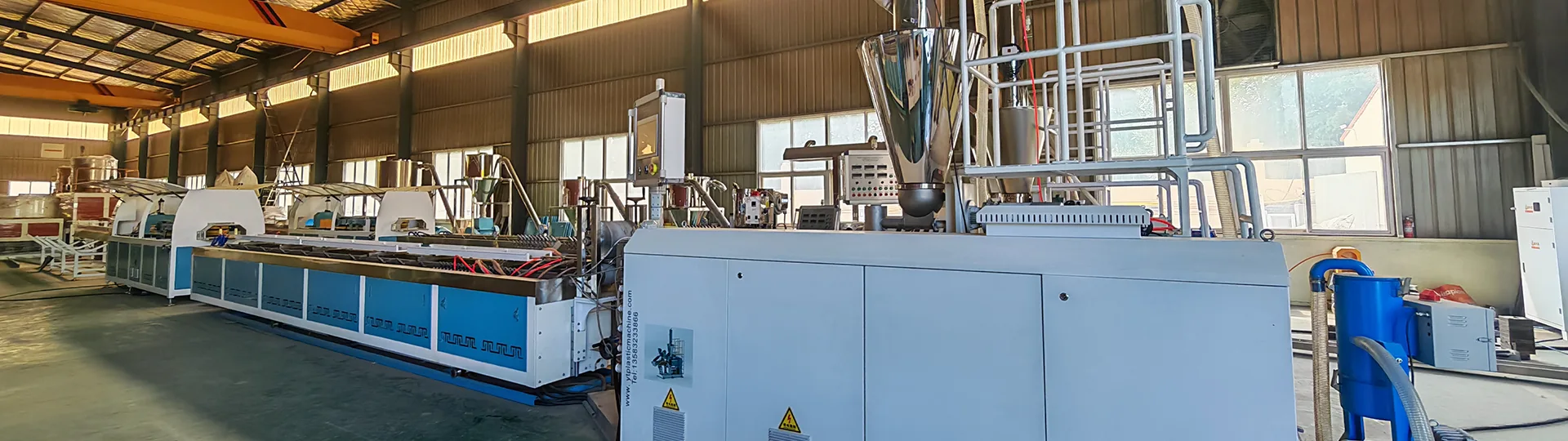
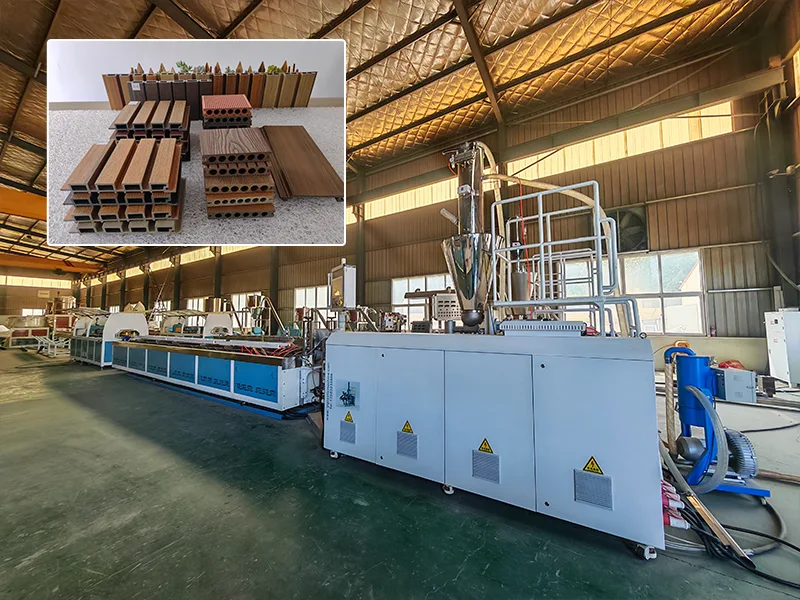
Extrusion Molding: The compound material is fed into the conical twin-screw extruder for melting and plasticizing, then extruded through the mold to form WPC products profiles.
Cooling, Traction & Cutting: The extruded profiles are cooled and shaped on the cooling table, then pulled by the traction machine and cut into finished products of specified length.
Quality Inspection & Packaging: Inspect the finished WPC products for dimensional accuracy, surface quality, and mechanical properties; package the qualified products for storage and delivery.
2. Core Equipment Configuration
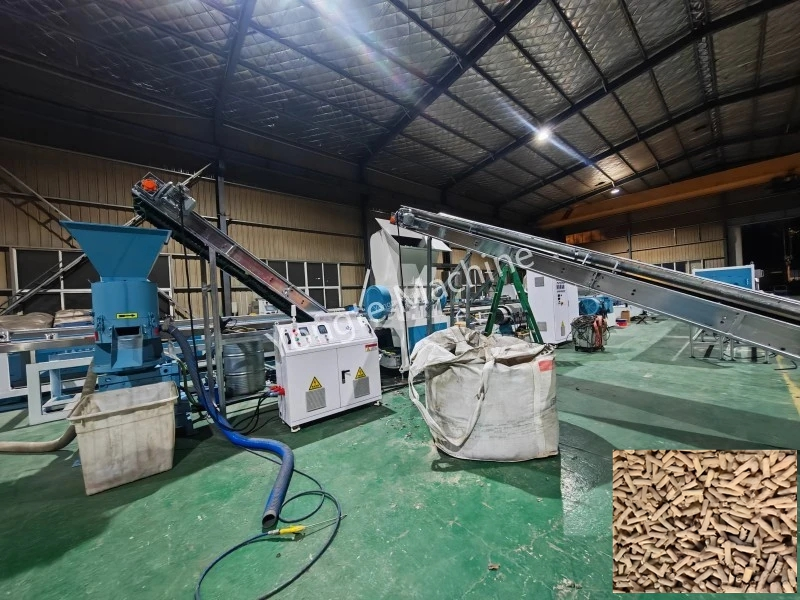
Waste Clothes Recycling: Waste Clothes Shredder & Crusher & pelletizer
Shred and crush various waste clothes into uniform fibrous fragments, remove impurities (such as buttons, zippers), and ensure the fineness of the material meets the requirements of subsequent granulation. The equipment adopts aspecial designed blade structure with adjustable cutting size, suitable for fabrics of different thicknesses, and has a noise reduction design (below 80 decibels) for workshop use.
Process the crushed old clothes fibers into recycled granules through melting pelletizer.
Conveyors and metal separators can be equipped between the crusher and pelletizer to achieve automatic production.
The capacity of our special designed old clothes recycling machine can be 500kg/h.
Mixing material by high speed heating mixer
Mix the recycled old clothes granules withrecycled PP/PE Plastic,and chemical additivesin a precise ratio. The high-speed mixer generates friction heat to preheat materials, remove moisture frommaterial, and ensure uniform dispersion of all components, solving the problem of poor bonding between textile fibers andplastic.
WPC compound granulation: Parallel twin screw extrusion and hot pelletizing
The mixed material shall be melted and compounded into WPC granules by special designed parallel twin screw extrusion machine with venting system, it adopts hot pelletizer and air blow cooling system to ensure good plastization and high capacity. The WPC granulation machine capacity can be 500kg/hour.
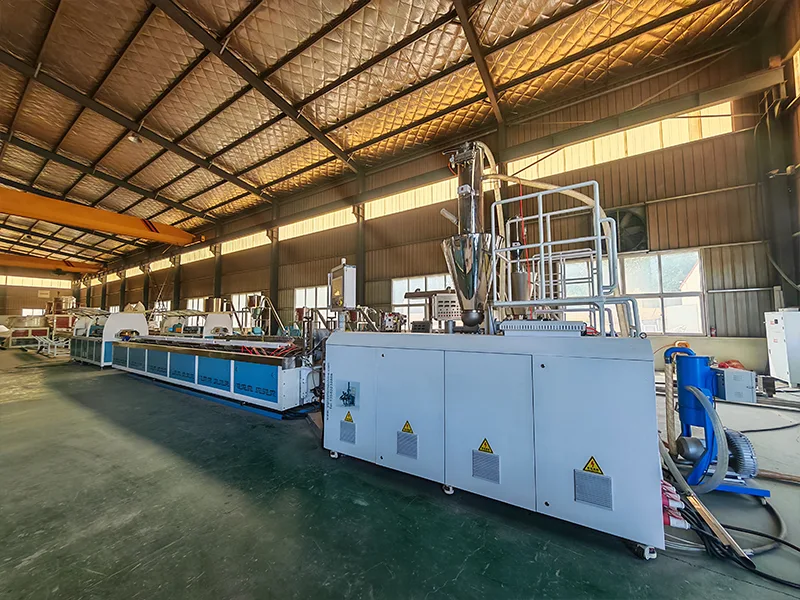
WPC Extrusion Molding:Conical Twin-Screw Extruder & Molding Die
Melt and plasticize the compounded material, then extrude it into WPCproducts profiles of various specifications through a custom-designed mold. The conical twin-screw extruder has strong torque and efficient plasticizing capacity, ensuring stable extrusion and precise dimensional accuracy of the products. Optional online embossing equipment can be configured to achieve wood grain or other textures on theproducts surface.
Special designed co-extrusion system can cover anti-weather layer on the product surface, so that the WPC products can be used for more than 10 years even outdoor under sunshine.
Project Advantages
Environmental Protection & Circular Economy
The project realizes the resource utilization of waste old clothes, diverting a large amount of textile waste from landfills and reducing environmental pollution. By replacing traditional plastic raw materials with recycled old clothes, it reduces the consumption of non-renewable resources and conforms to the global concept of circular economy and net-zero goals. The produced WPC products is non-toxic, formaldehyde-free, and 100% recyclable, further extending the circular chain of resources.
Customization & Adaptability
Yongte fully customized the production line according to the customer’s needs, including equipment specifications, production capacity, and product standards. The line can handle various types of old clothes and produce WPC products of different specifications (width 100-300mm, thickness 15-30mm) to meet the diverse needs of indoor and outdoor decoration. The equipment configuration can be flexibly adjusted according to the customer’s subsequent production expansion needs.
High Efficiency & Cost-Effectiveness
The production line adopts a fully automated control system, which reduces manual operation, improves production efficiency, and ensures stable product quality. The use of recycled old clothes as raw materials greatly reduces the cost of raw material procurement compared with traditional WPC production (which mainly uses recycled PE particles and wood powder). In addition, the equipment adopts energy-saving design, reducing energy consumption by 25-30% compared with standard production lines, further reducing the customer’s operational costs.
High-Quality End Products
Through precise process control and advanced equipment configuration, the produced WPC products combines the natural texture of wood with the durability of plastic, having the advantages of waterproof, moisture-proof, moth-proof, mildew-proof, and wear-resistant properties. It can be sawn, nailed, and planed, with better nail-holding force than ordinary wood materials, and its bending strength is higher than that of traditional WPC products using wood powder as filler. The product meets international environmental protection and building material standards, with broad market prospects.
Application
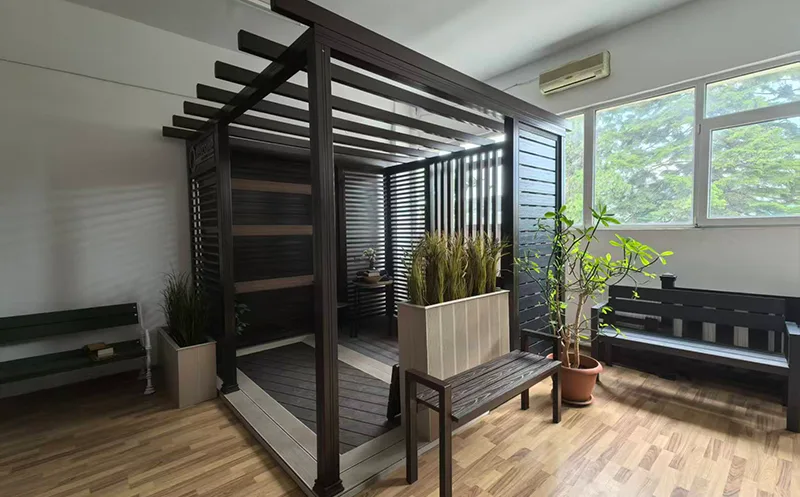
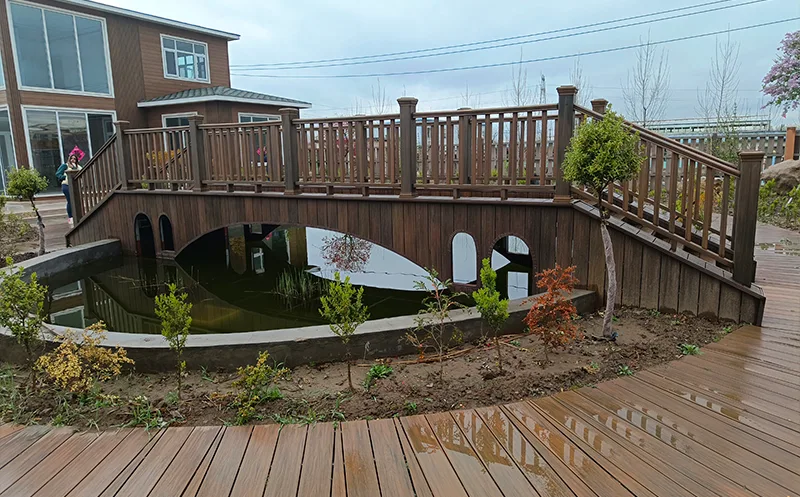
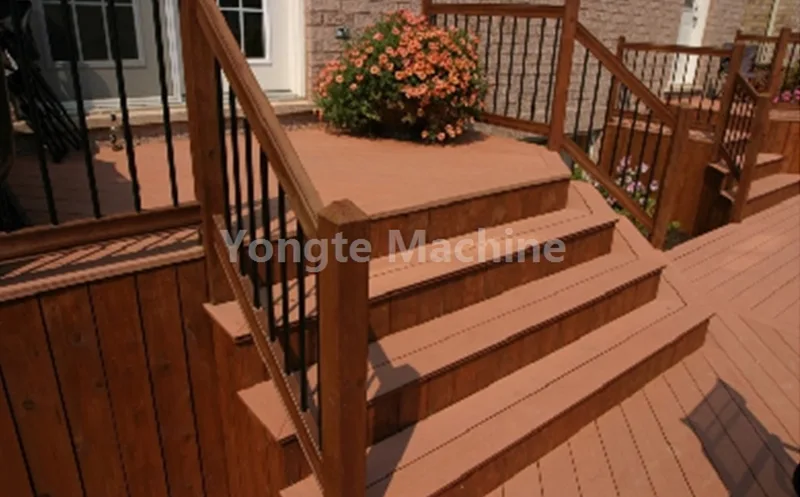
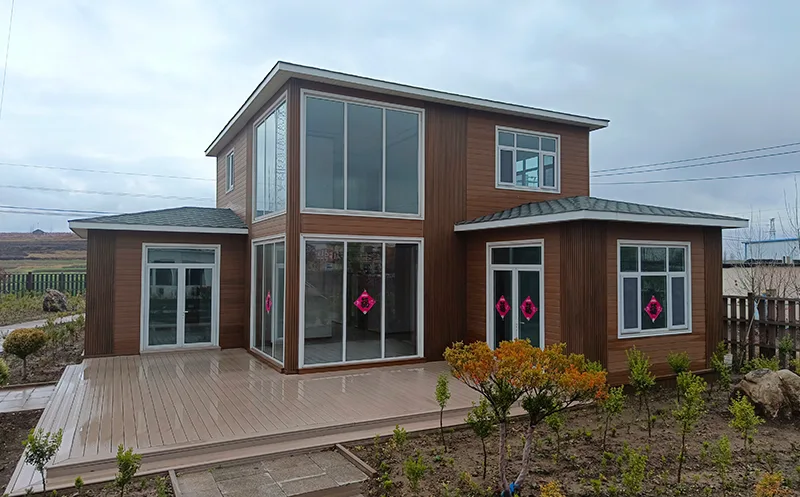
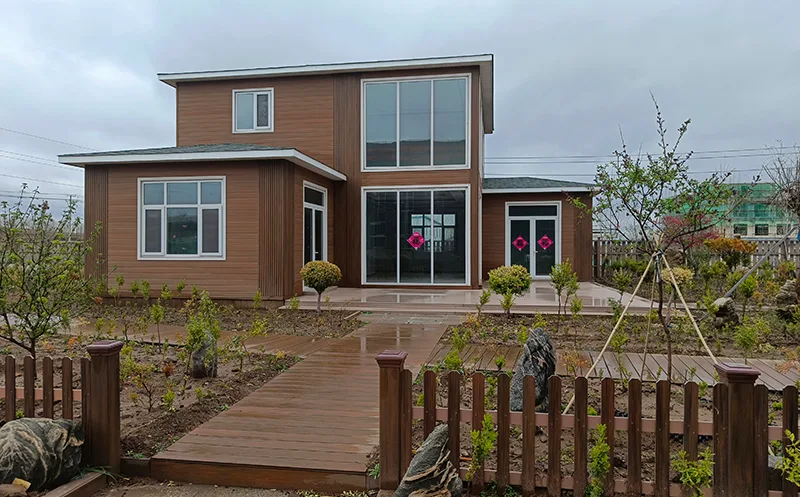
WPC products made from waste textile clothing are widely used in construction and building applications, such as decking, fencing, and cladding. They are also well suited for outdoor landscaping—including garden borders, walkways, and park benches. Their resistance to moisture and decay makes them ideal for humid environments, such as bathrooms and kitchens. Furthermore, their durability ensures long-term performance with minimal maintenance, appealing to both residential and commercial markets. The versatility of these WPC products enables architects and designers to incorporate sustainable solutions into their projects without compromising aesthetic appeal.